Hauptplatz 11 | Villa Bucher
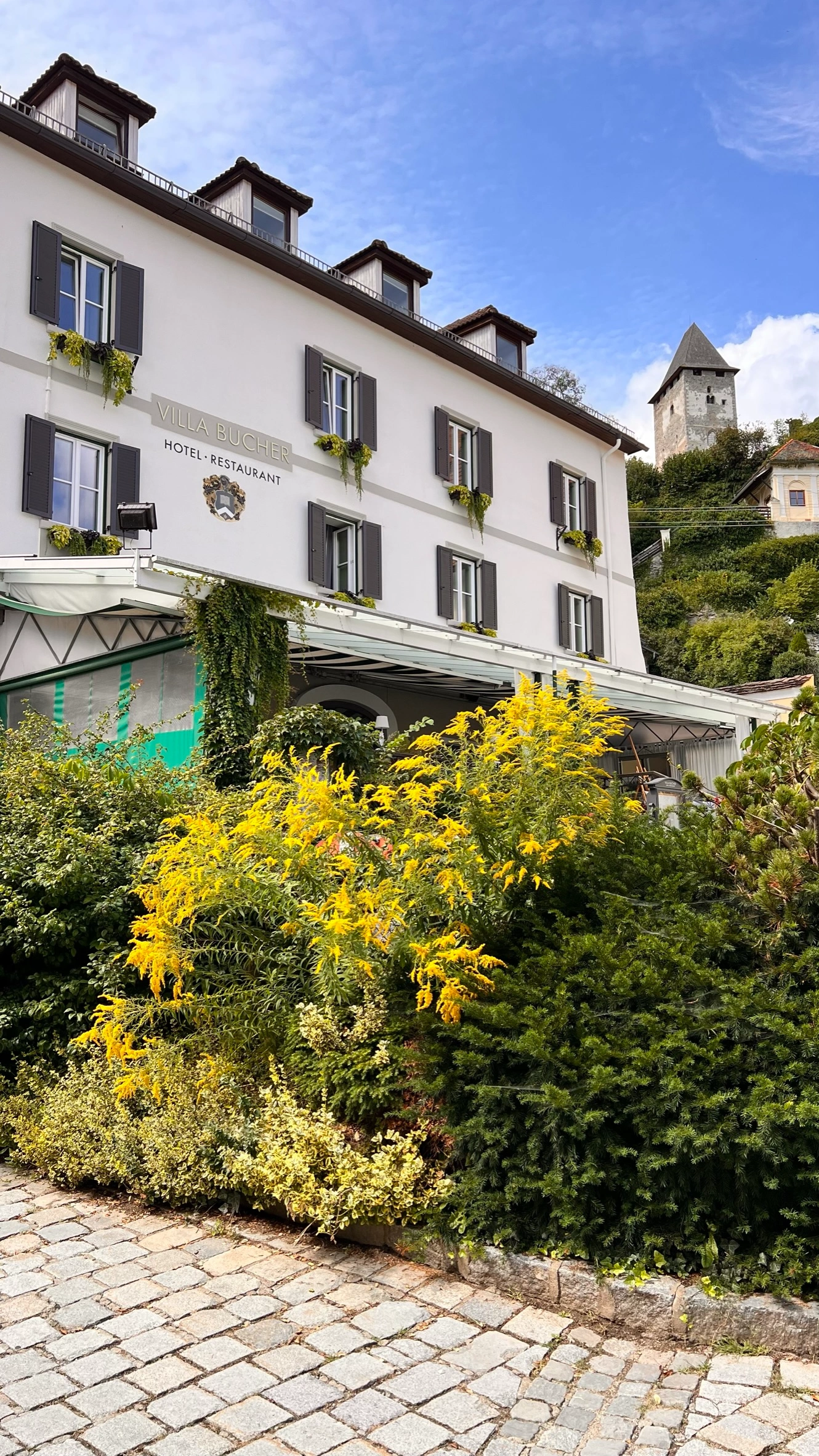
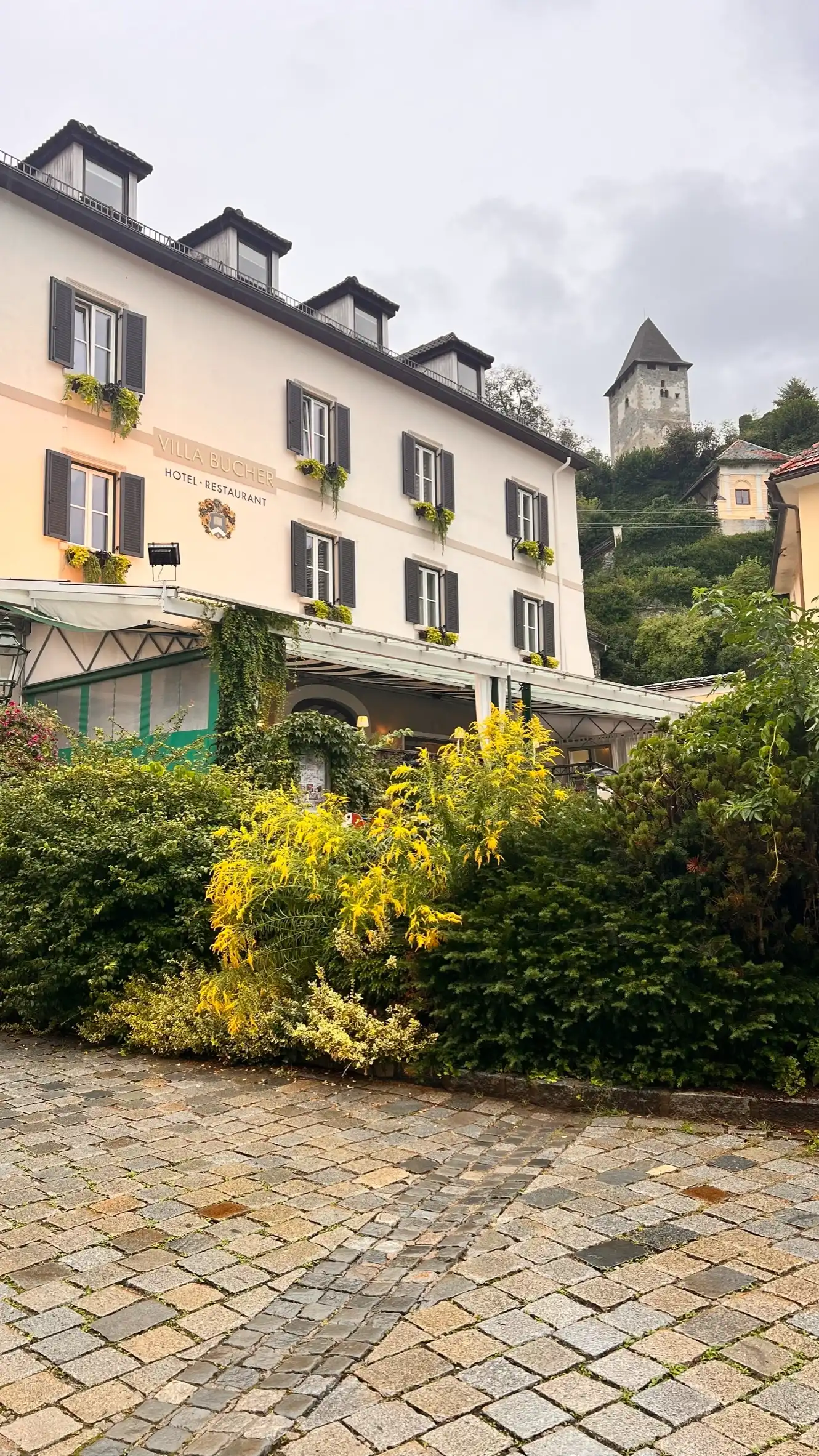
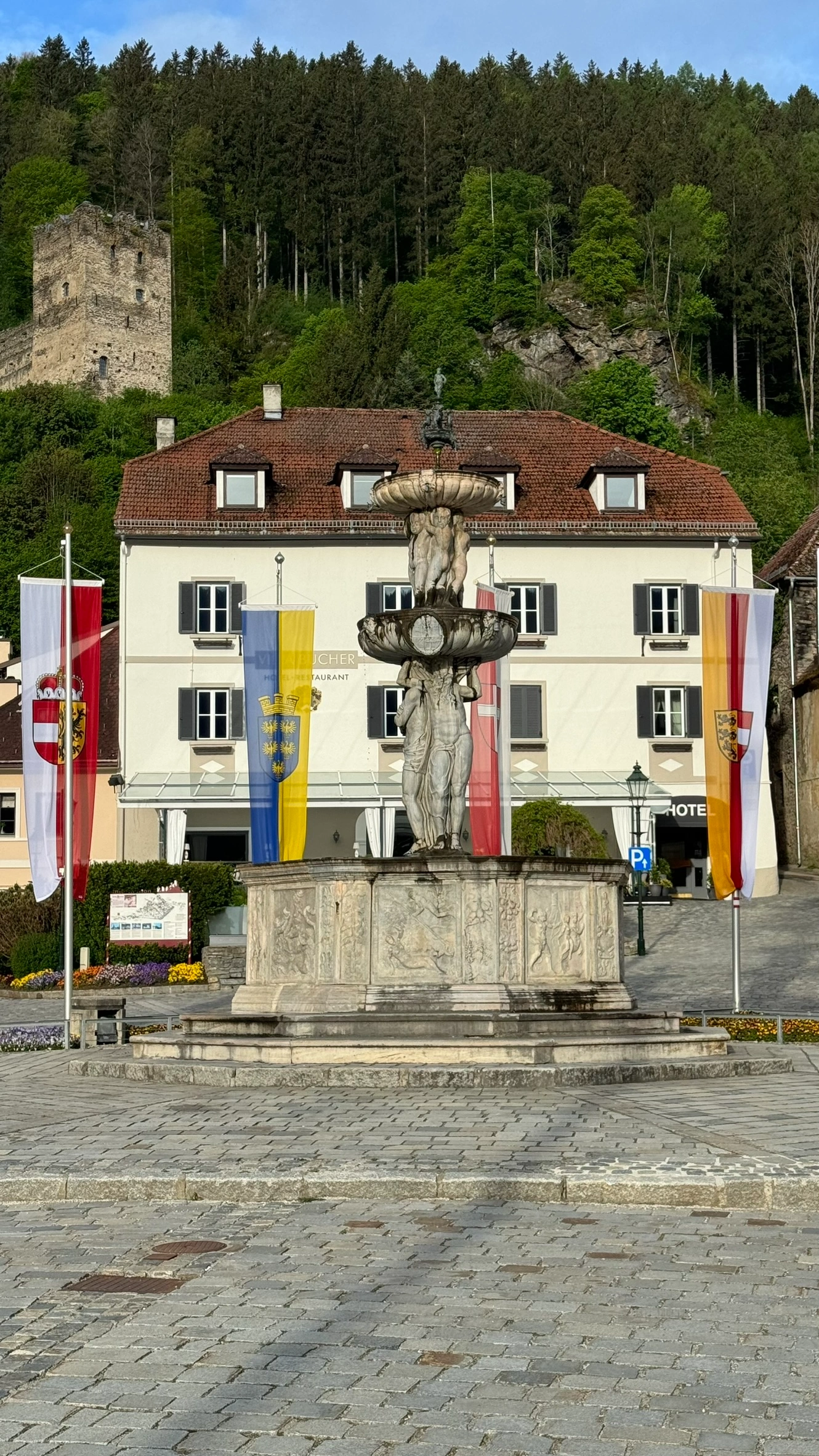
The Villa Bucher, formerly known as the Metnitztalerhof Inn, once served as the mining judge’s house.
The structure overlooks the main square and presents itself as a representative townhouse.
History
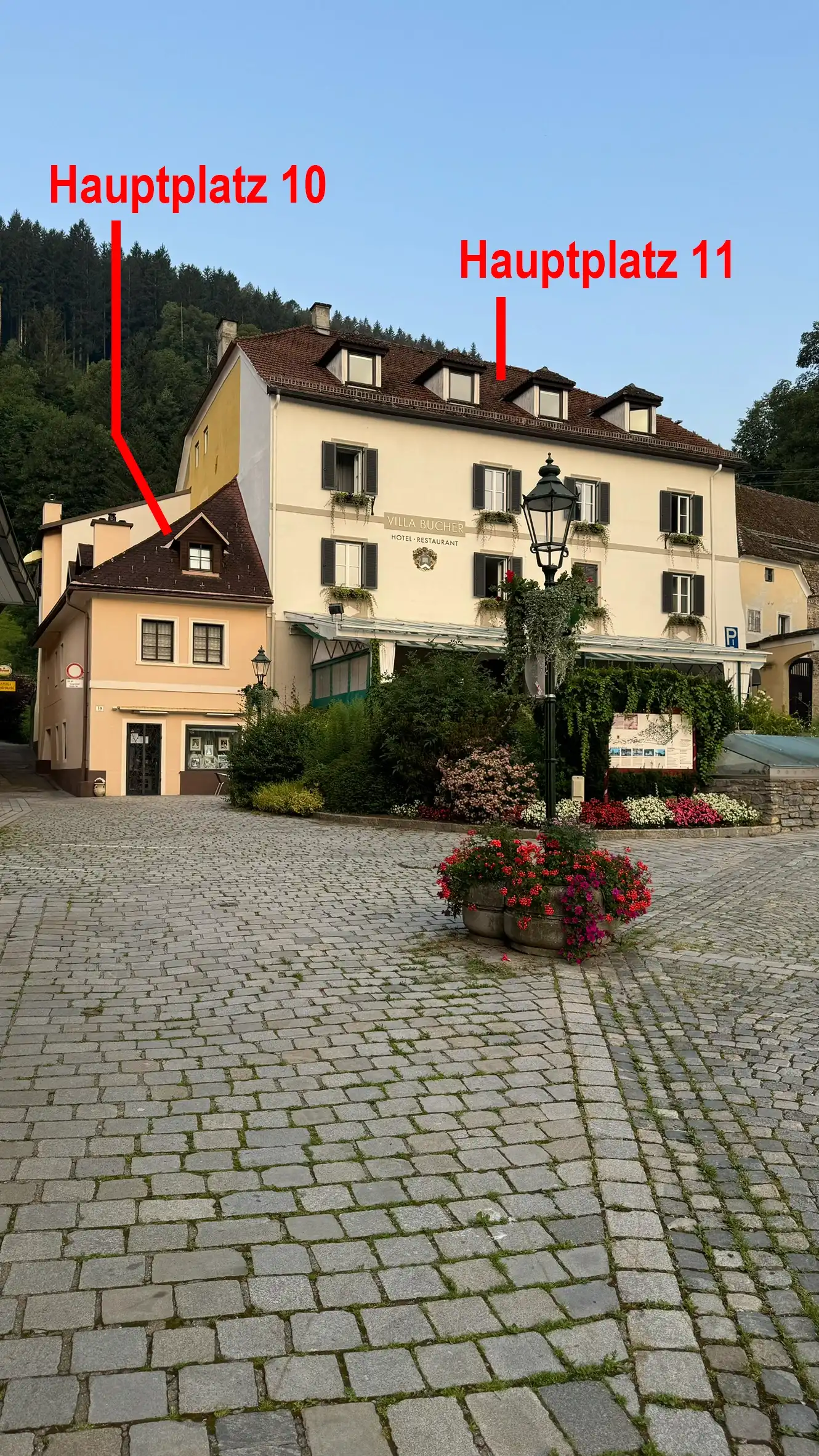
The building originally consisted of two townhouses.
The southern townhouse (formerly House No. 81) was owned by a silk seamster around 1600. From 1735 until the 19th century, this townhouse was in the possession of various master weavers.
According to archival records, the northern townhouse (formerly House No. 82) was owned by a mining judge in 1516.
Architectural History
The structural complex originally consisted of two separate medieval houses dating from the first half of the 13th century.
The northern house was extended to the rear in the 14th century.
Both houses were remodelled mainly in the 16th century.
They were given a unified facade between 1896 and 1898.
In 1967, facade alterations took place.
In 1984, an attic conversion was carried out.
In 1988, the facade underwent further alterations.
Location
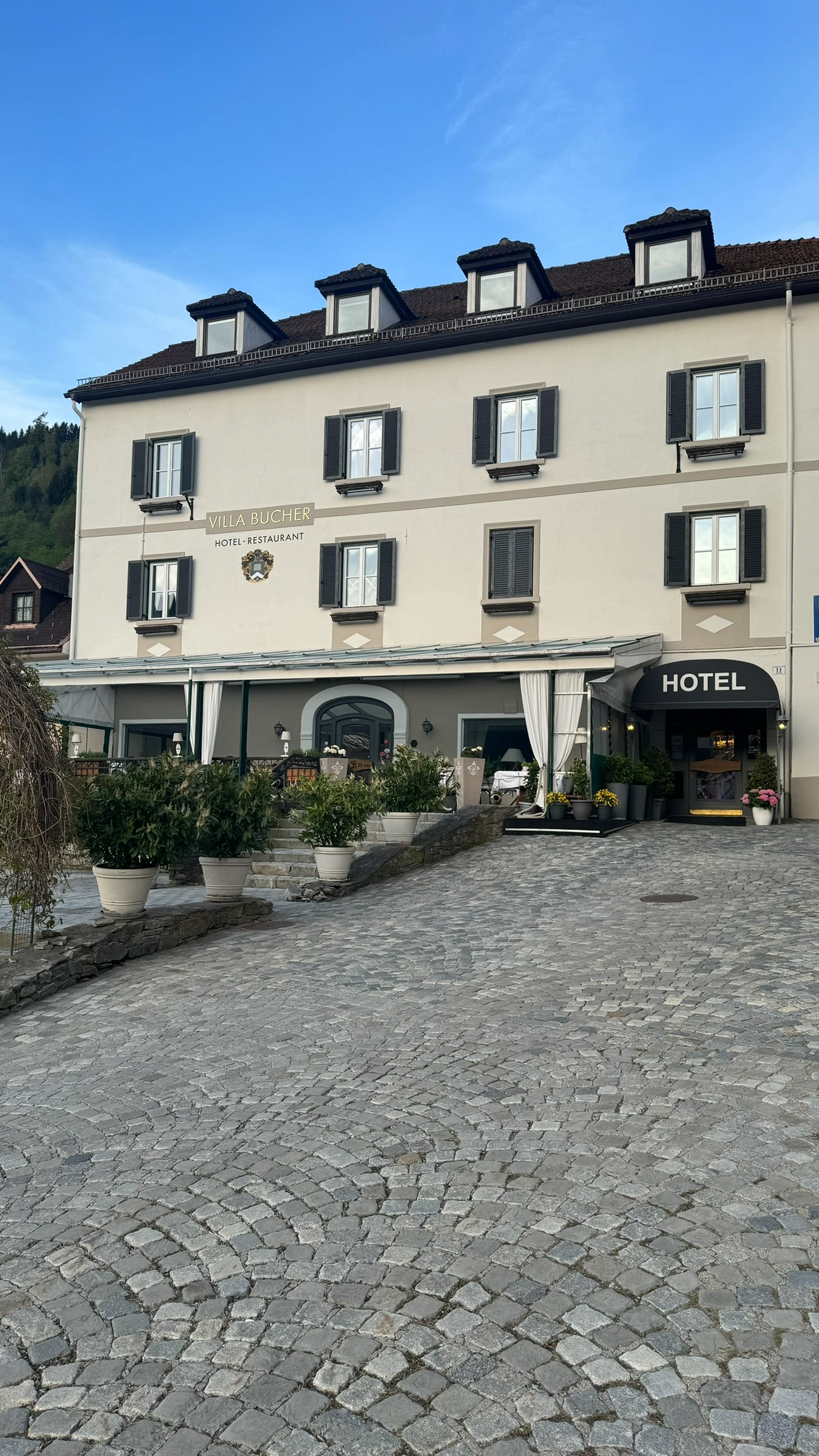
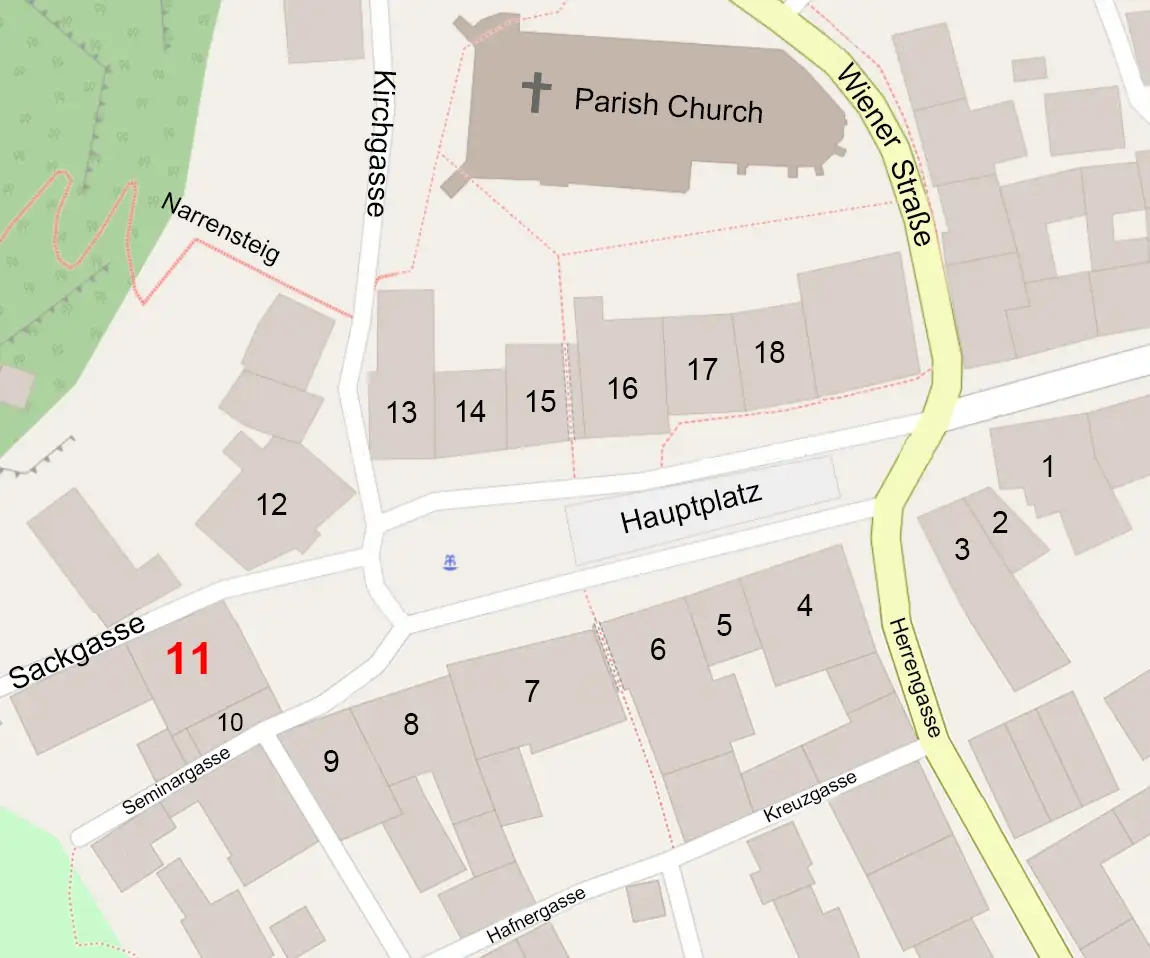
The building stands on a slight elevation and closes the western end of the main square.
Current Function
The historical property at Hauptplatz 11 now houses “Villa Bucher – Hotel & Restaurant”.
Main Square Facing Facade
Style
Since 1988, the facade has featured a simple design in a lightly historicising style.
Storeys
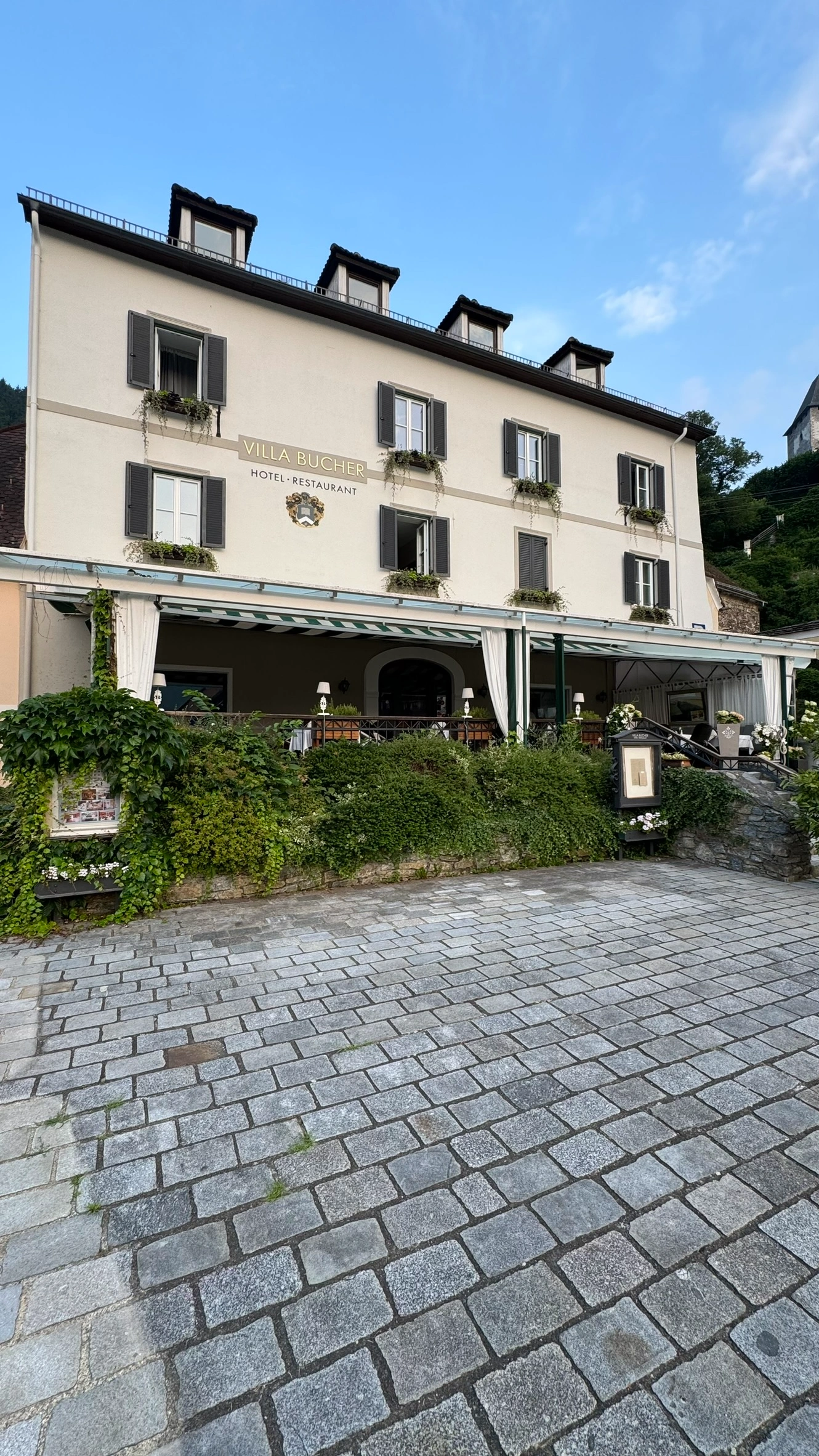
The building now consists of three storeys and an attic level.
Horizontal Articulation
The facade is horizontally articulated by a string course dividing the upper two floors.
Vertical Articulation
The main square facade features four window bays.
Second Floor Windows
The windows are framed by subtle plaster surrounds and have dark shutters. Flower boxes are fixed below the sills.
First Floor Windows
These windows also feature plain plaster surrounds, dark wooden shutters and flower boxes. A rectangular plasterwork panel connects the window sill to a string course below. This panel has a shallow recess in the centre that is shaped like a rhombus.
Ground Floor
At ground floor level, large glazed windows and an arched doorway face the porch. A modern glass canopy extends over the porch.
Covered Entrance
A covered entrance to the right of the porch provides access to the building from the square.
Facade Lettering and Coat of Arms
Facade lettering and coat of arms on the facade recall the building’s traditional function as an inn.
North-West Facade
On the north-west facade, masonry dating from the 13th century is exposed at ground-floor level.
Roof
The building is covered by a tiled jerkinhead roof. This roofing type combines features of gabled and hipped roofs. As the design is more complex, it is more expensive to build than a standard gable or hip roof. However, it offers more attic space and greater wind stability. The roof is punctuated by prominent dormer windows, which bring additional light into the attic.
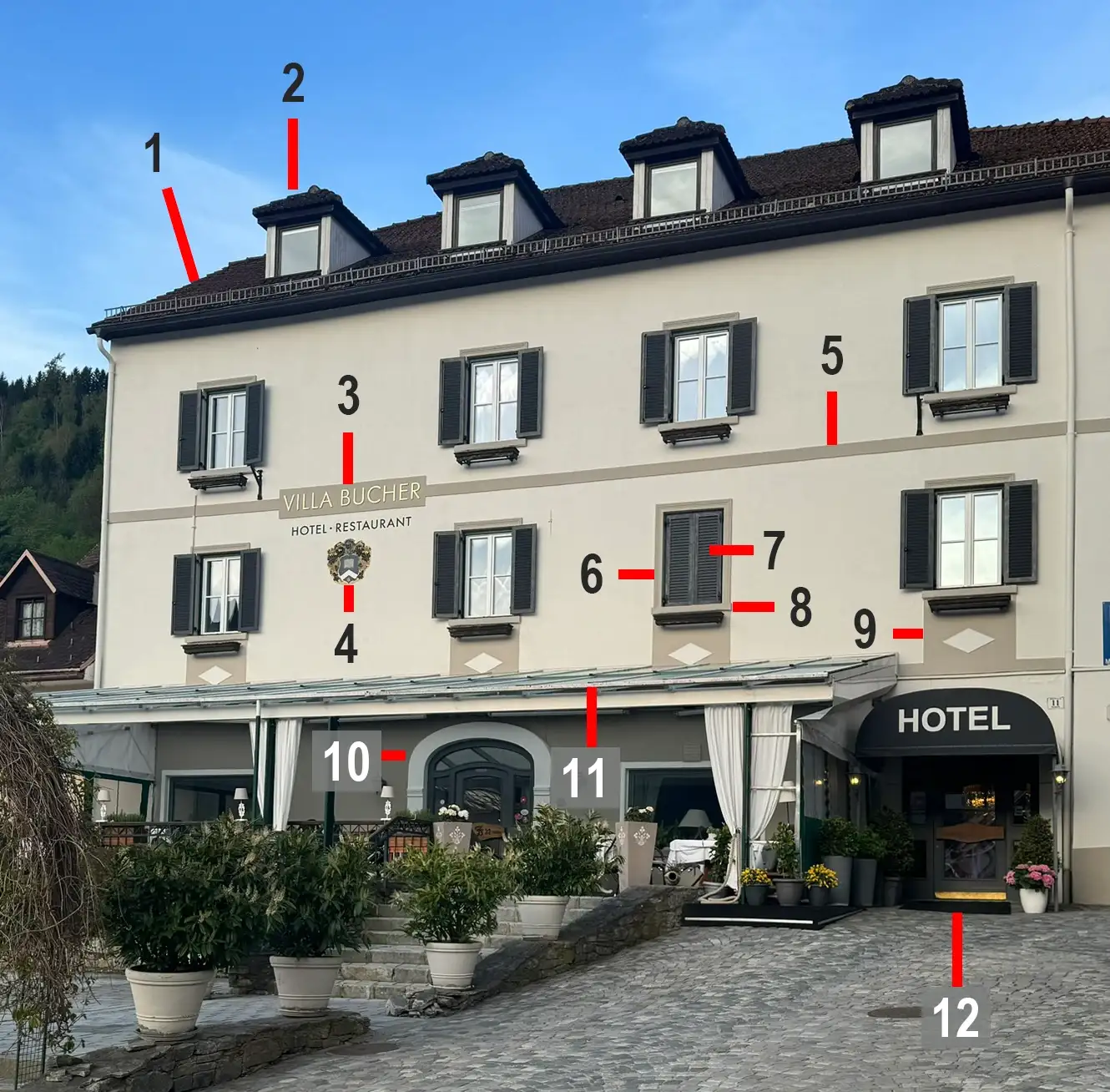
1 tiled jerkinhead roof | 2 prominent dormer
3 | plasterwork lettering | 4 coat of arms
5 string course | 6 plain plaster surround
7 dark wooden shutters | 8 window sill
9 rectangular plasterwork panel with central recessed rhombus
10 basket-arched doorway | 11 porch
12 covered entrance
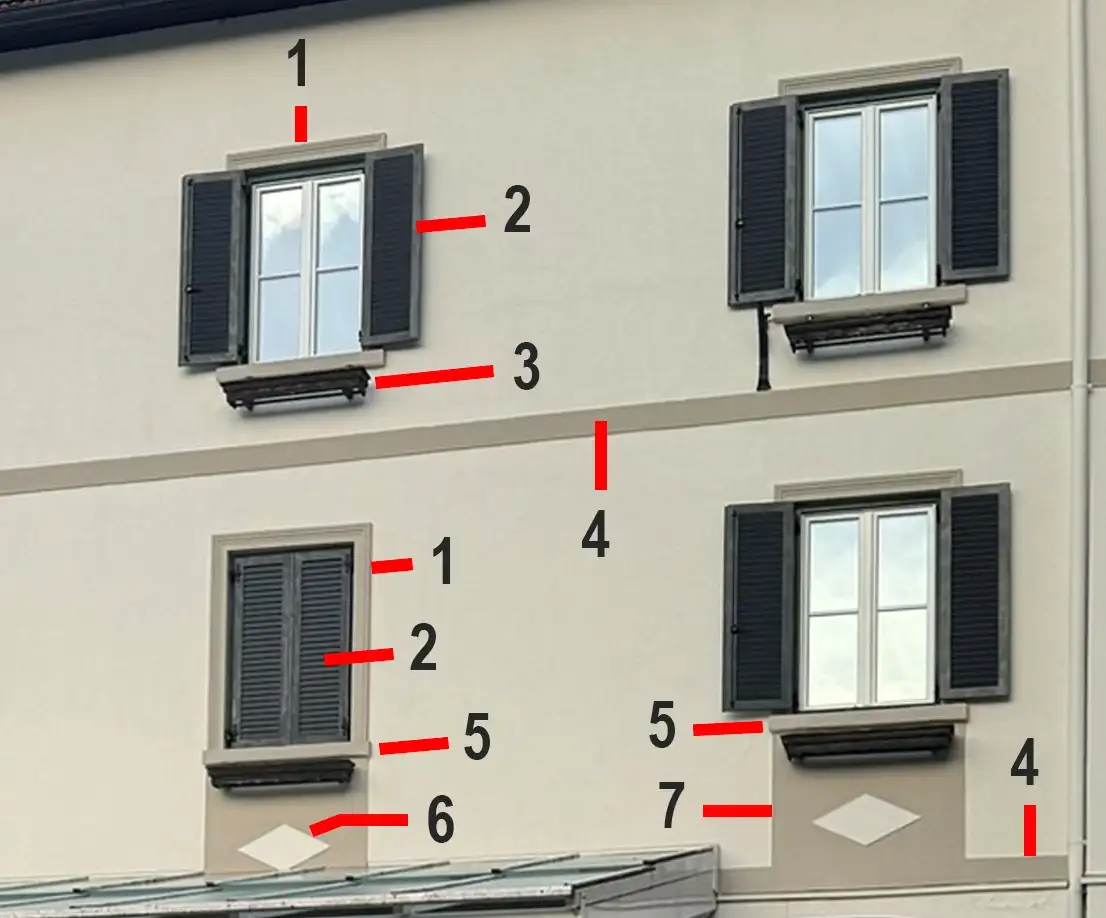
1 plain plaster surround | 2 dark wooden shutters
3 flower box | 4 string course | 5 window sill
6 central recessed rhombus
7 rectangular plasterwork panel