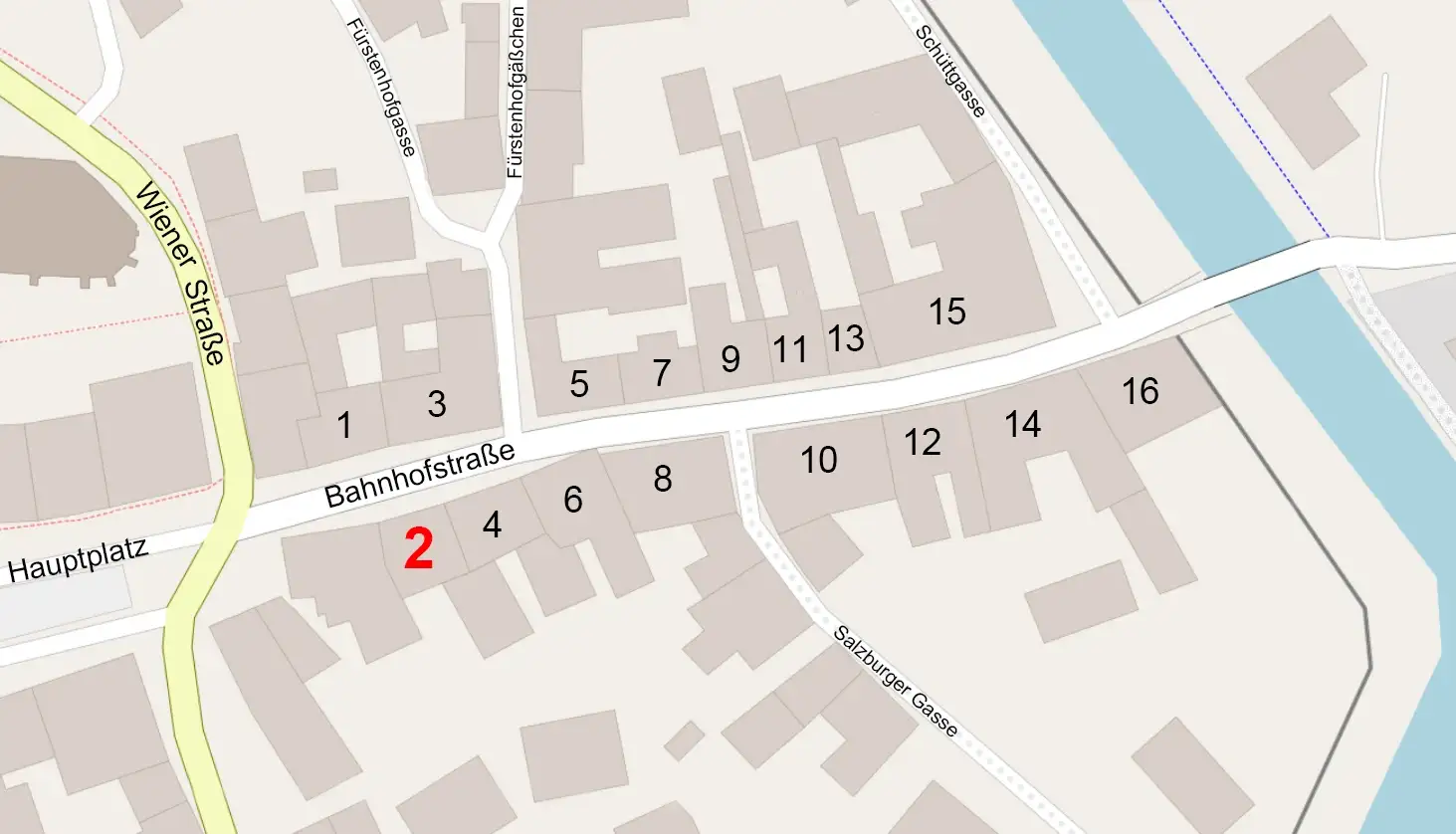
Bahnhofstraße 2 | Townhouse
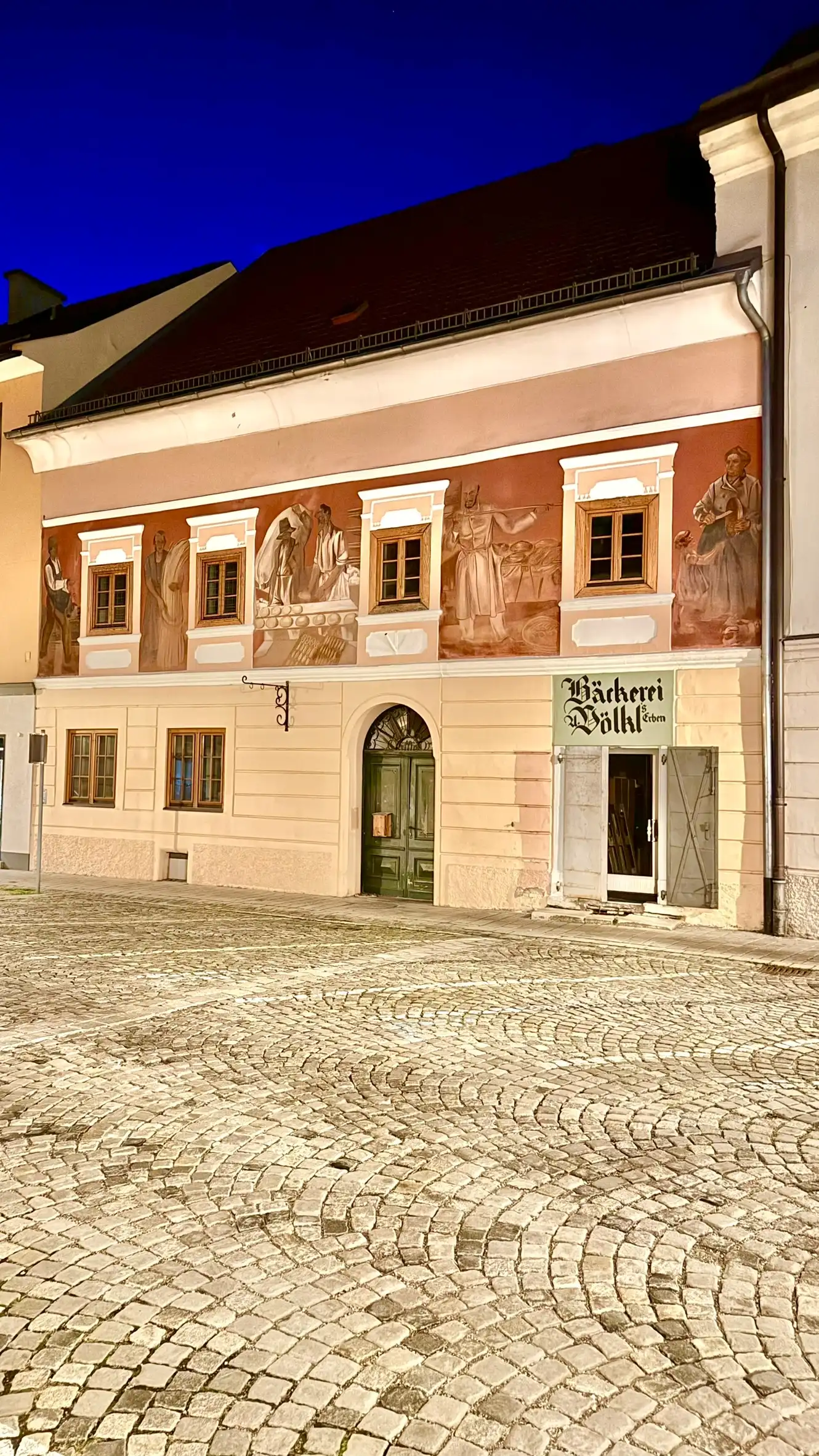
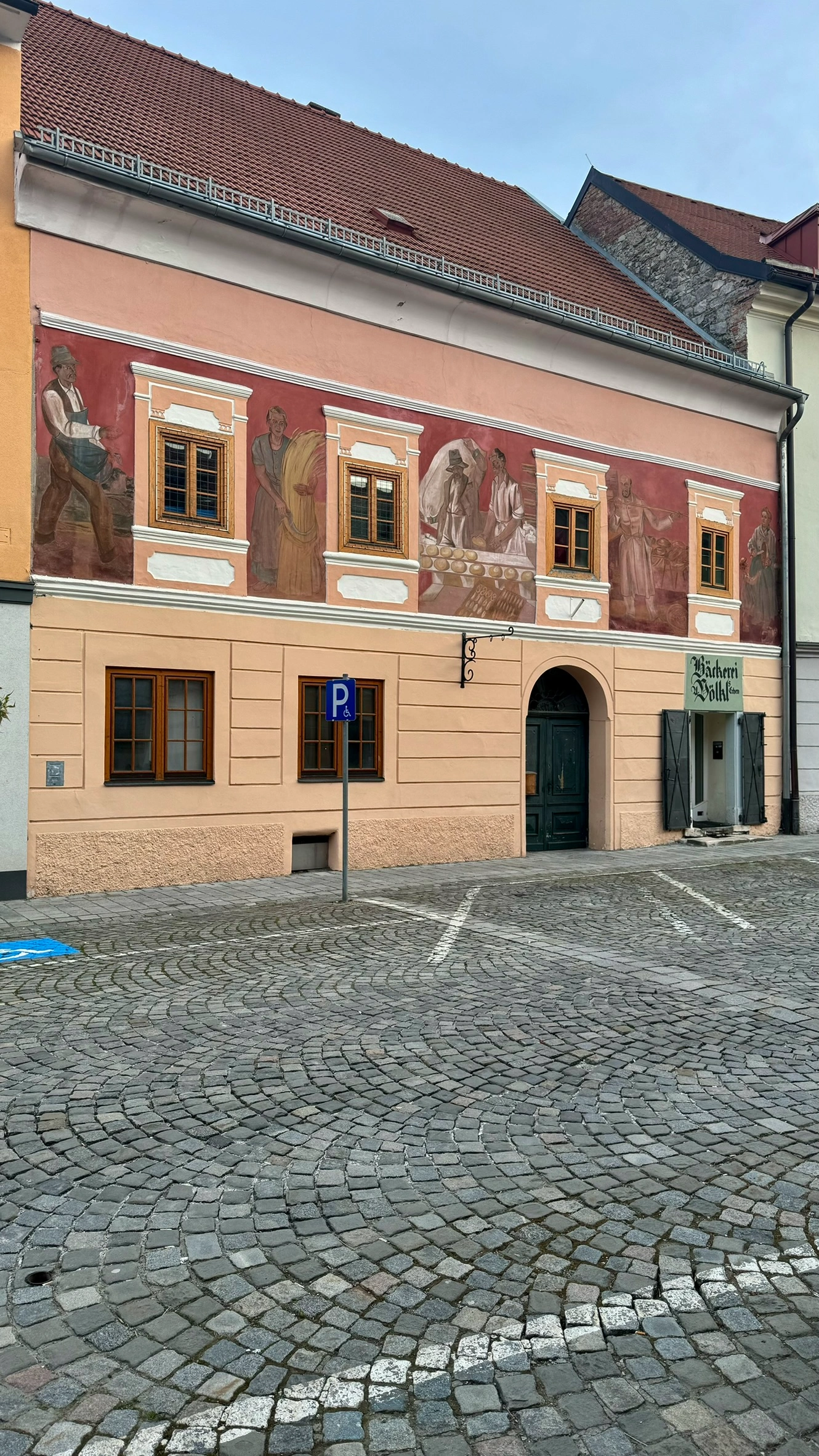
The building at Bahnhofstraße 2 presents a two-storey facade typical of 19th-century Carinthian townhouse architecture.
History
From the early 18th century until the 20th century, archival records attest that the house remained continuously in the ownership of a baker, reflecting a long-standing craft tradition.
Architectural History
The building originally formed a unified complex together with No. 4 Bahnhofstraße (today partly replaced by a modern structure).
The core fabric of the house dates back to the 16th century.
Architectural Description | Exterior
Facade
The historicist facade dates from the second half of the 19th century.
It is rendered in a soft, pastel salmon-peach hue, contrasted by white plasterwork.
Articulation
Two continuous cornice bands are positioned above and below the first-floor windows.
Together, the cornices frame a decorative zone featuring five frescoes and four windows arranged alternately.
The lower cornice also marks the division between the ground and first floors.
First Floor
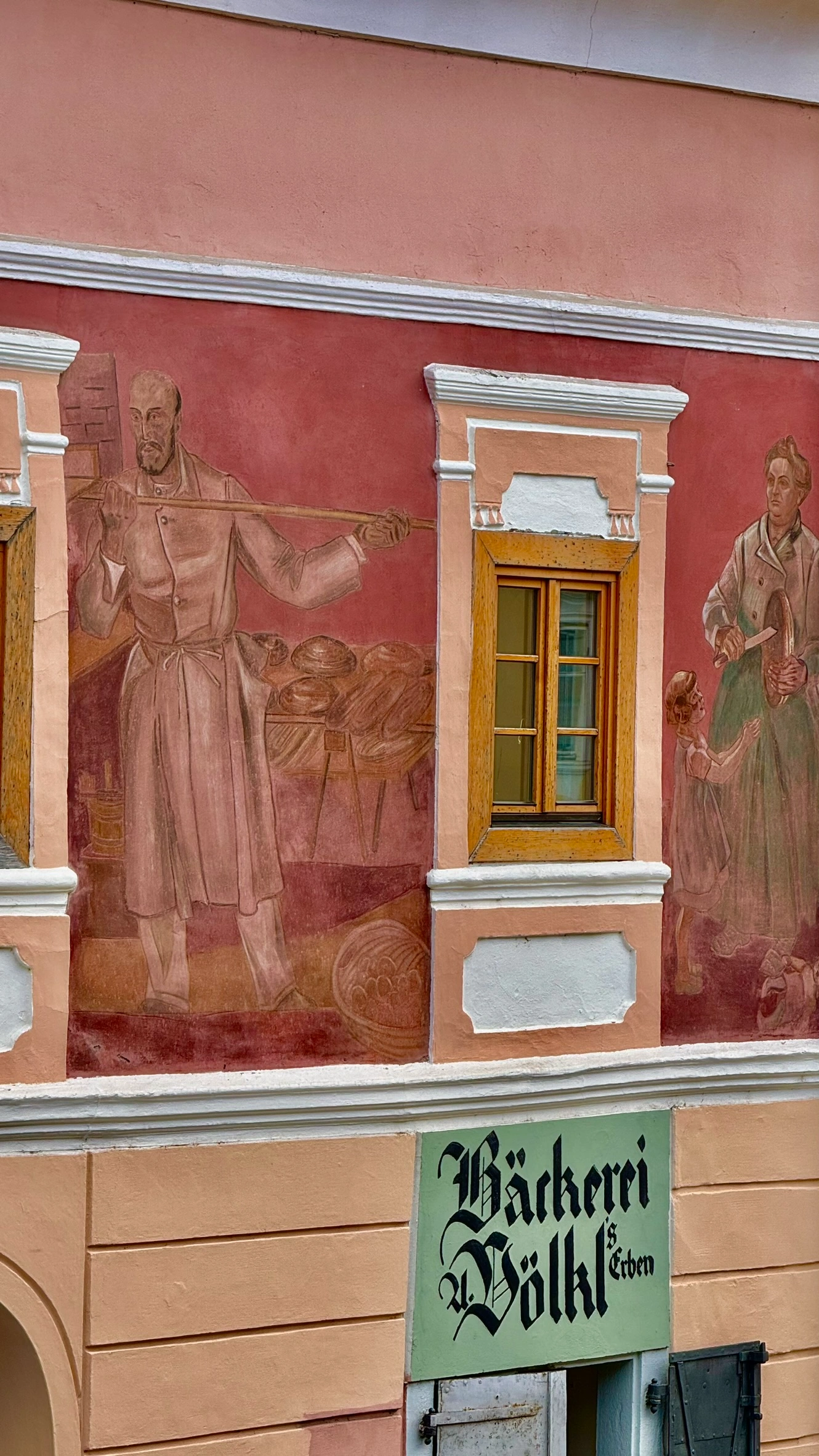
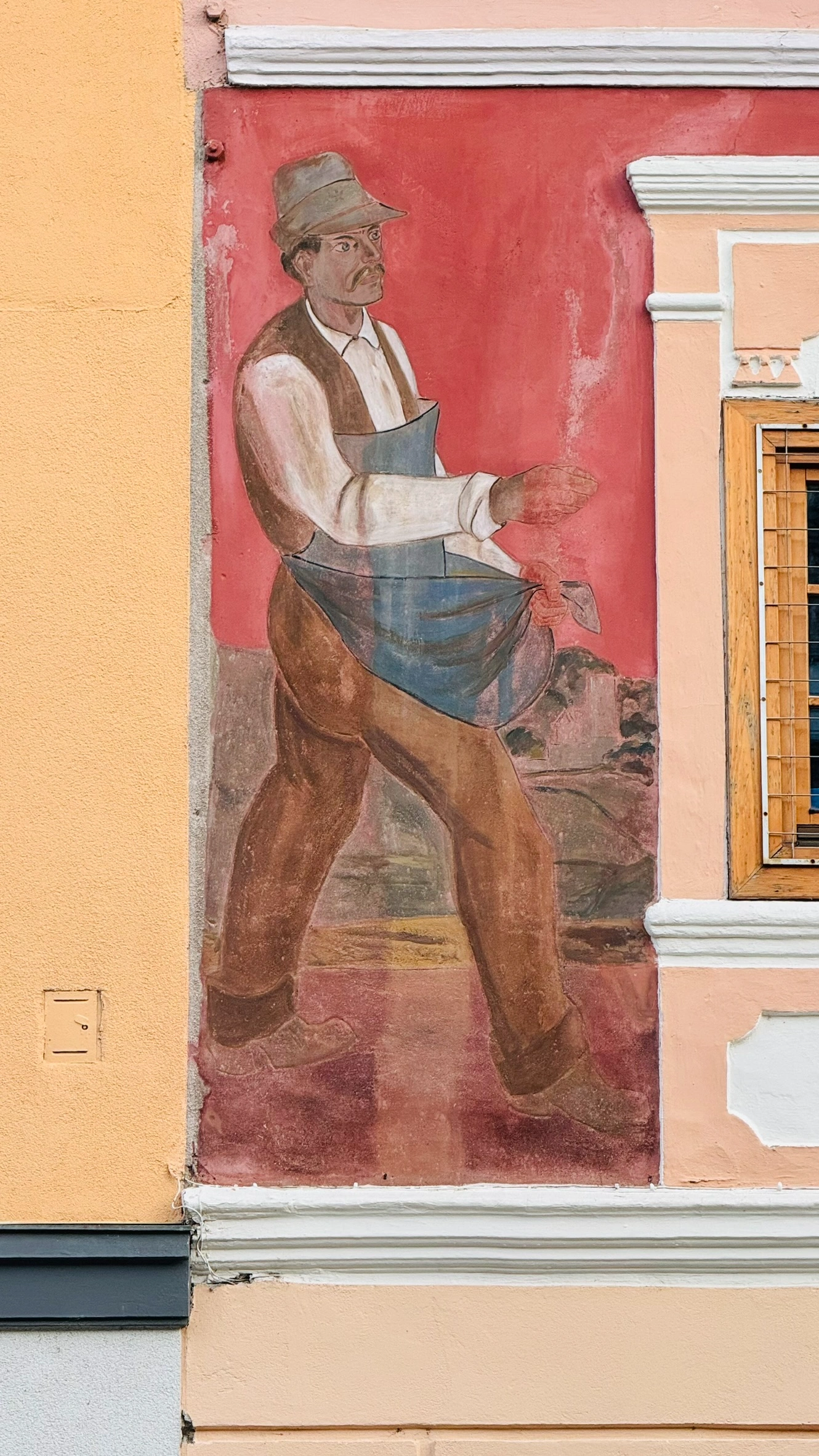
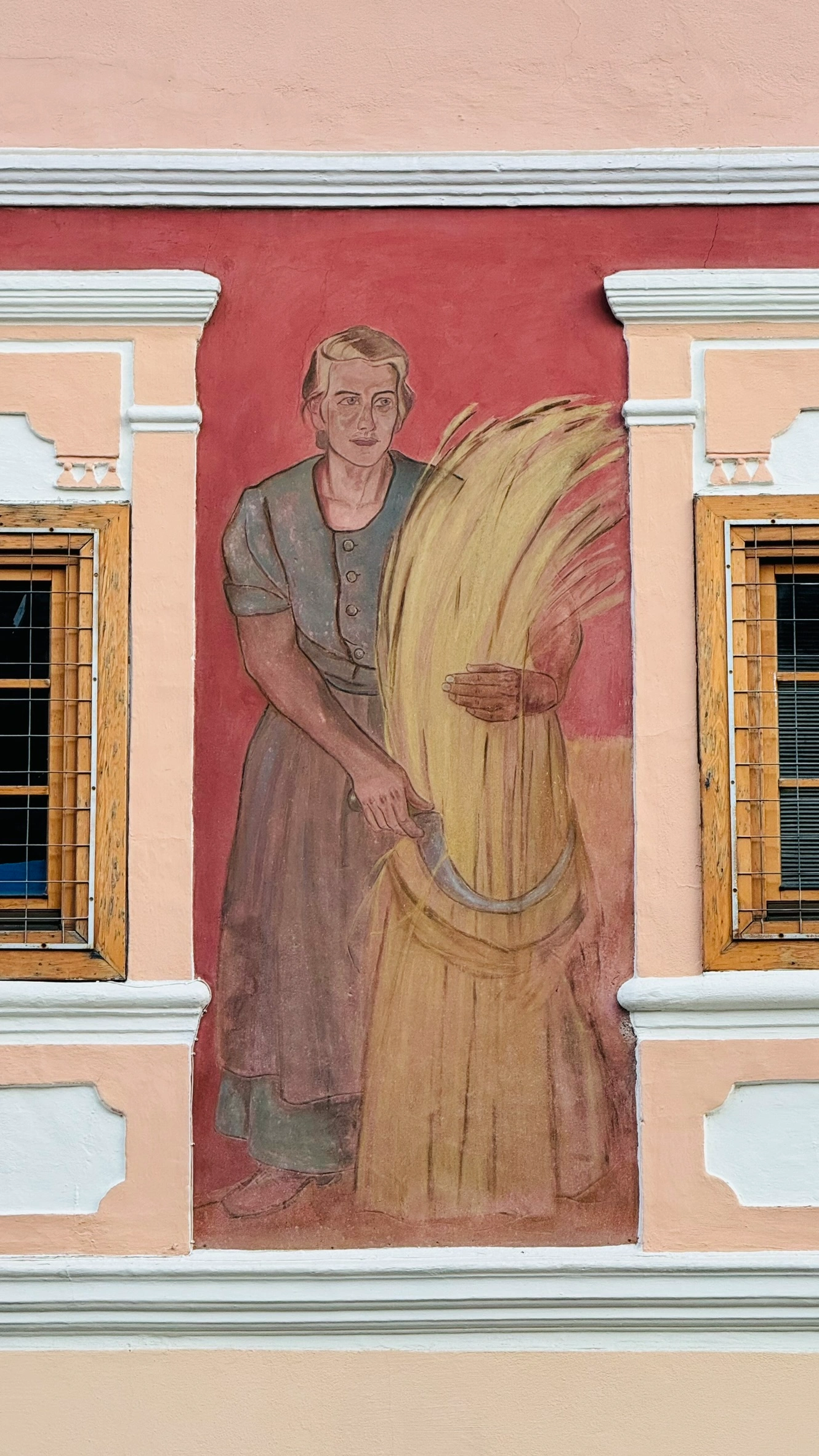
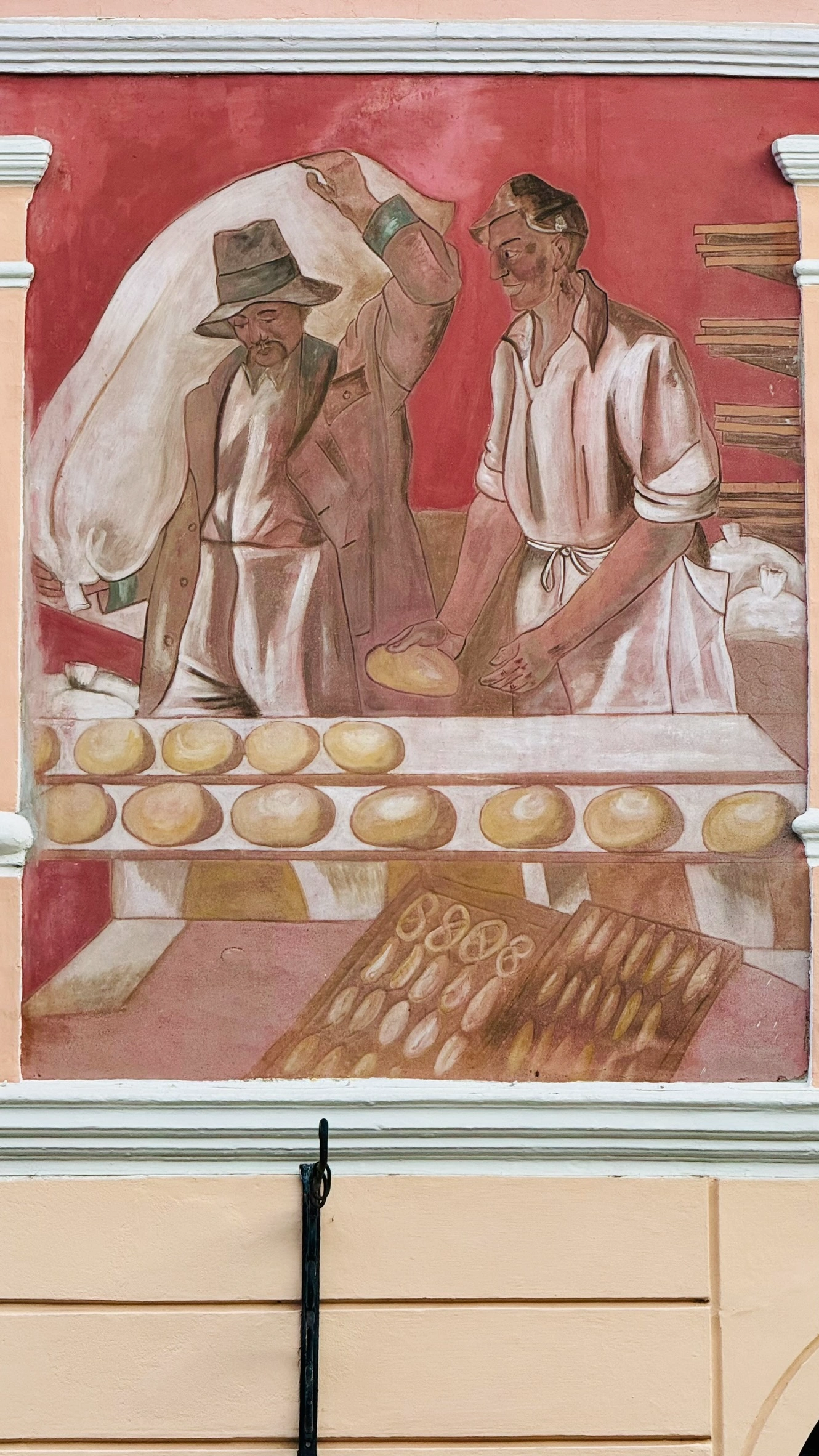
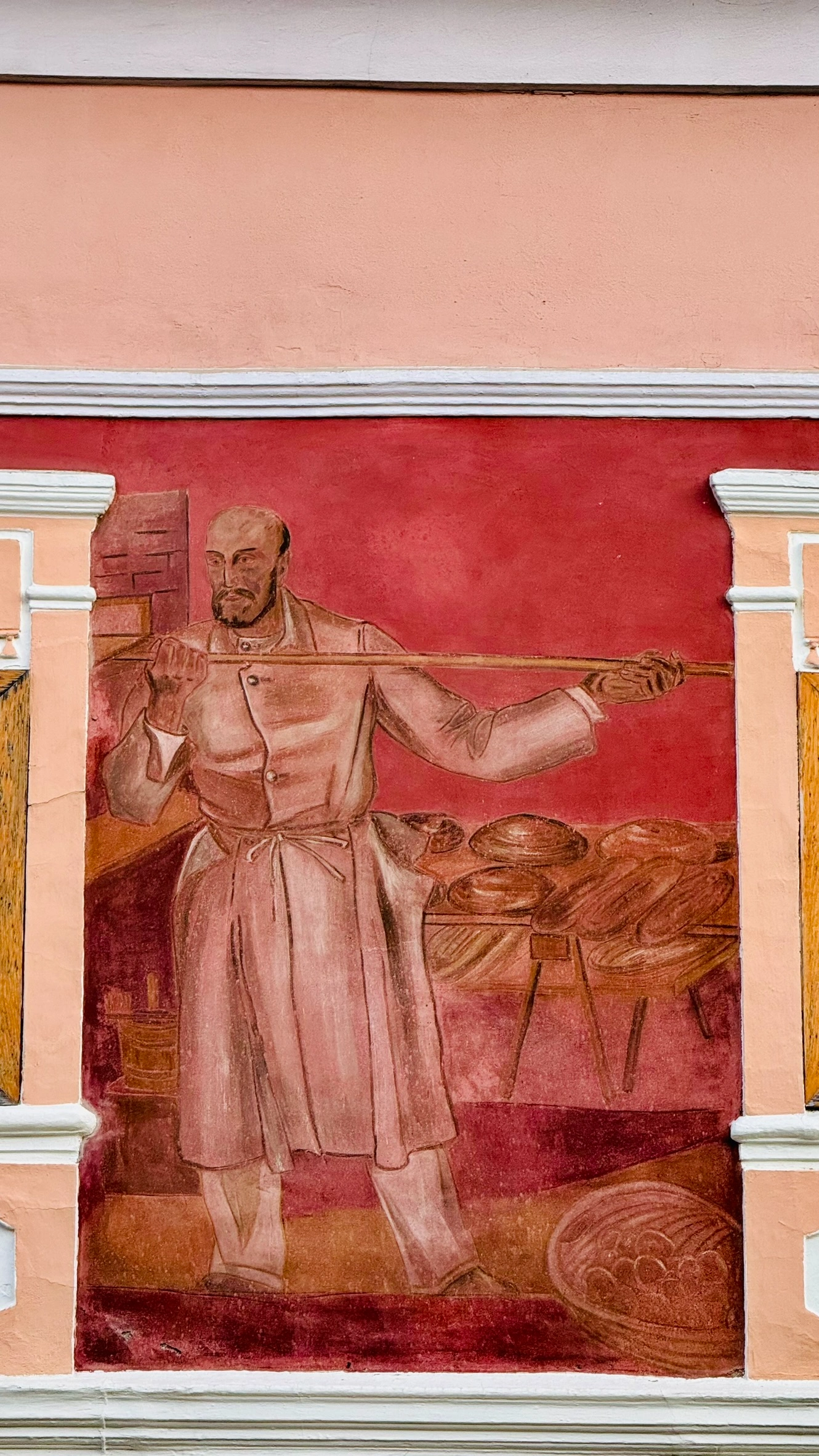
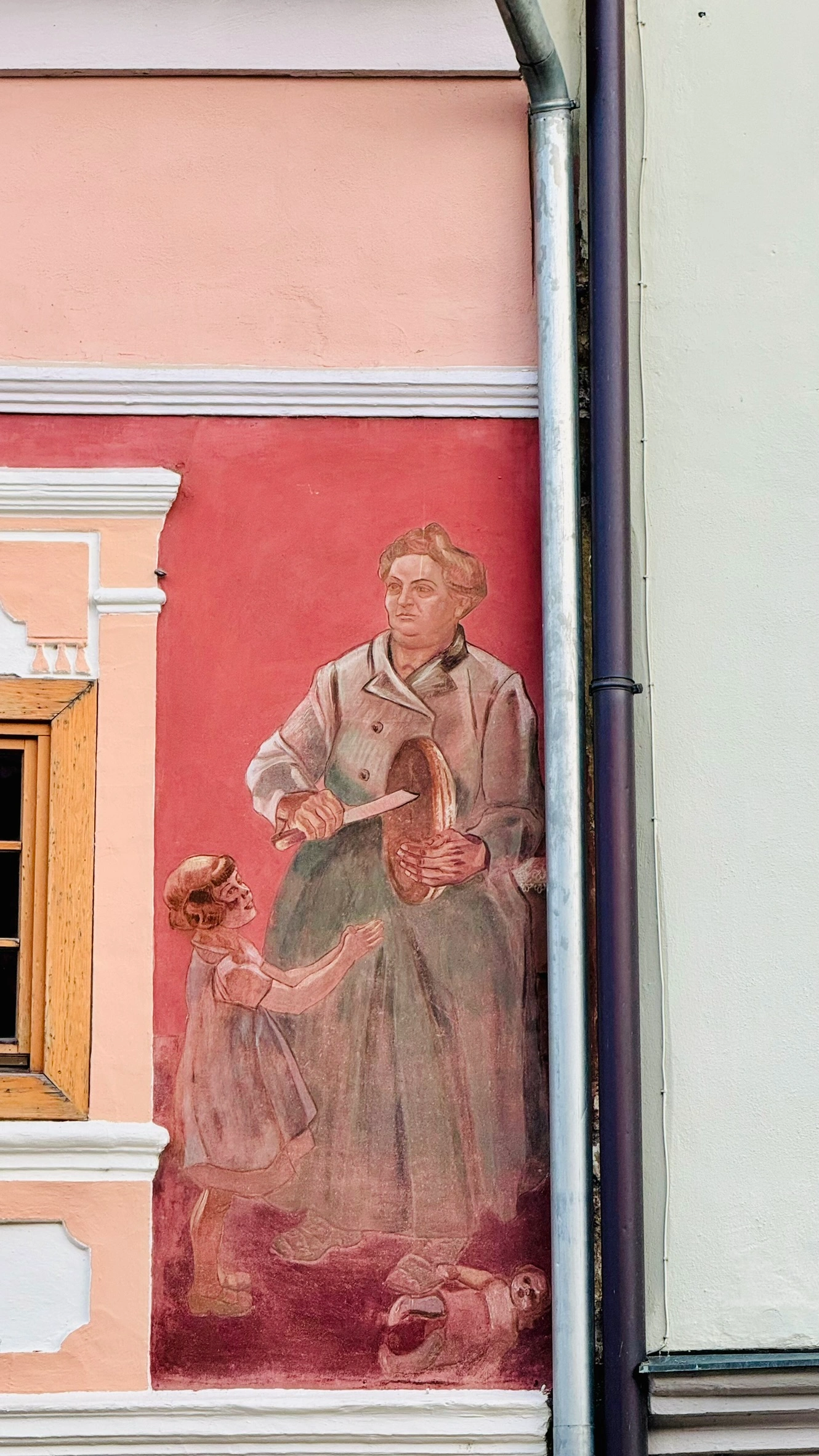
The frescoes in the decorative zone depict five scenes illustrating the process of breadmaking. They were created around 1950.
Ground Floor
The rusticated ground floor contains two square windows with internal iron grilles, dating from the 19th century.
In the third axis from the left is a round-arched portal with timber door leaves and a wrought-iron grille within the arch, dating from 1901.
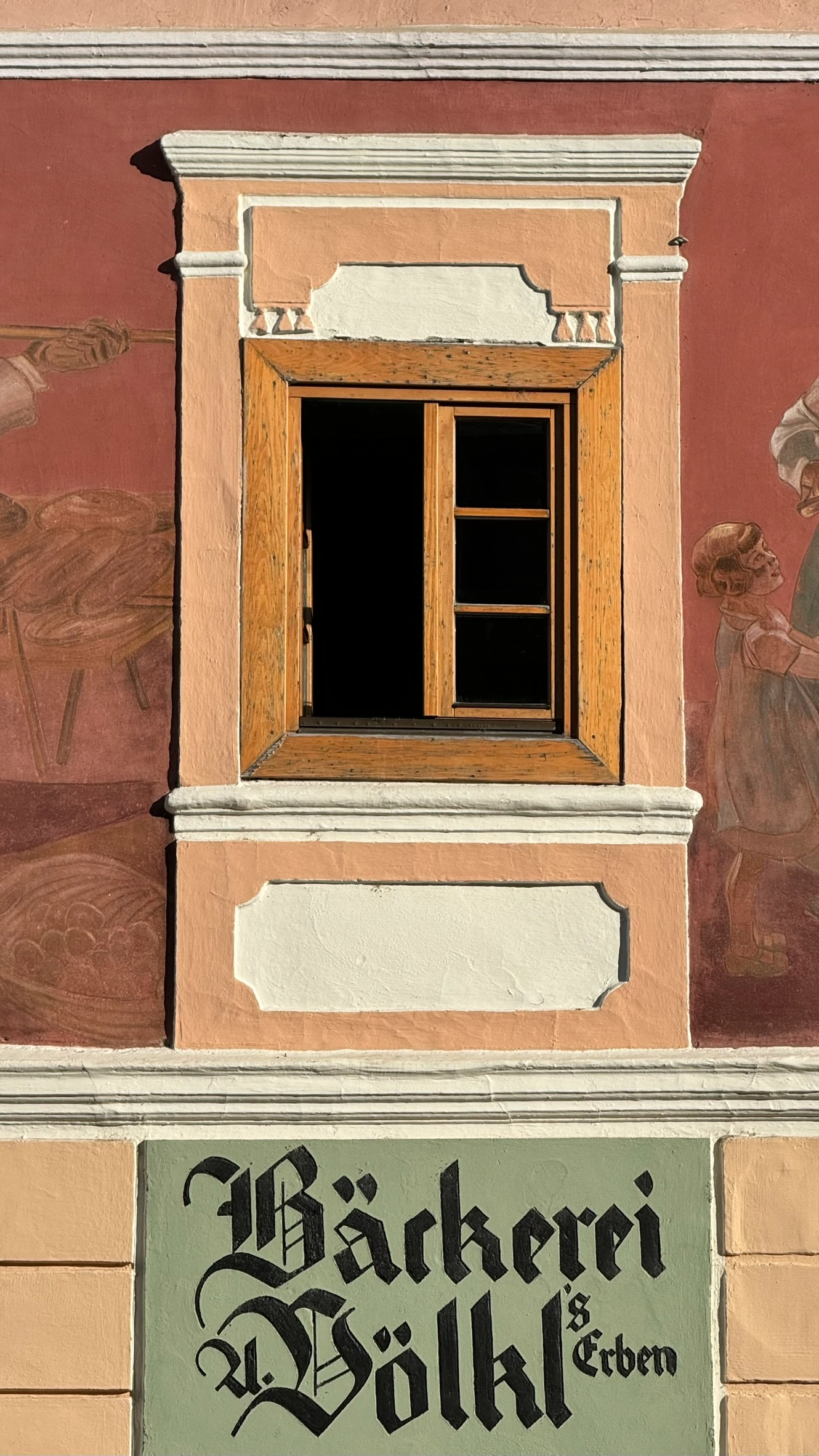
In the fourth axis is a rectangular portal surmounted by a traditional sign reading “Bäckerei Völkl”. The sign indicates that a historical bakery once operated here.
Ground Floor Rustication
The ground floor displays plasterwork rustication – an imitation of stone masonry created by horizontally aligned, elongated plaster panels.
The rusticated plinth zone has a roughened texture, enhancing the building’s visual solidity at street level.
Roof
The building is crowned by a steeply pitched saddle roof. It is covered with traditional red tiles.
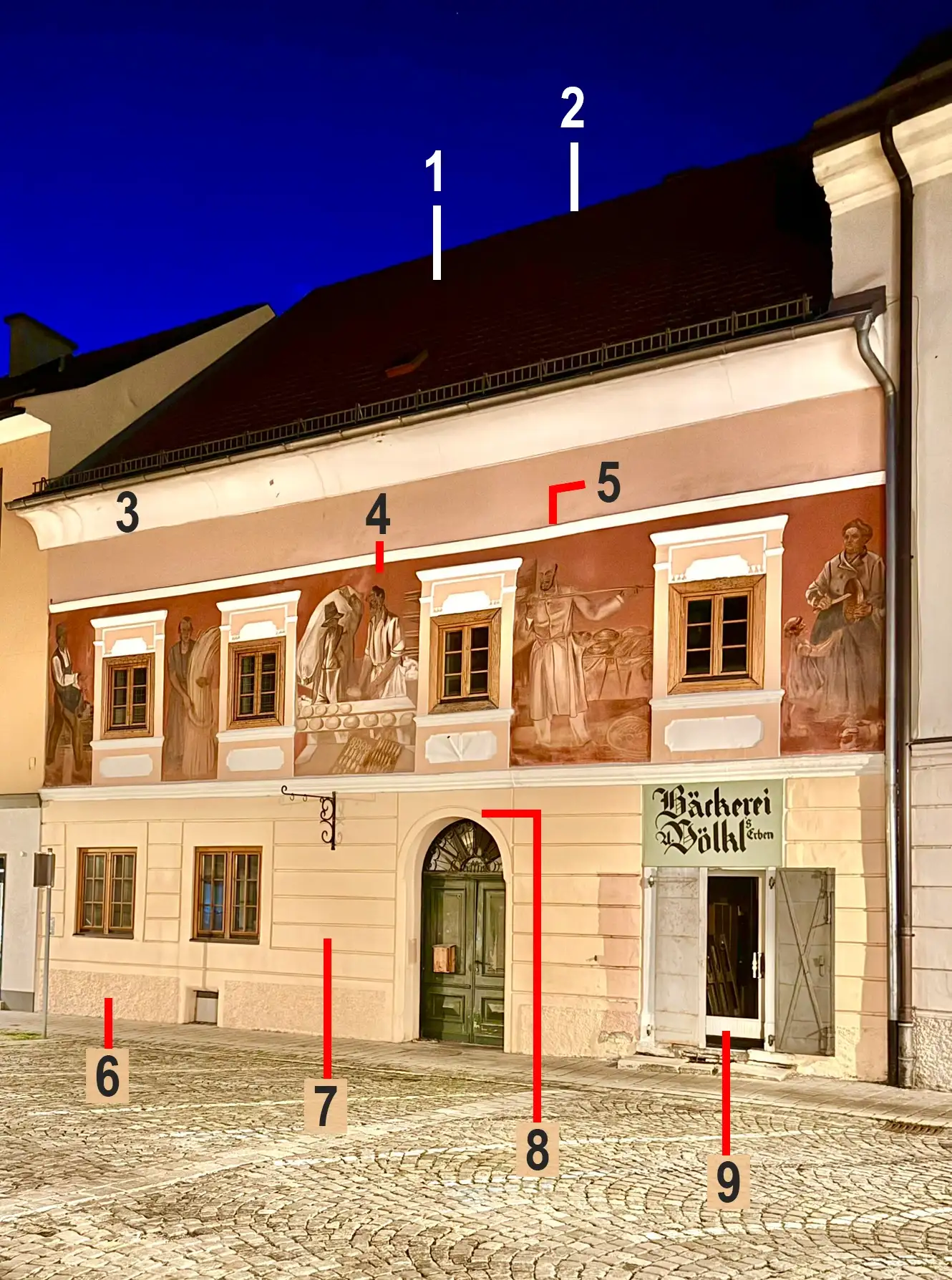
1 saddle roof | 2 ridge | 3 broad eaves moulding |
4 frescoes (making of bread) | 5 cornice |
6 coarse plasterwork rustication |
7 banded rustication | 8 round-arched portal |
9 shopfront installation
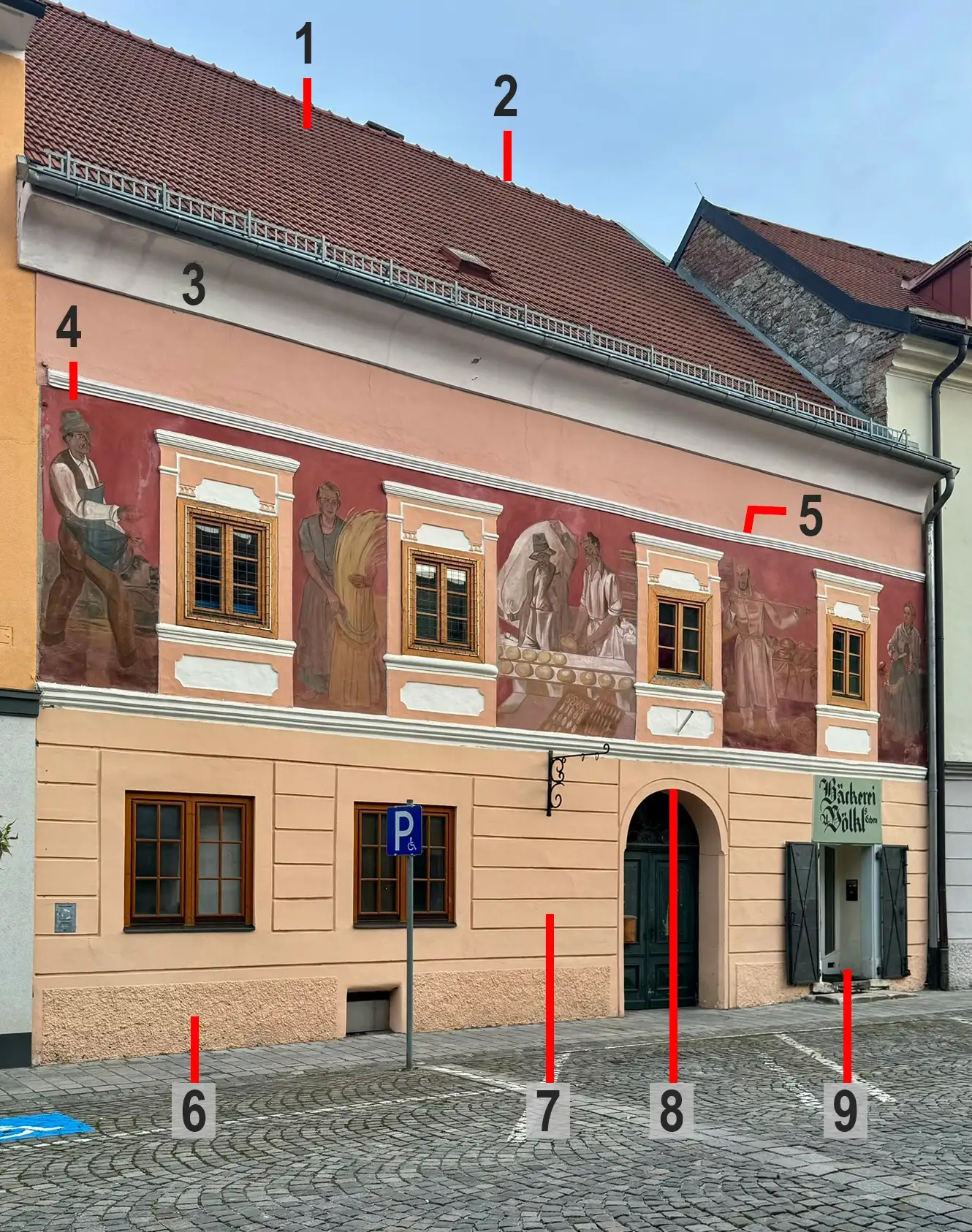
1 saddle roof | 2 ridge | 3 broad eaves moulding |
4 frescoes (making of bread) | 5 cornice |
6 coarse plasterwork rustication |
7 banded rustication | 8 round-arched portal |
9 shopfront installation
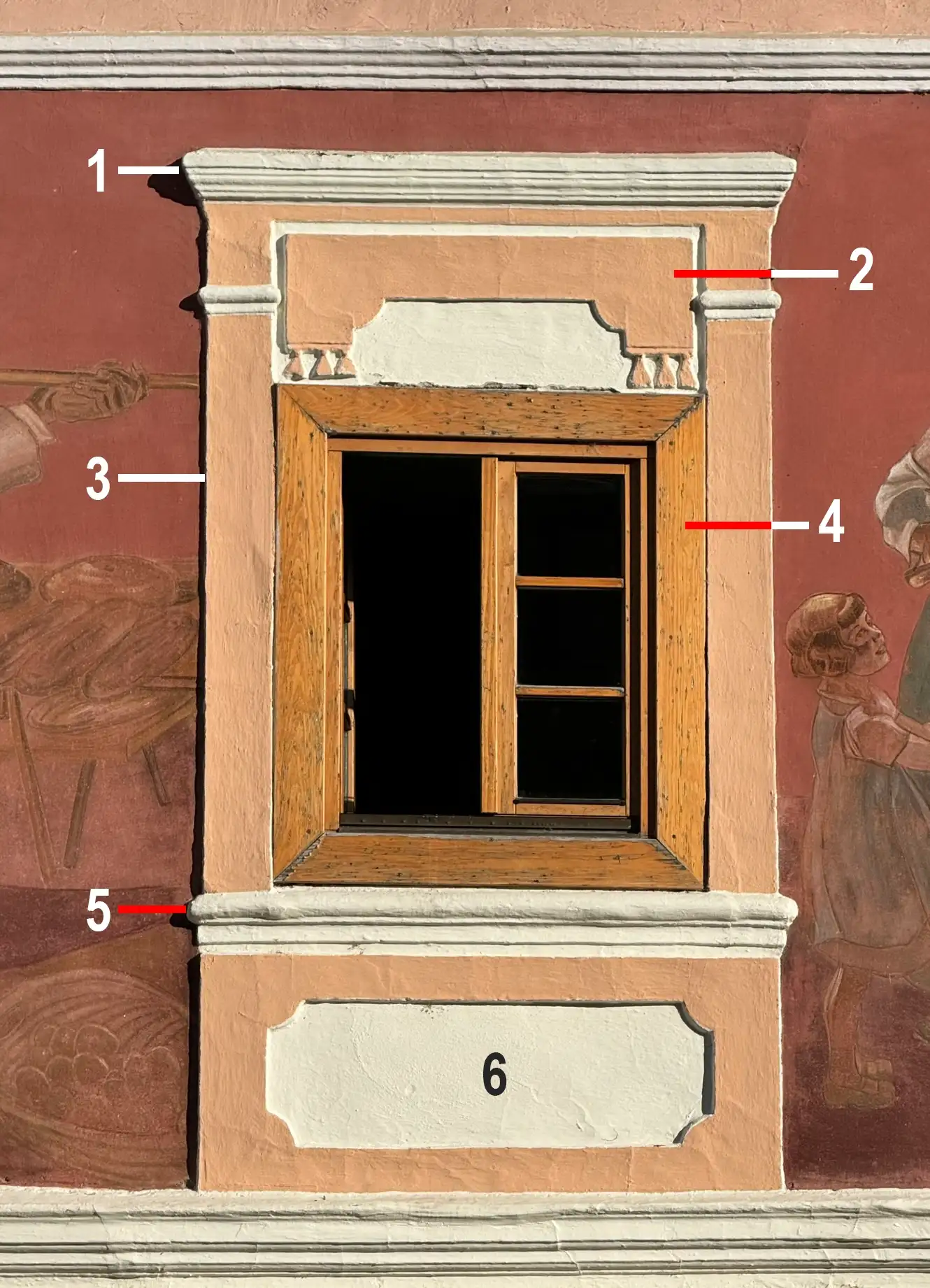
1 profiled window cornice |
2 plasterwork ornamentation |
3 window surround | 4 wooden window frame |
5 sill course | 6 decorated apron
Window Surround and Plasterwork
Window Cornice
The entire plasterwork window ensemble is crowned by a profiled white window cornice that projects slightly from the wall.
Plasterwork Above the Window
Above the window, a central white recessed field contains a peach-coloured decorative moulding with a tassel motif.
Two Vertical Pilaster Strips
The plasterwork window surround has two peach-coloured pilaster strips on either side of the window frame.
Plasterwork Below the Window
Below the window, a projecting white plaster moulding forms a sill course. Beneath this, there is a peach-coloured plaster panel with a central recessed white field.
Five Murals Illustrating the “Making of Bread“
On the first floor, five mural panels are interspersed with four rectangular windows. The frescoes depict the stages in the making of bread. The figures are rendered in warm, earthy tones – ochres, browns and soft reds – set against a deep red background, creating a harmonious visual rhythm across the facade.
Mural sequence (from left to right, when facing the facade):
1 | Planting seeds
2 | Harvesting
3 | Preparing the dough
4 | Baking the bread in an oven
5 | Consuming the bread loaf