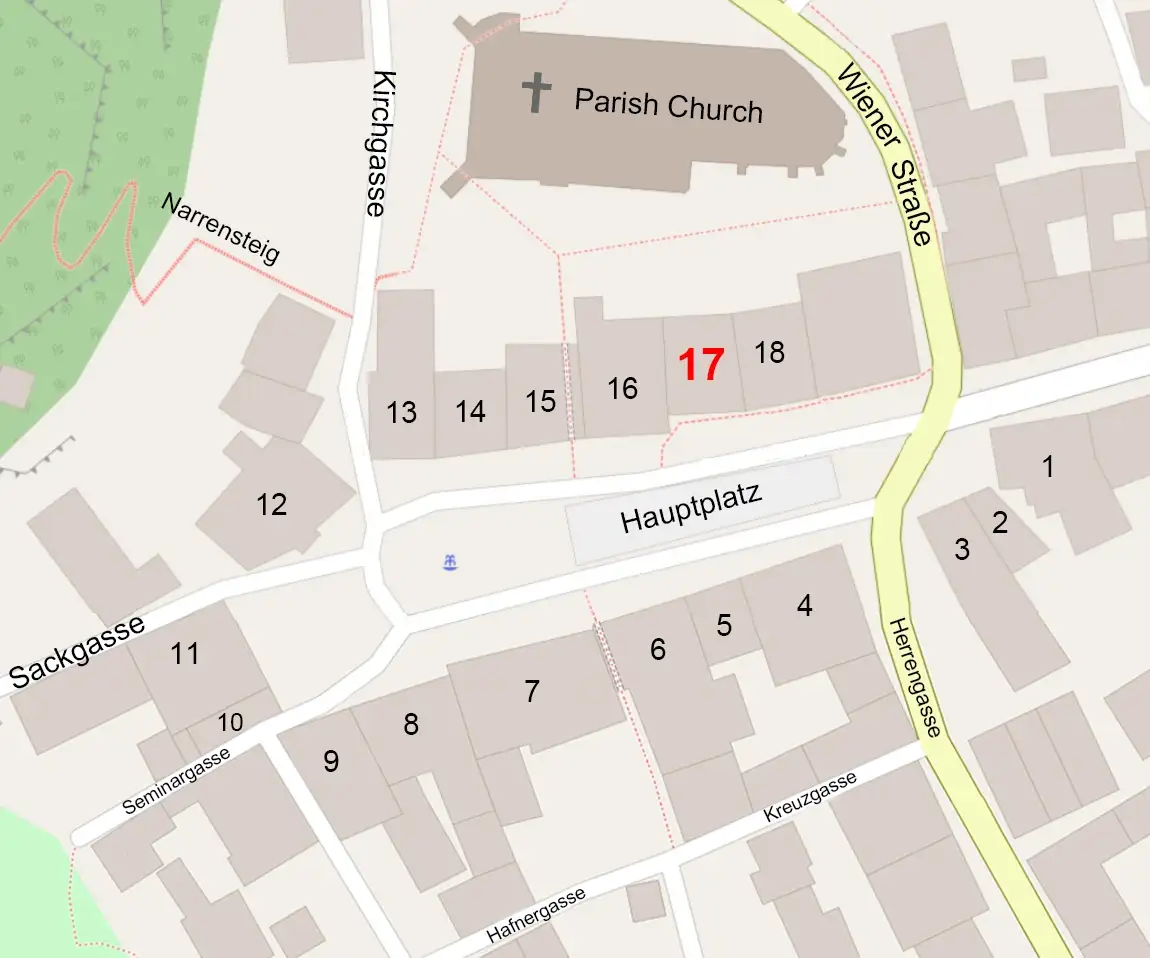
Hauptplatz 17
History
From around 1700 until the 19th century, the building was in the ownership of merchant families.
Architectural Description
Facade Orientation
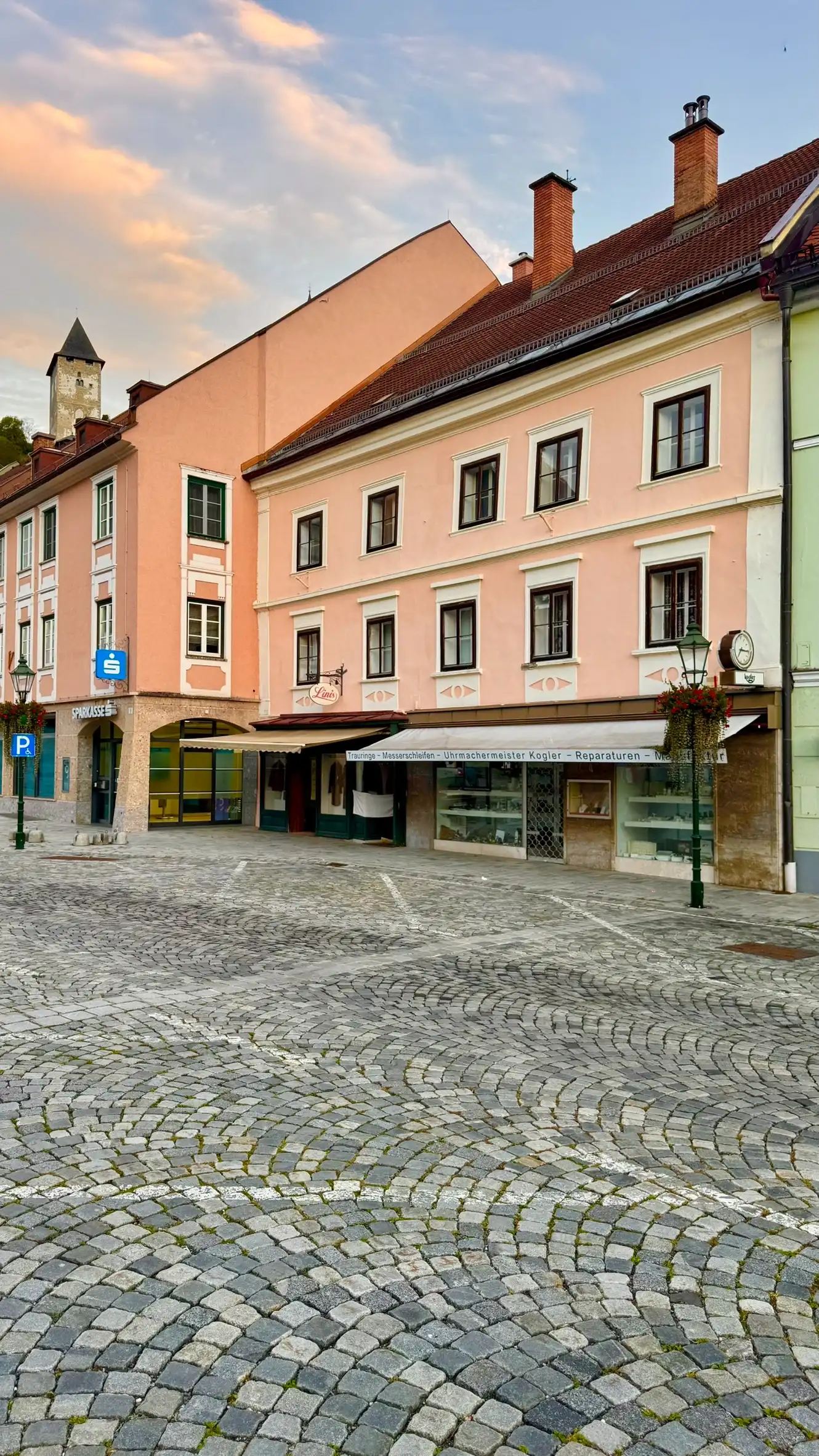
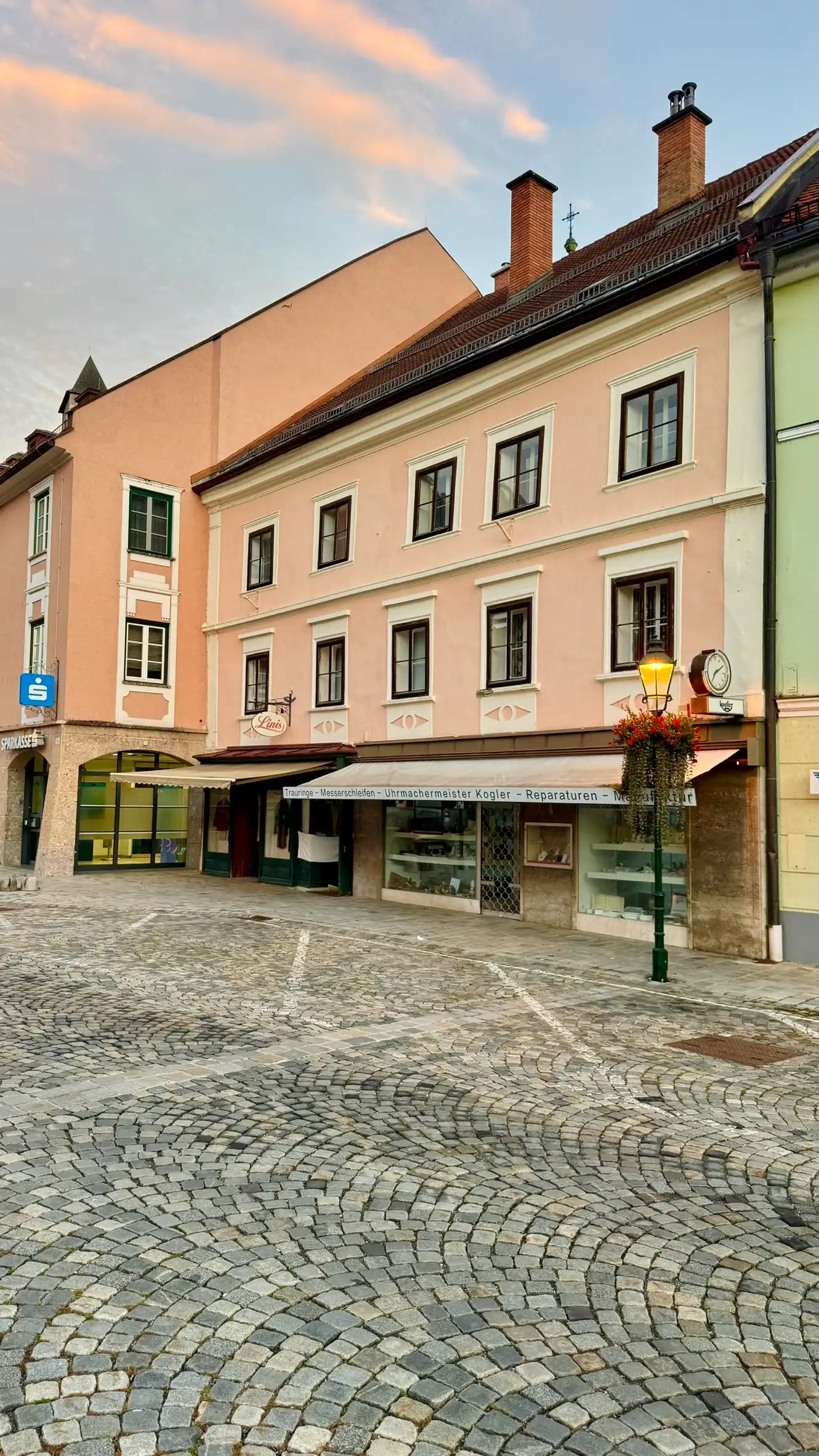
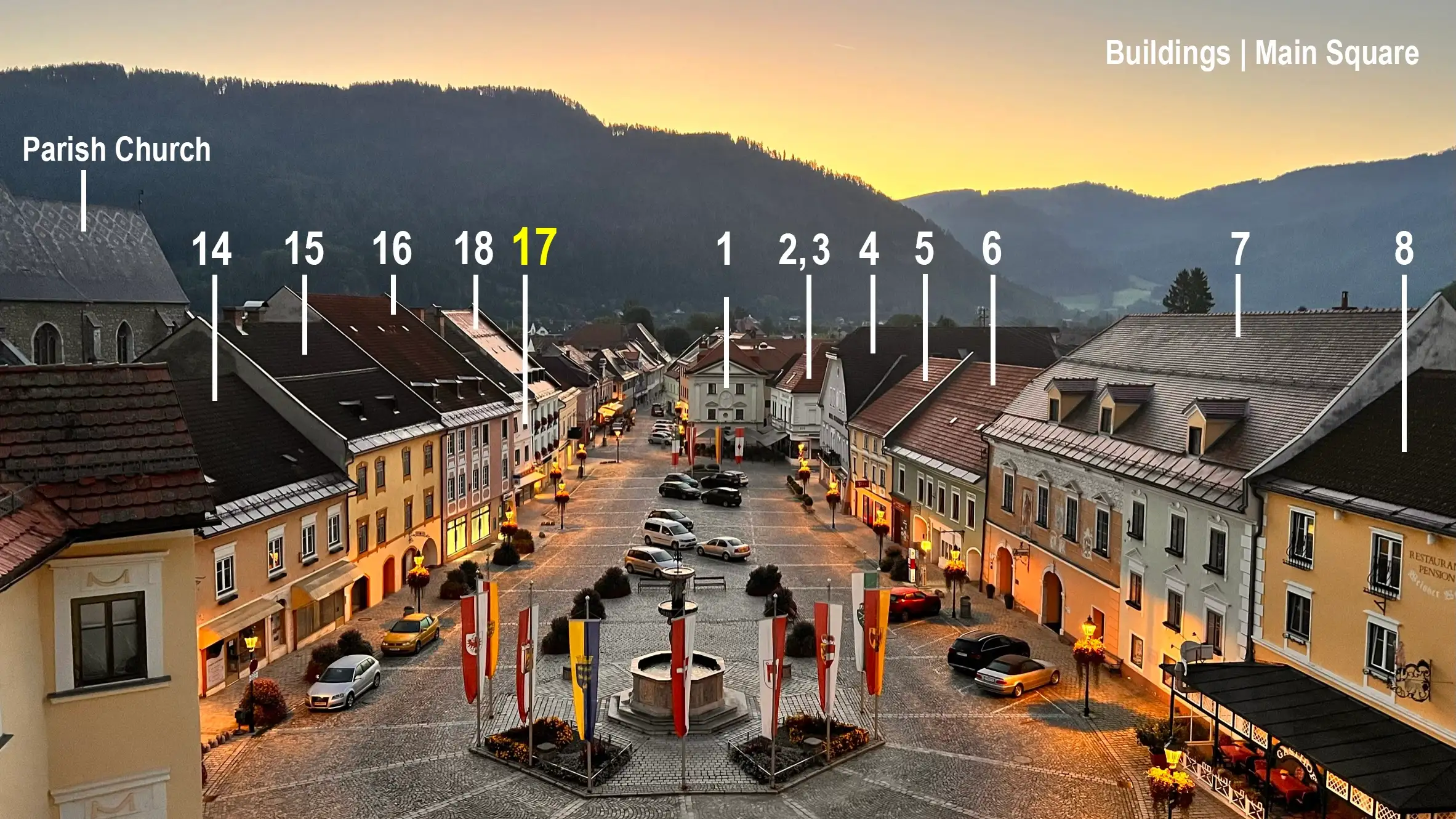
The main facade faces south and overlooks the main square.
Structural Core
The townhouse retains a structural core dating to the 15th–16th century.
Current Historicist Facade
Its present appearance is characterised by a Historicist facade.
Storeys
The principal south-facing facade is divided into three storeys. The ground floor accommodates commercial premises, while the upper storeys house residential units.
Horizontal Articulation
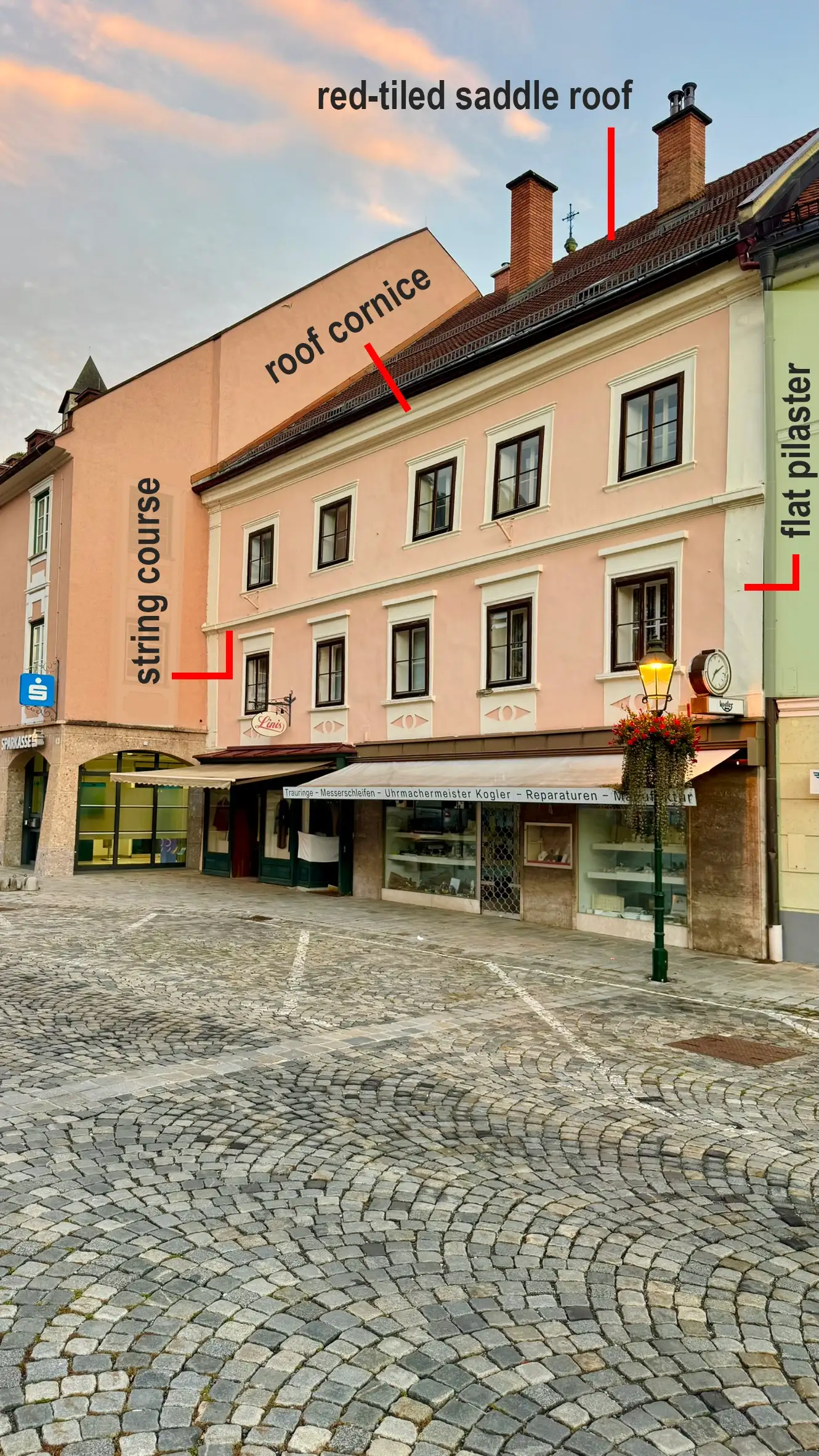
A continuous string course separates the upper floors, providing clear horizontal articulation. A richly profiled roof cornice projects prominently, visually defining the upper boundary of the facade.
Vertical Articulation
Two flat pilasters positioned laterally at the outer edges frame the building, creating a structured and balanced facade composition.
Second-Floor Windows
The second-floor windows are set within plain, rectangular moulded surrounds.
First Floor Windows
The first-floor windows feature timber frames enclosed by moulded plaster surrounds. The composition is crowned by a straight window cornice, beneath which a plain panel is set. A slightly projecting sill defines the lower edge of the window opening, with a recessed decorative panel below it.
Ground Floor | Shop Installations
Between 1964 and 1967, the ground floor was substantially altered through the installation of shop premises.
Roof
The two sloping roof planes meet along a central ridge, forming a saddle roof. Small dormer structures and a pronounced fire-wall gable are also present.
Roofscape
The roofscape of Hauptplatz 17 and 18 is continuous. It is formed by two saddle roofs with similar pitch and height. The roofscape of Hauptplatz 16 and 17 is discontinuous. This is because saddle roof of Hauptplatz 16 is much higher.