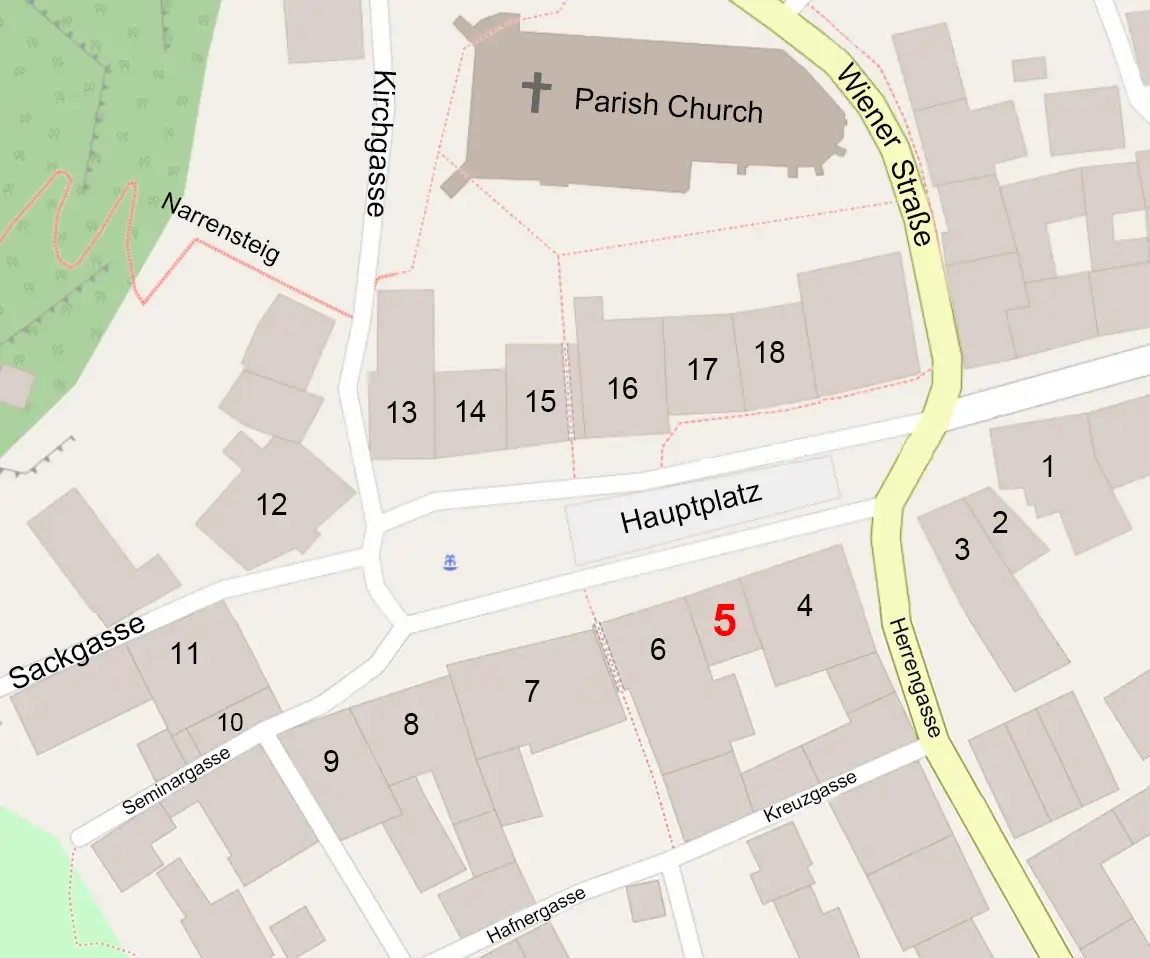
Hauptplatz 5
History
Around 1700, the house was owned by a girdler.
From approximately 1720 until the end of the 18th century, it belonged to a stocking knitter.
Architectural History
This residential and commercial building retains a late medieval structural core, most clearly preserved in the western wall section.
Significant structural alterations were carried out primarily in the 16th century and again in the 18th century.
The present facade design dates from the middle of the 19th century.
The ground floor was remodelled in the 1960s to accommodate a shop installation.
Architectural Features | Exterior
Architectural Style
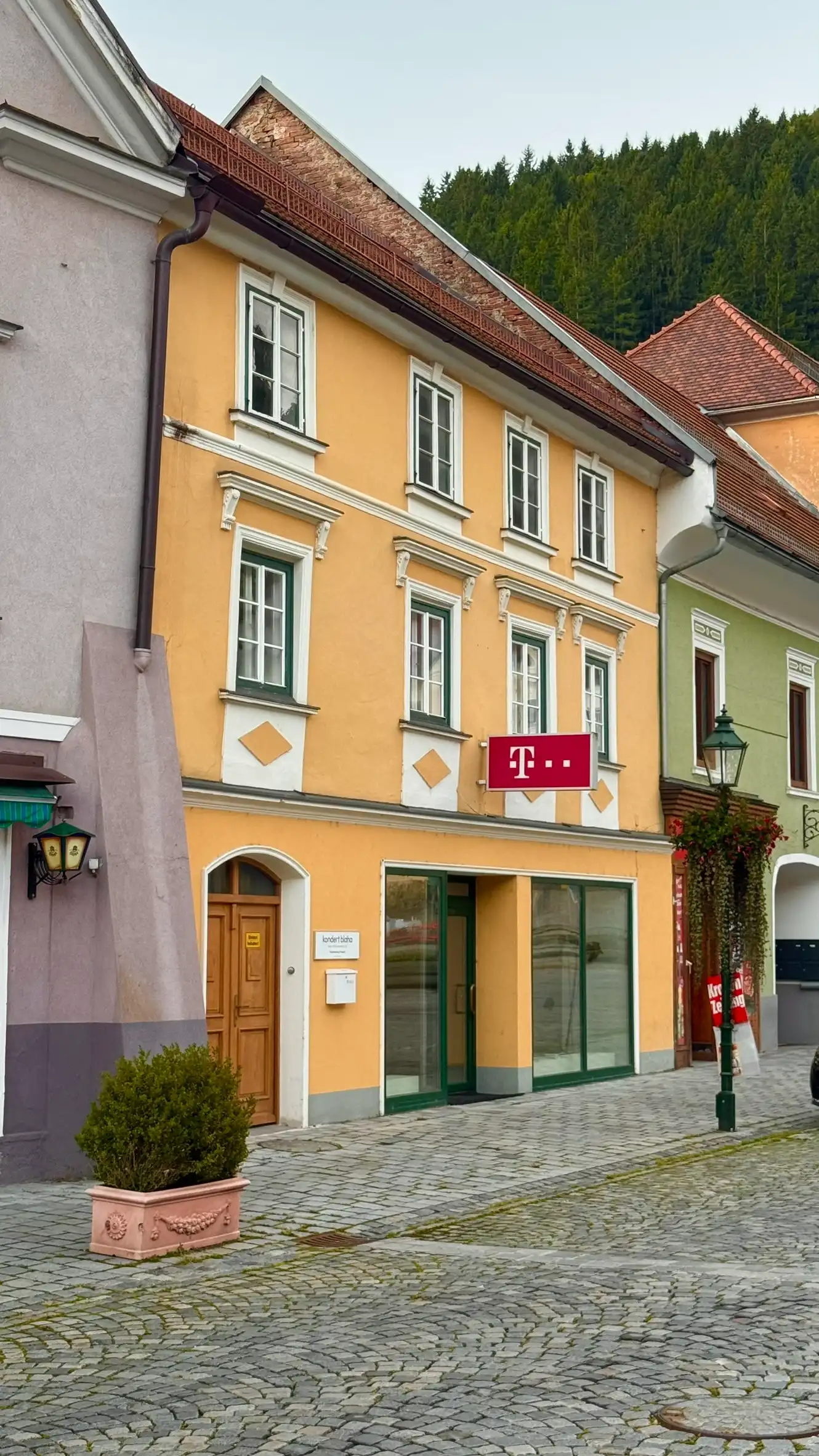
The facade displays a restrained Early Historicist character.
Storeys
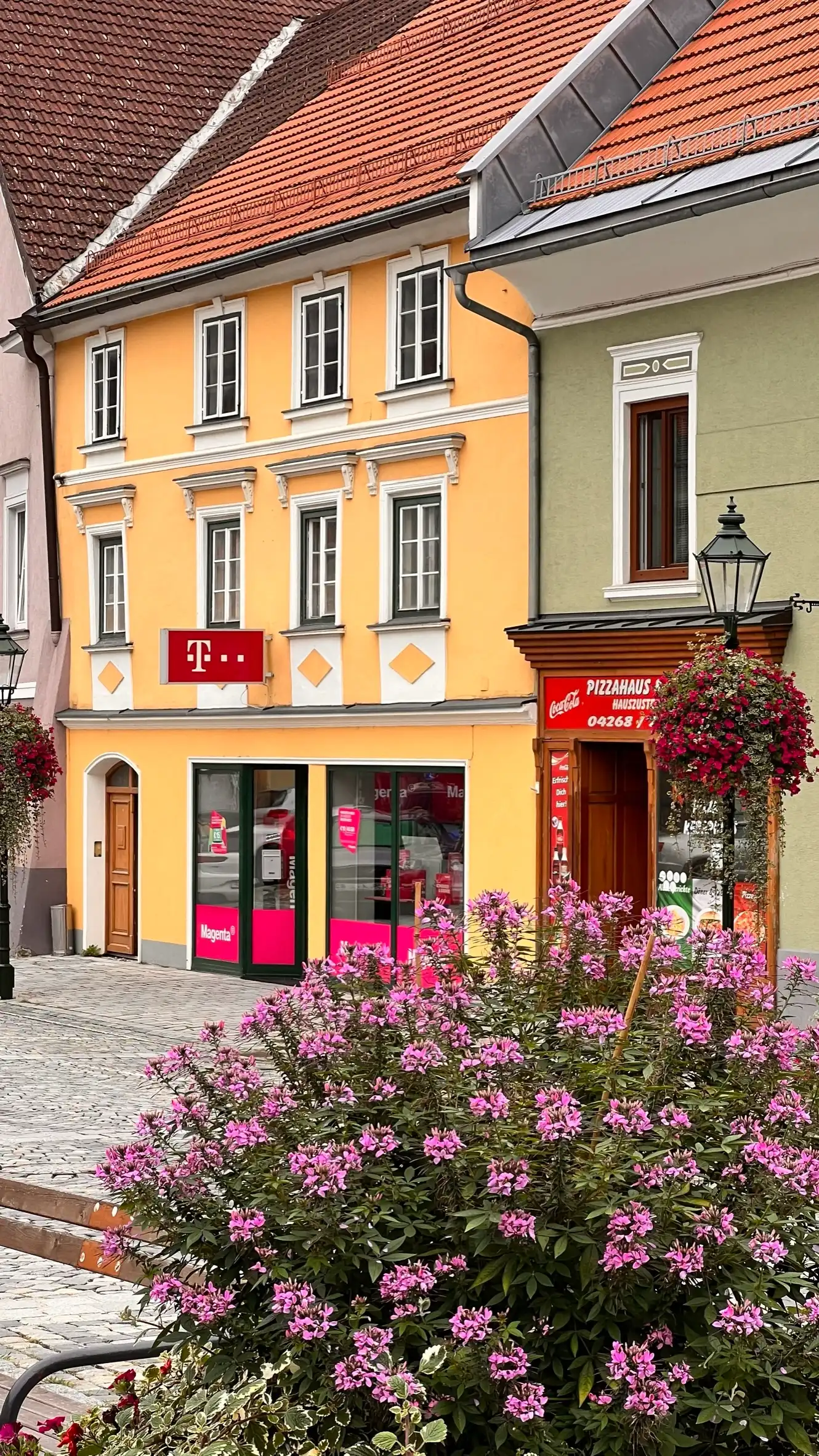
The building is a three-storey structure.
Horizontal Articulation
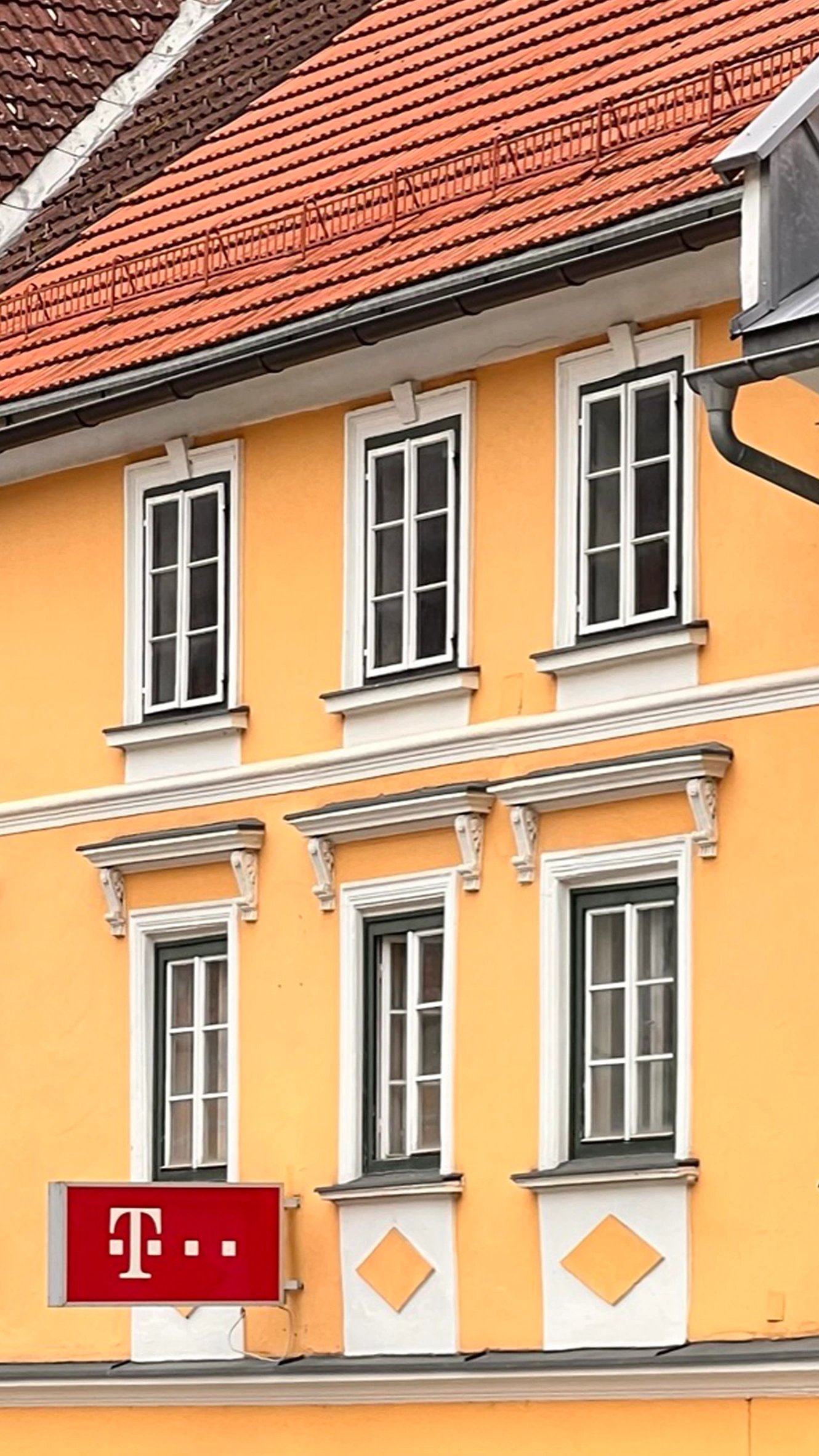
There are two horizontal moulded bands (string courses) running across the facade. They visually divide the facade into three horizontal storeys.
Vertical Articulation | Four Window Bays
The windows are grouped into four vertical bays. The fourth bay, on the eastern side, is set slightly apart.
First Floor
The windows on the first floor are framed with moulded surrounds. They are topped with straight window pediments supported by decorative consoles. Parapet panels beneath the window sills feature Biedermeier-style lozenge motifs.
Second Floor
The second-floor windows are characterised by plain plaster surrounds with keystone decoration.
Ground Floor
A segmental-arched doorway is part of the eastern axis. It is fitted with a wooden door featuring panelled infills. Modern shopfronts occupy the remainder of the frontage.
Facade Colour and Finish
The plain plastered facade is rendered in a rich yellow tone, contrasted with crisp white architectural detailing.
Roof
The building is crowned by a steeply pitched saddle roof with red tiles.
Architectural Features | Interior
On the ground floor, the outermost bay to the left contains a corridor with a barrel vault and irregular lunettes dating from the second half of the 16th century.