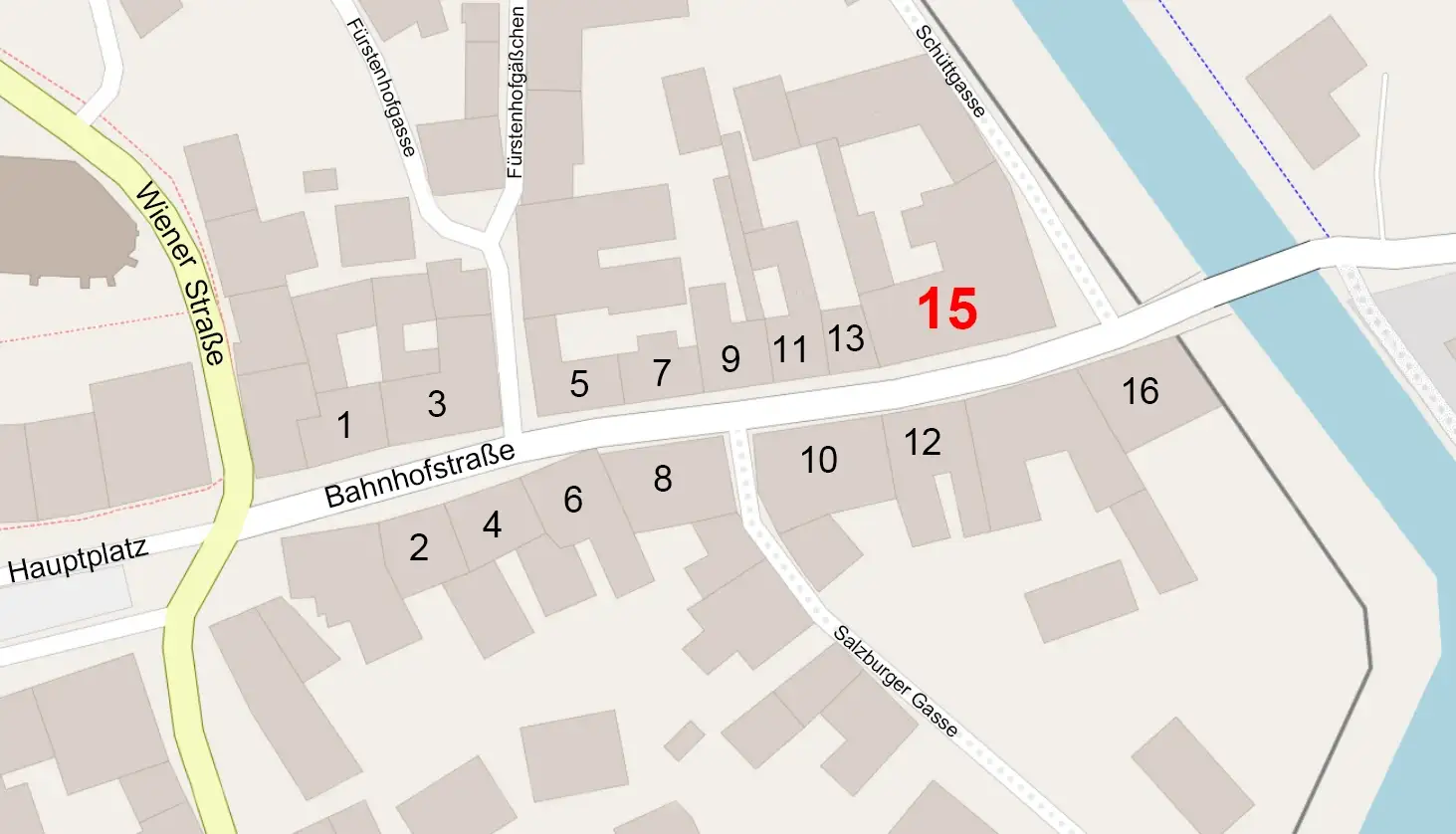
Bahnhofstraße 15
History
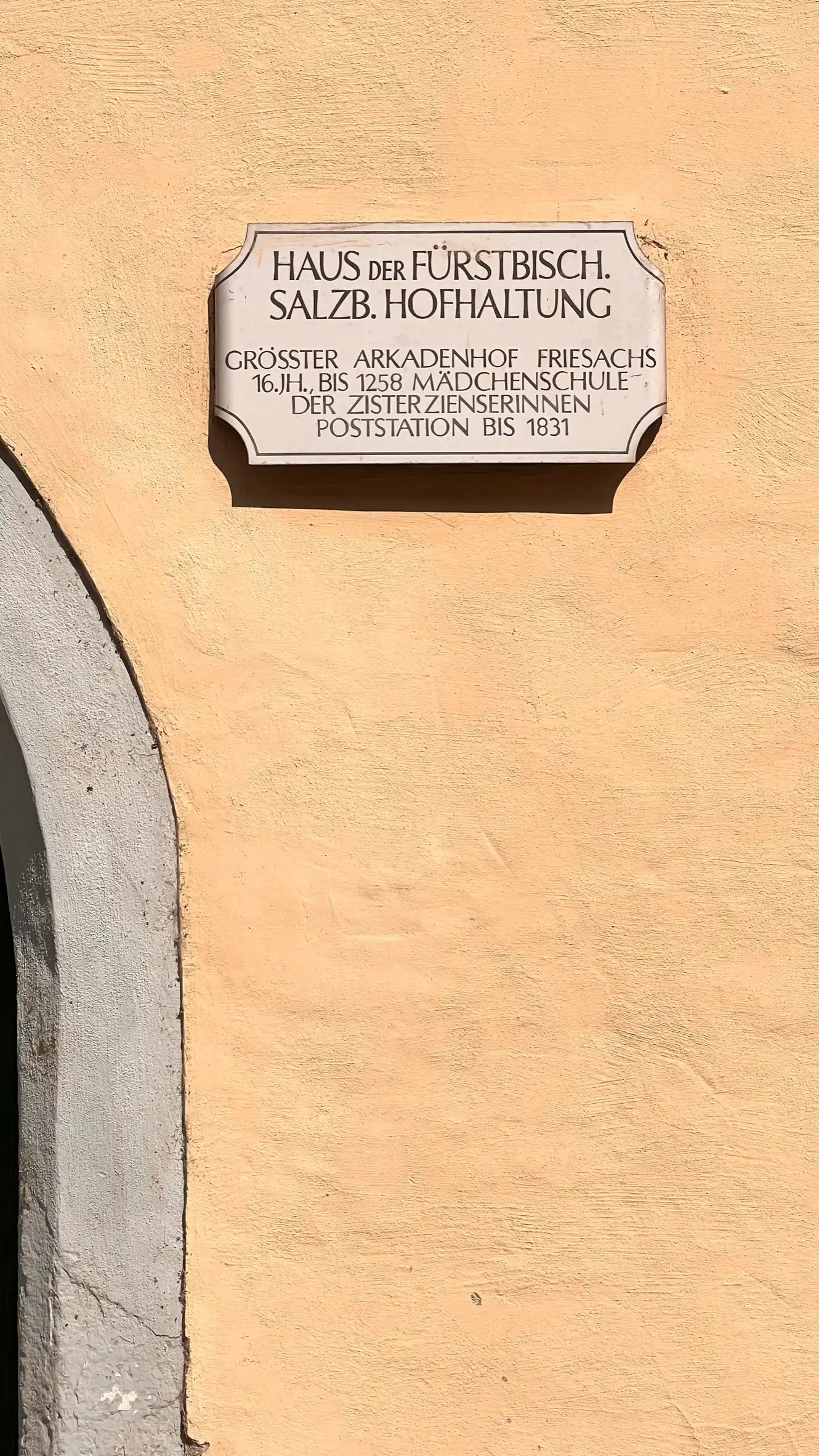
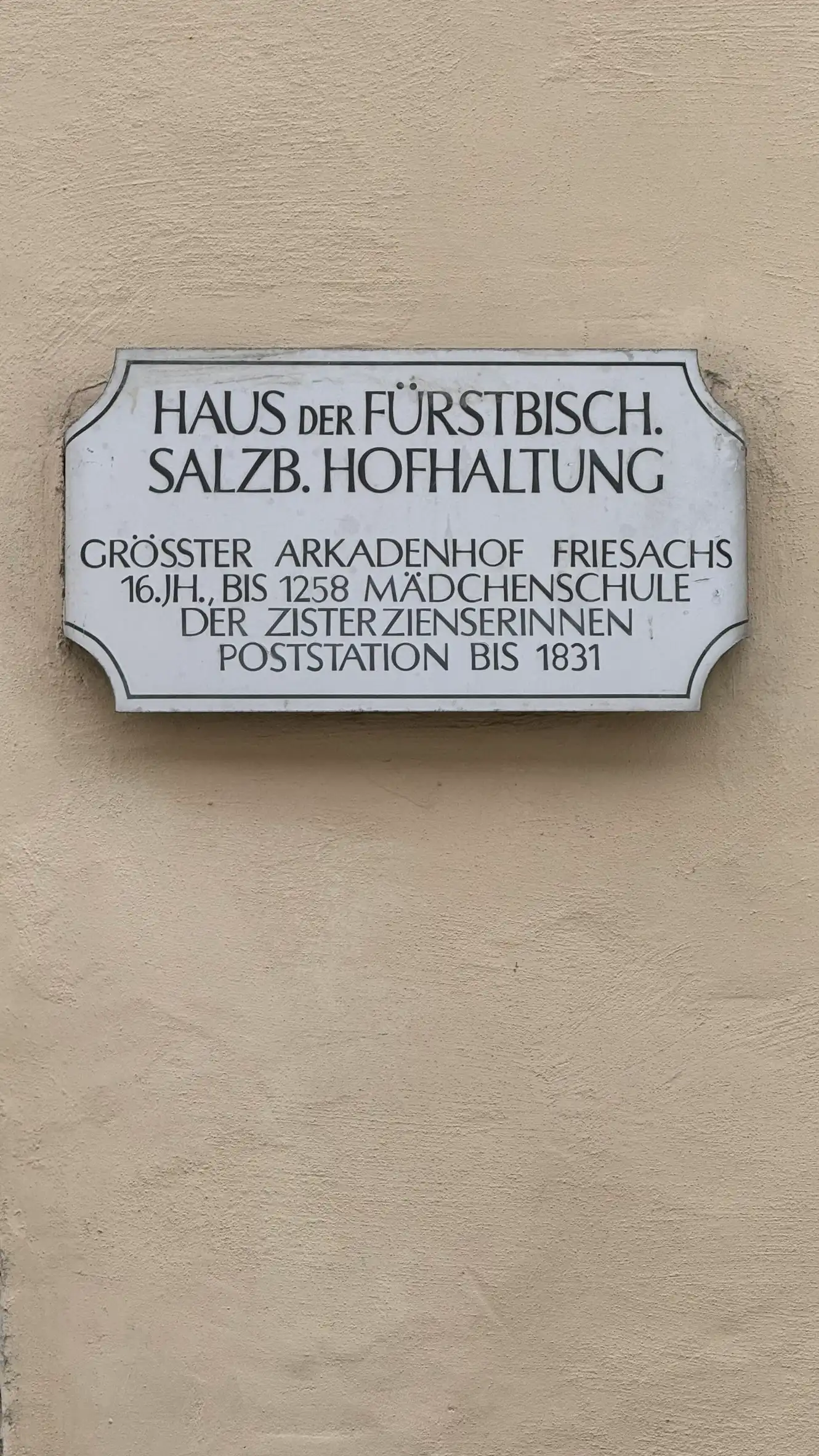
As early as 1258, the presence of Cistercian nuns at this site is documented.
Between approximately 1700 and 1831, the house was owned by the Imperial-Royal postmaster, who also operated an inn offering meals and refreshments.
Subsequently, the building served as the residence and workplace of a master tanner.
In 1840, a timber shed and a carriage shed were constructed in the courtyard.
Architectural History
The property forms part of a four-winged complex.
Parts of its structural fabric date back to the first half of the 13th century, most notably the southern section of the east wing and the cellars.
During the Late Middle Ages, the complex was rebuilt and enlarged in several stages.
In the 16th century, it was remodelled into a spacious ensemble with a two-storey arcaded courtyard.
Architectural Description
Storeys
The complex is organised around multiple wings enclosing an inner courtyard and comprises ground-floor and upper-floor levels, as well as cellars and roof spaces.
Facade facing Bahnhofstraße
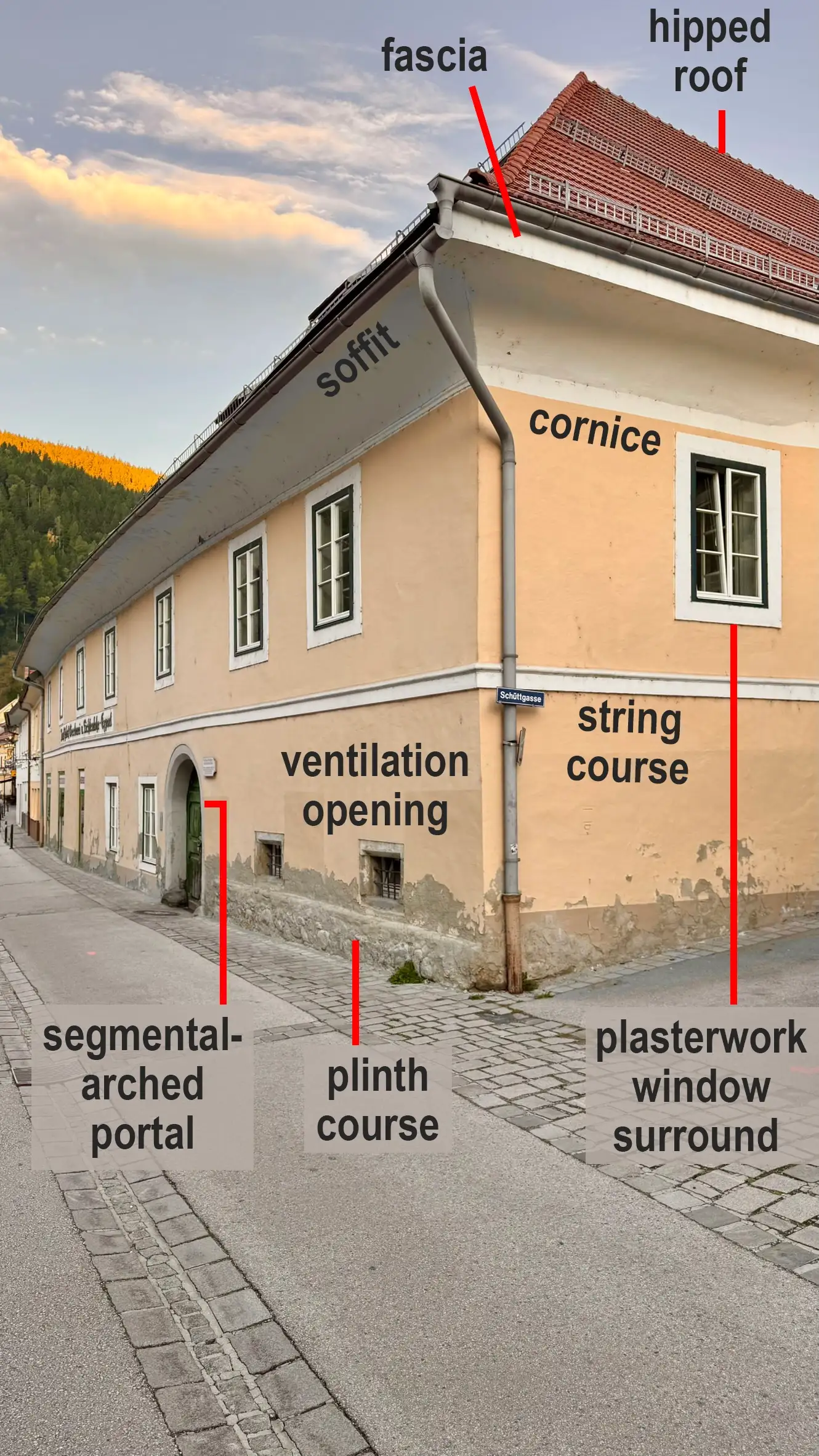
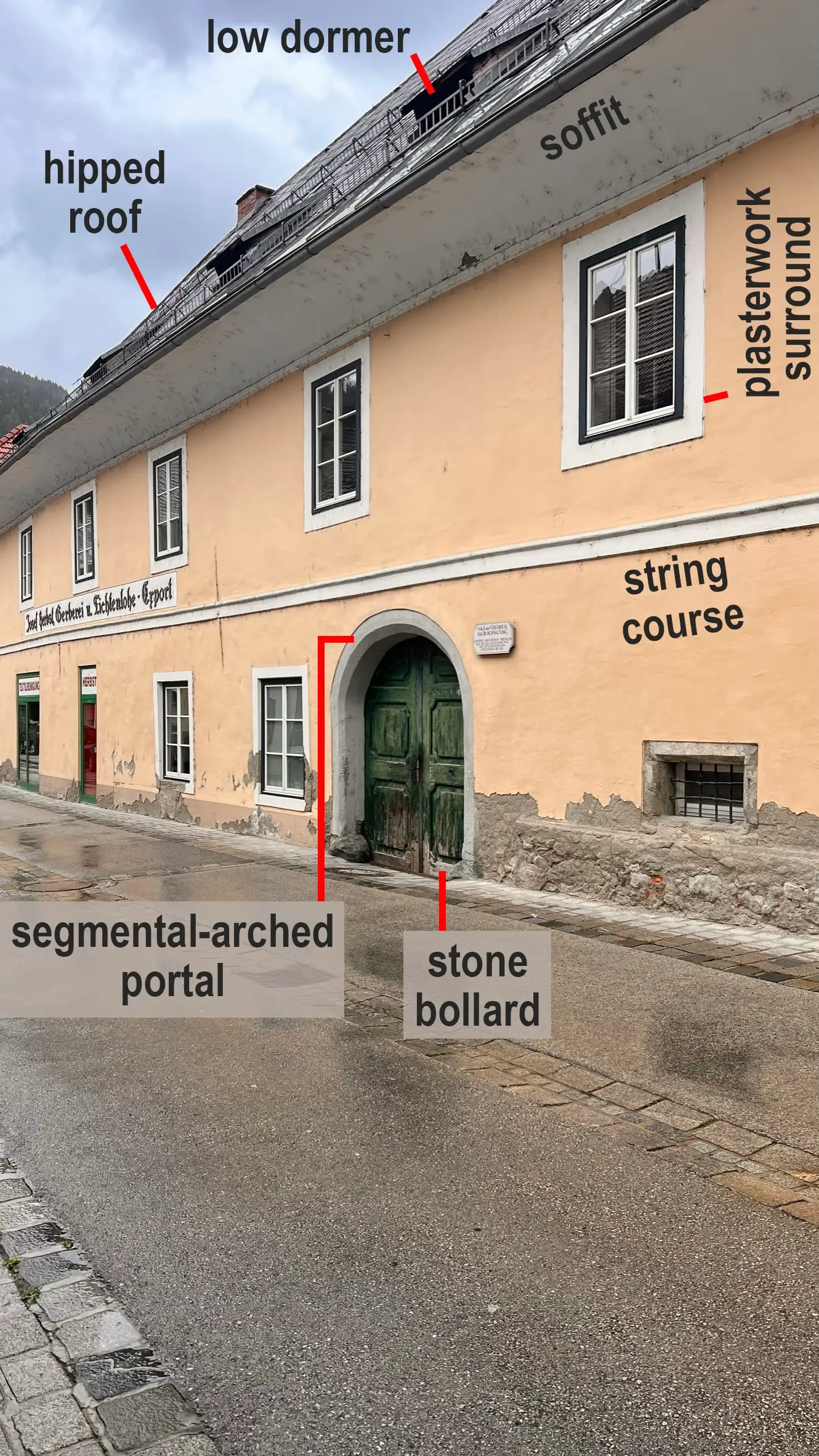
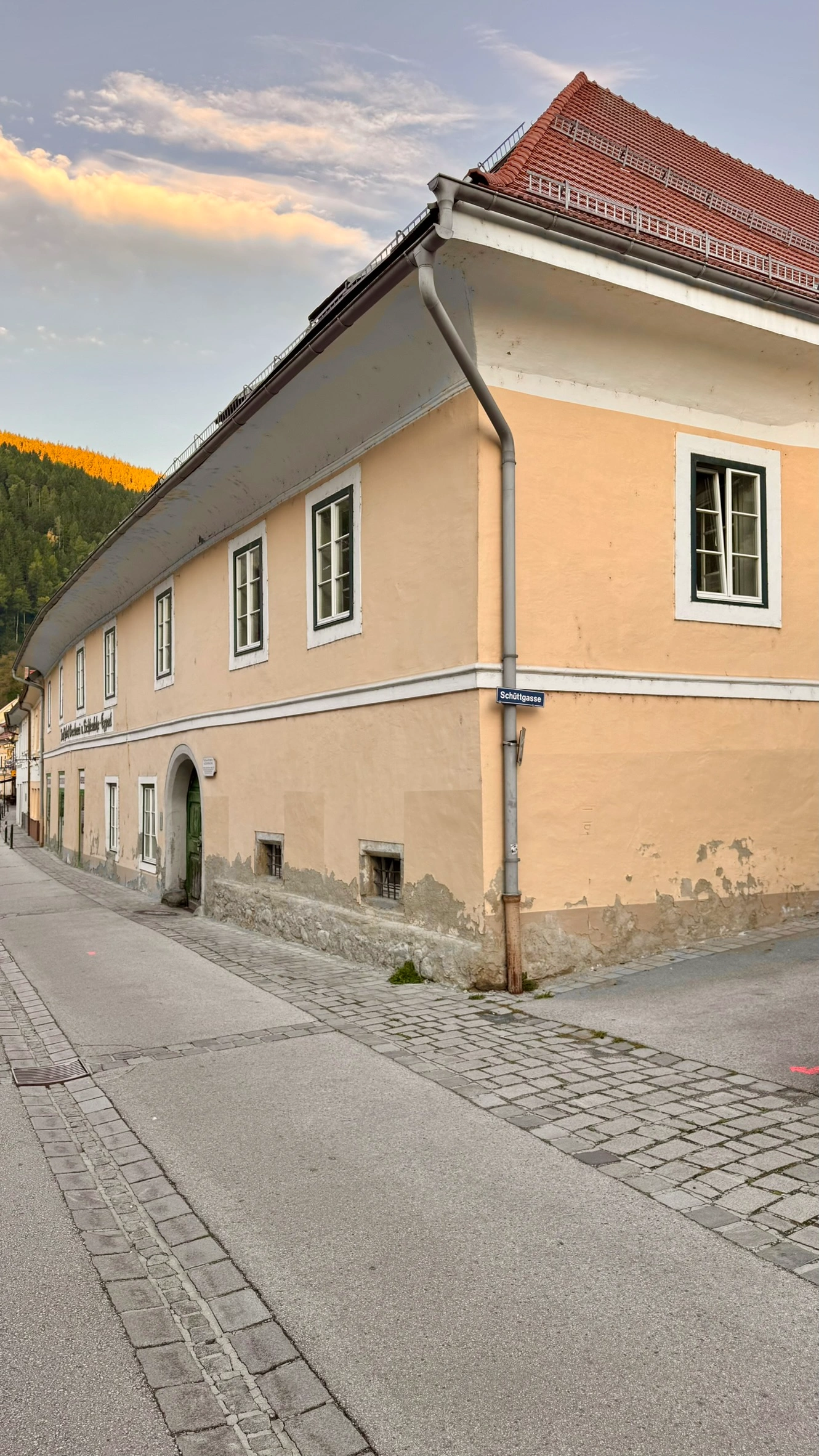
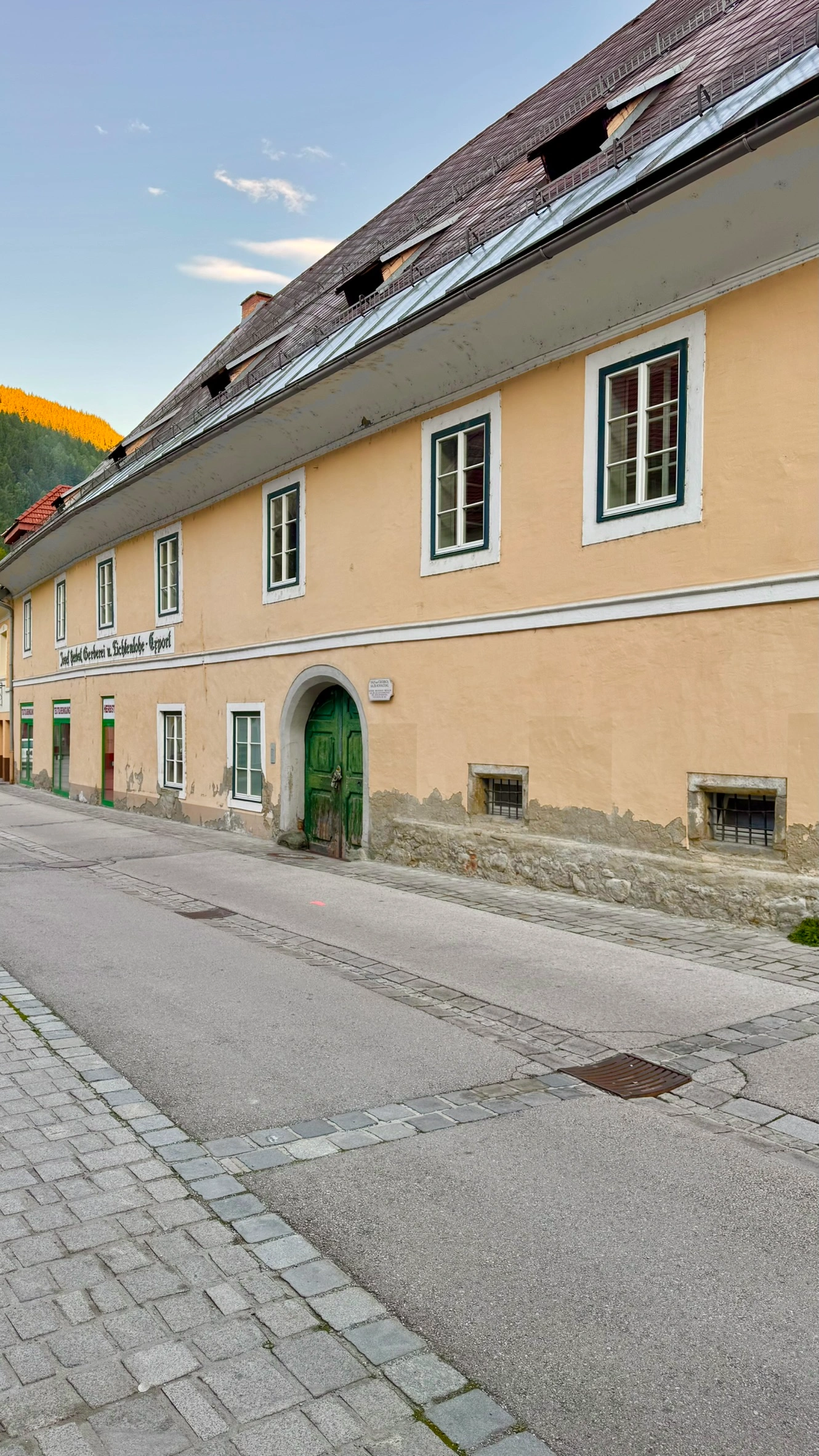
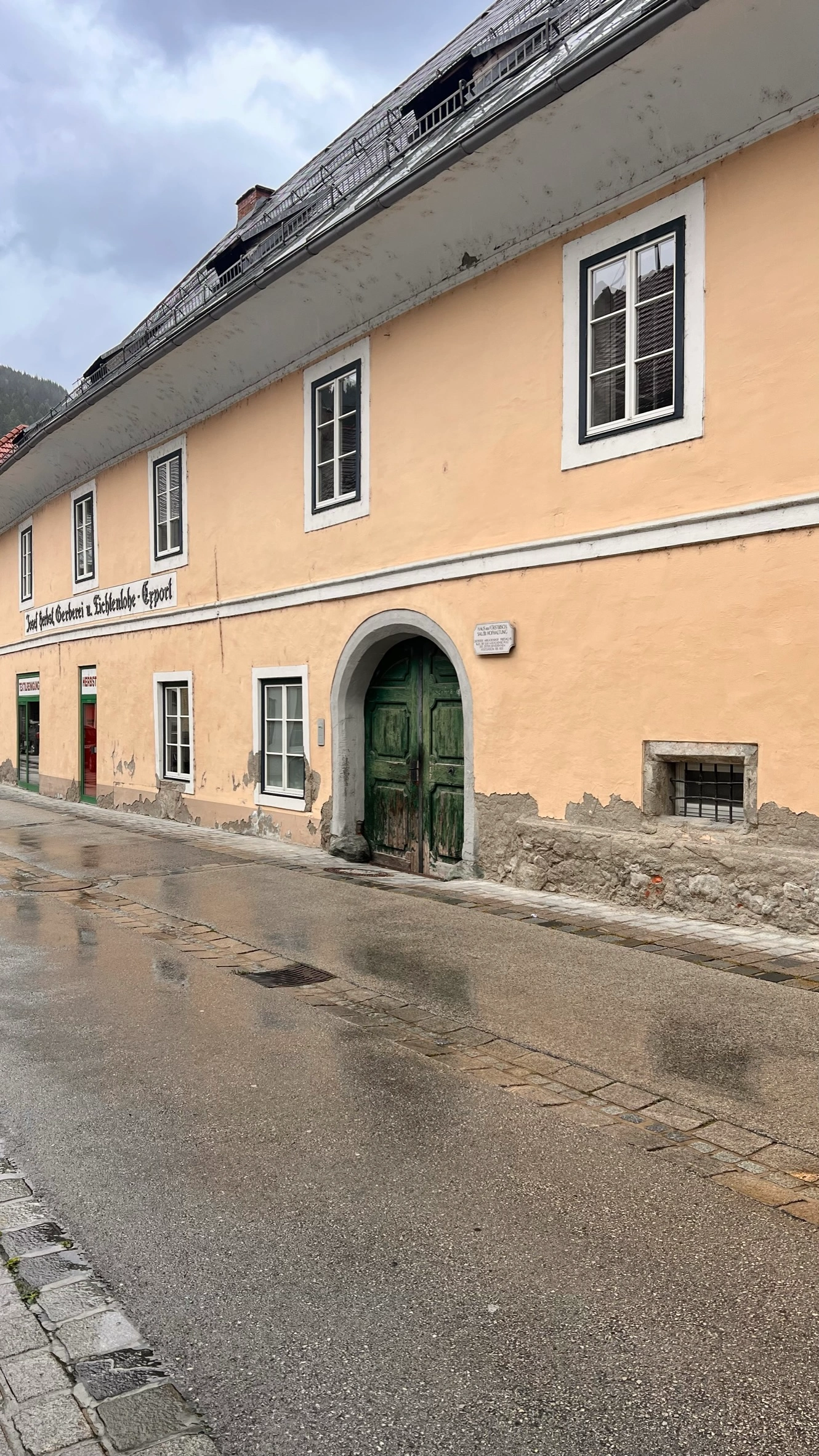
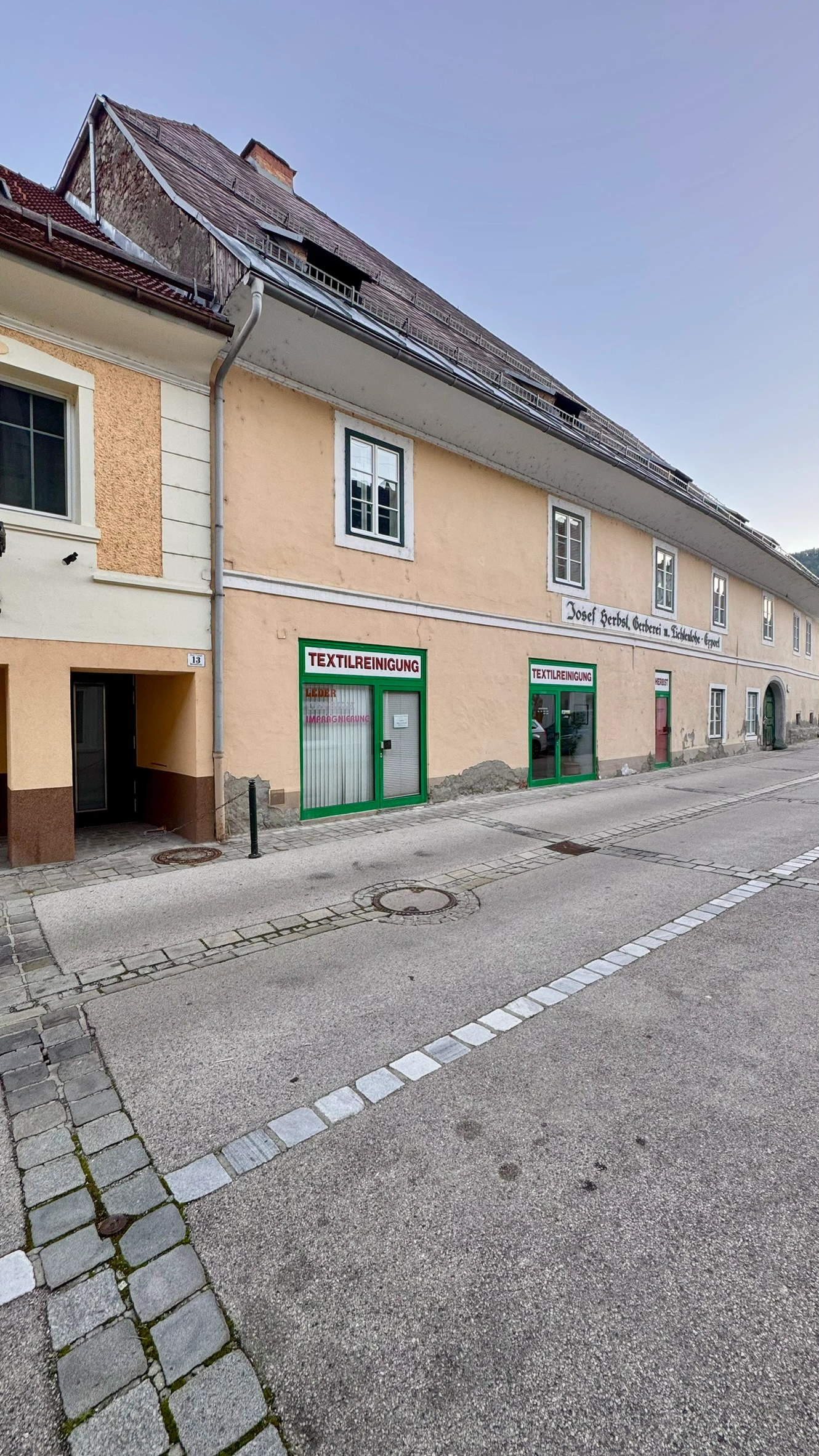
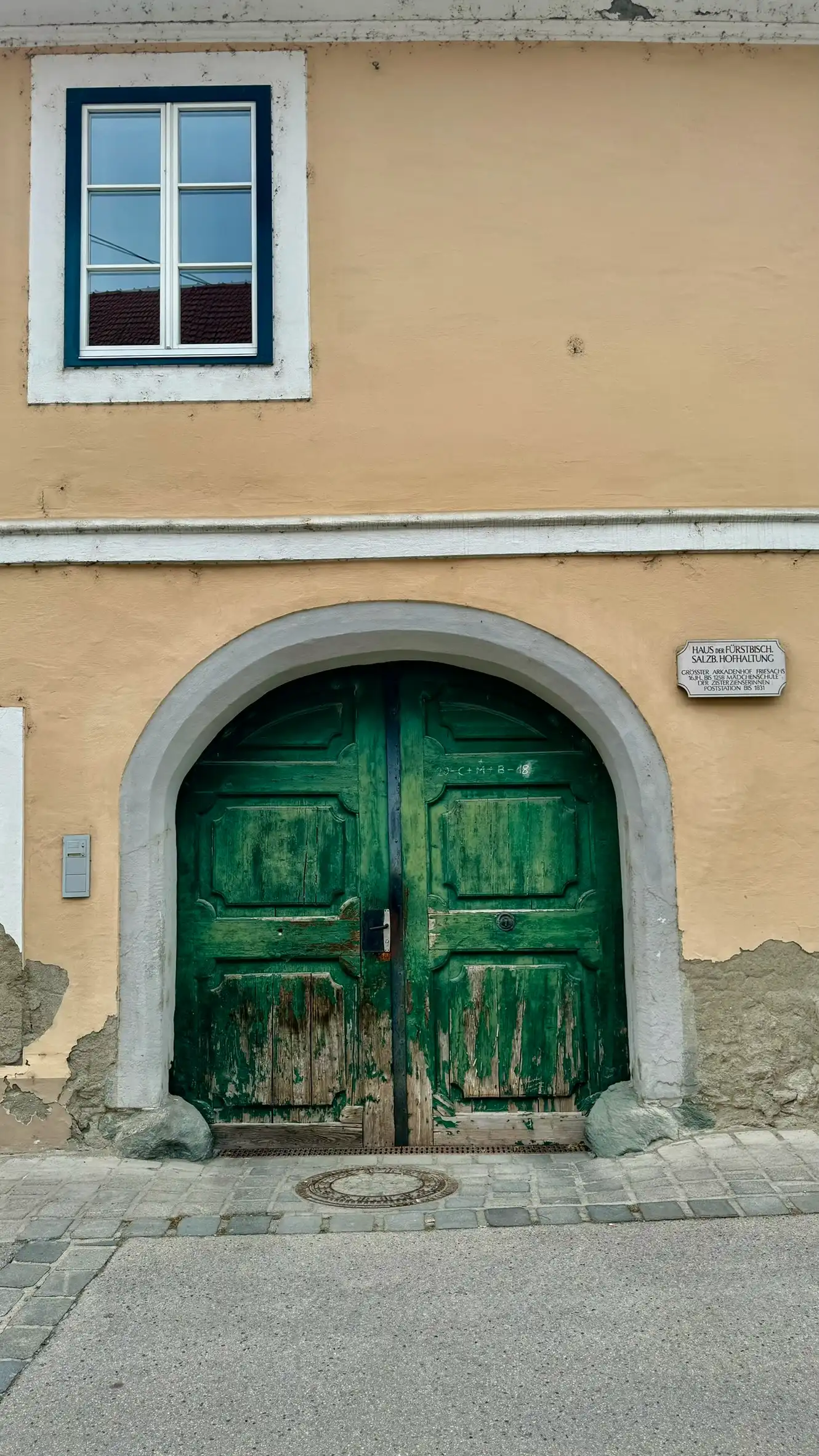
The facade facing Bahnhofstraße is of restrained design and dates, in its present appearance, to the mid-19th century.
Horizontal Articulation
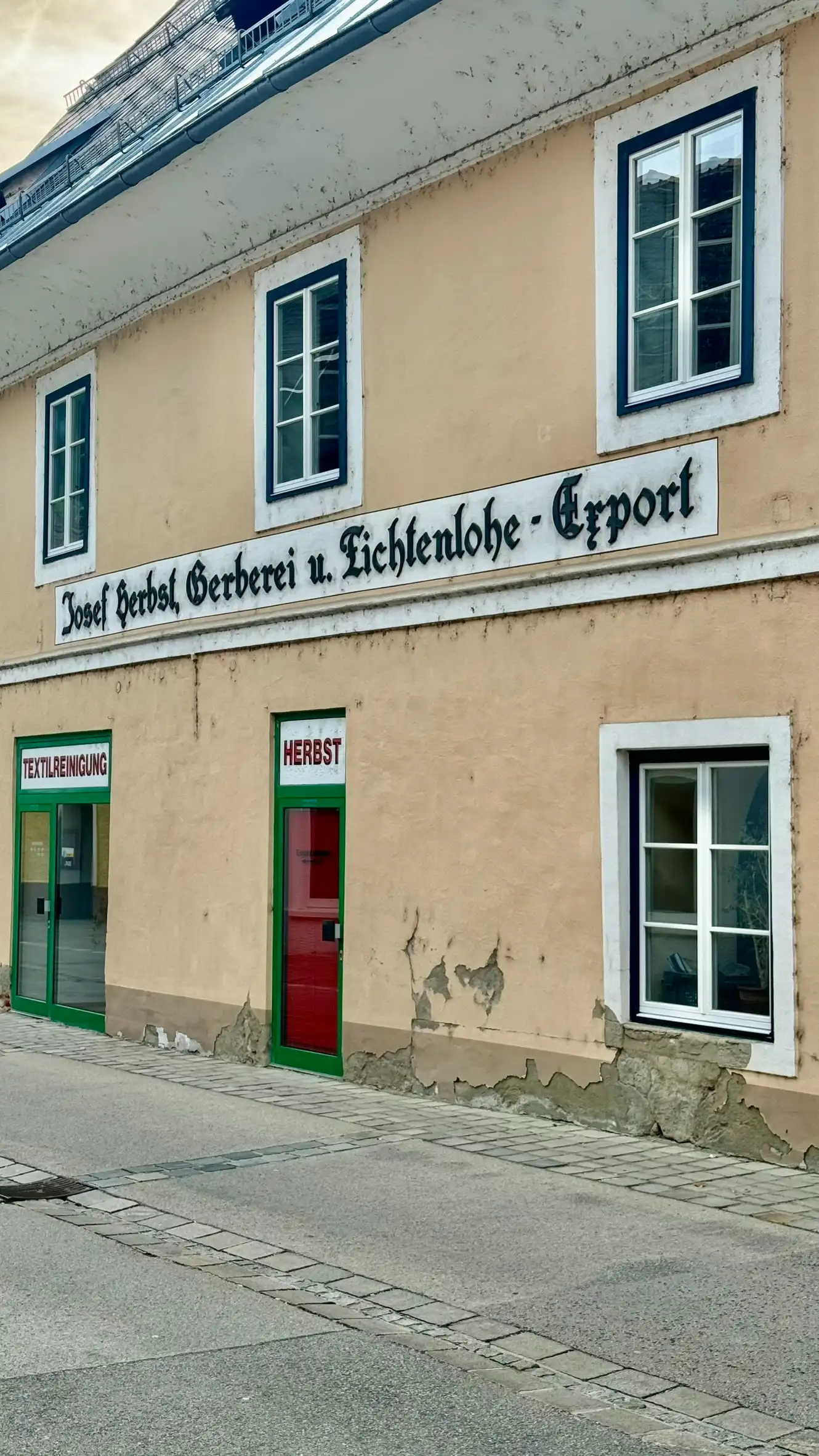
The facade is articulated by a moulded mid-facade string course and a projecting eaves cove above a delicate cornice band.
Vertical Articulation
The elevation is characterised by an irregular arrangement of bays.
Ground Floor
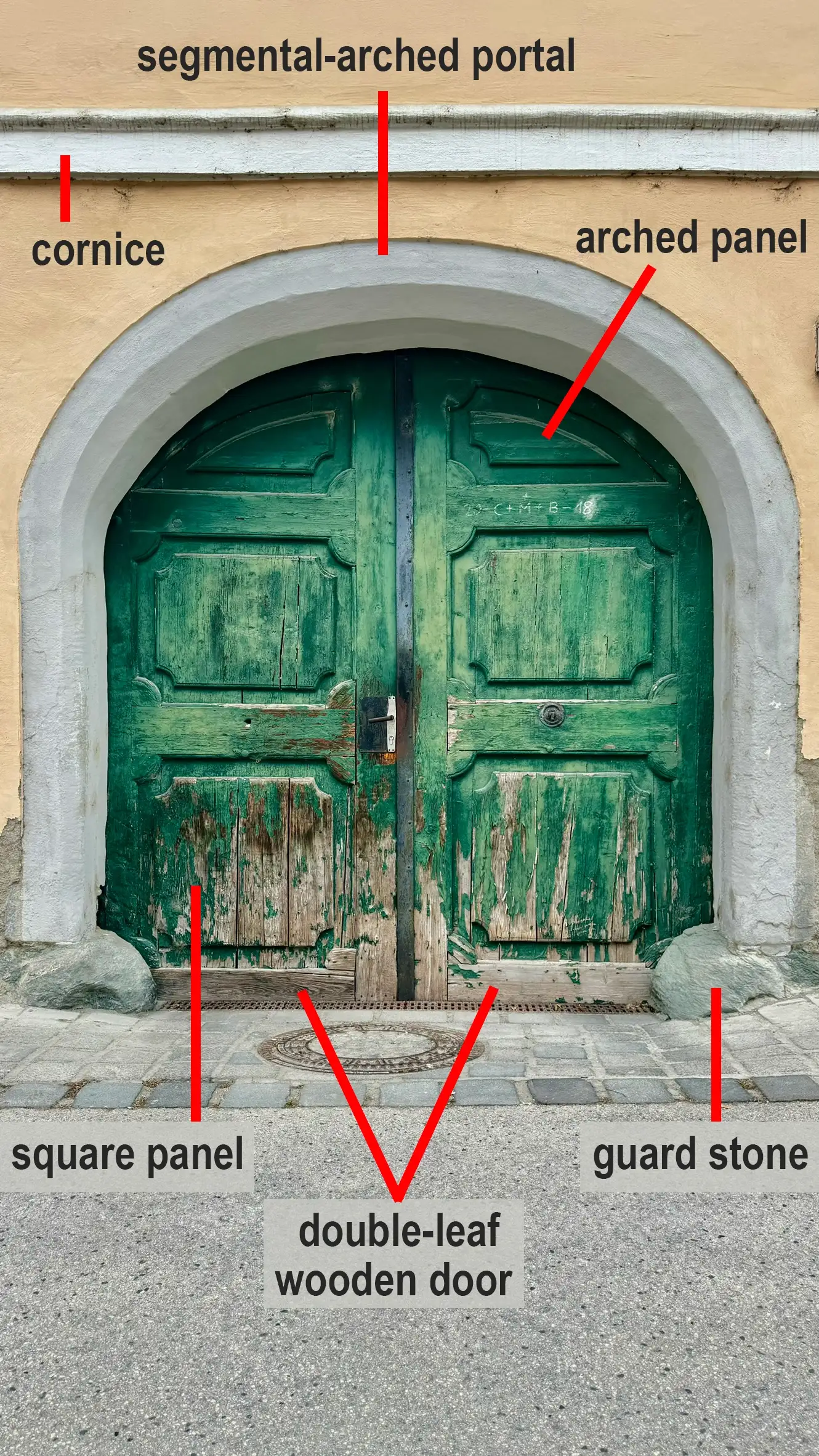
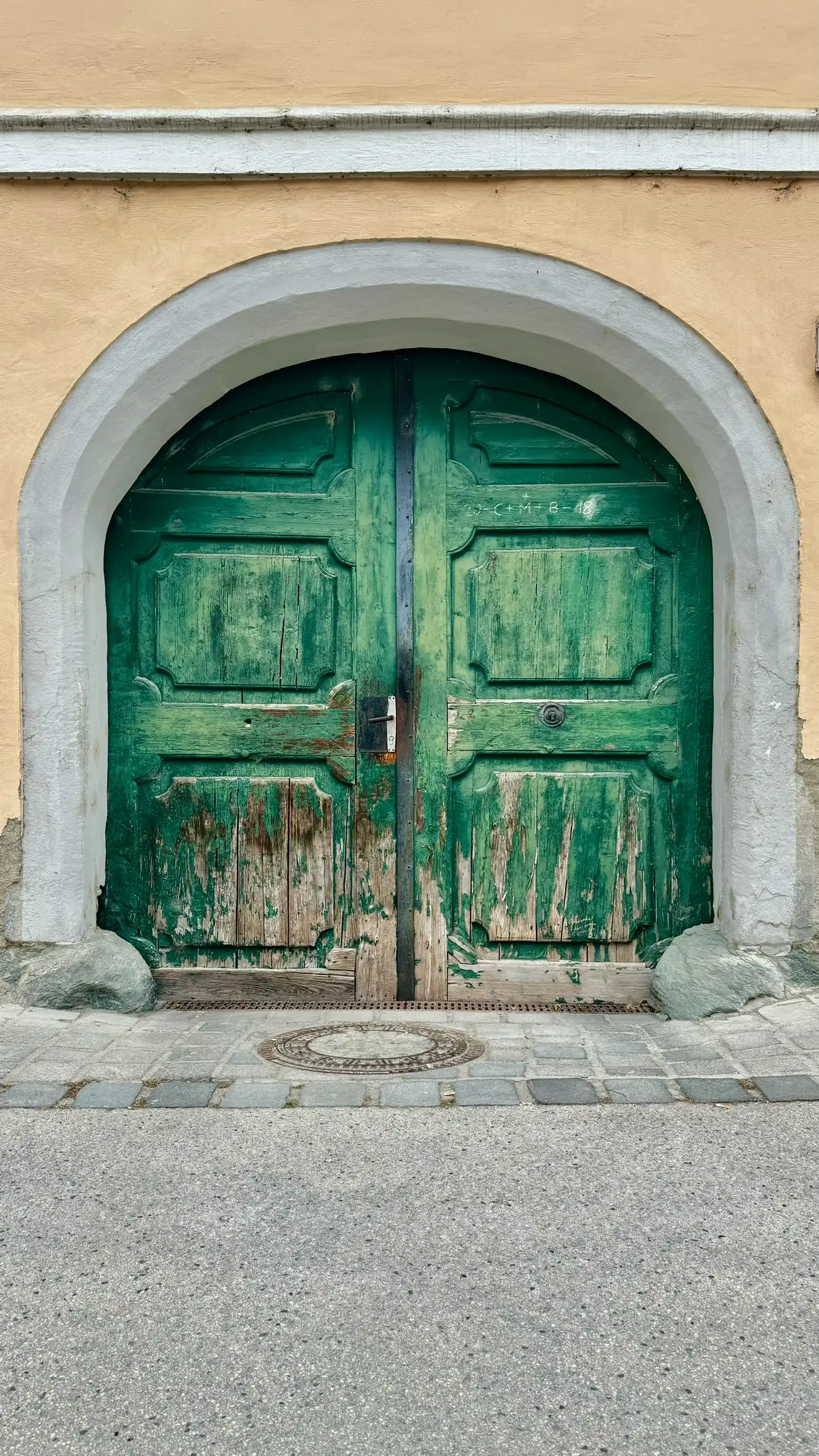
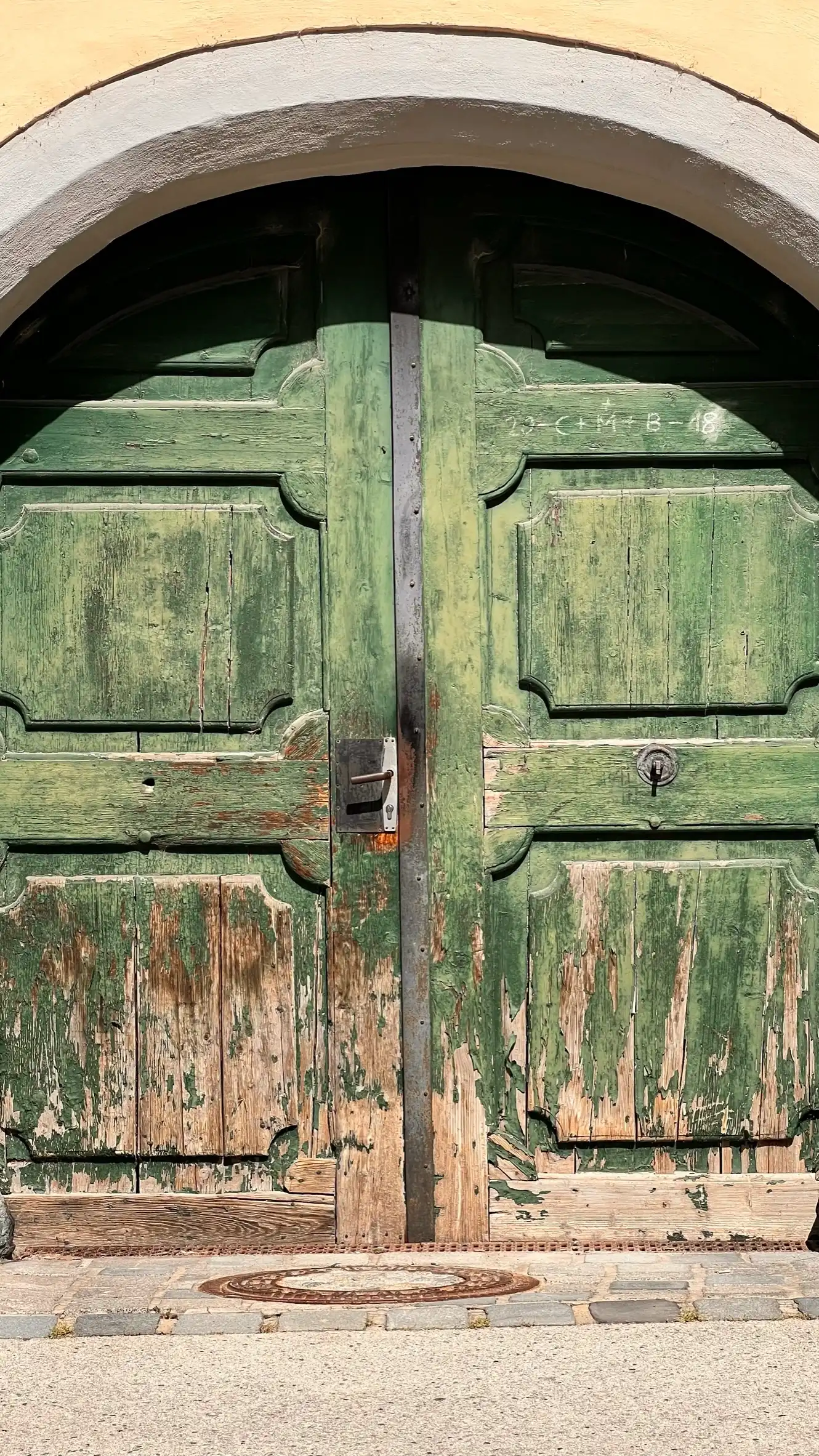
At ground-floor level, the Bahnhofstraße facade features a round-arched portal flanked by guard stones. The window openings are framed by plain plaster surrounds.
Upper Floor
The upper-floor windows are likewise set within plain plaster surrounds.
Facade facing Schüttgasse
Only the bays adjoining Bahnhofstraße are integrated into the facade design; the section extending northwards lacks architectural articulation.
Projecting Bay
In the second bay, a portico-like projection with round-arched arcades at ground-floor level is present. It is surmounted by a hipped roof and preserves traces of sgraffito decoration dating from the 16th century.
Roof and Dormers
The complex is crowned by a partly tile-covered hipped roof with varying ridge heights and includes a drying loft.