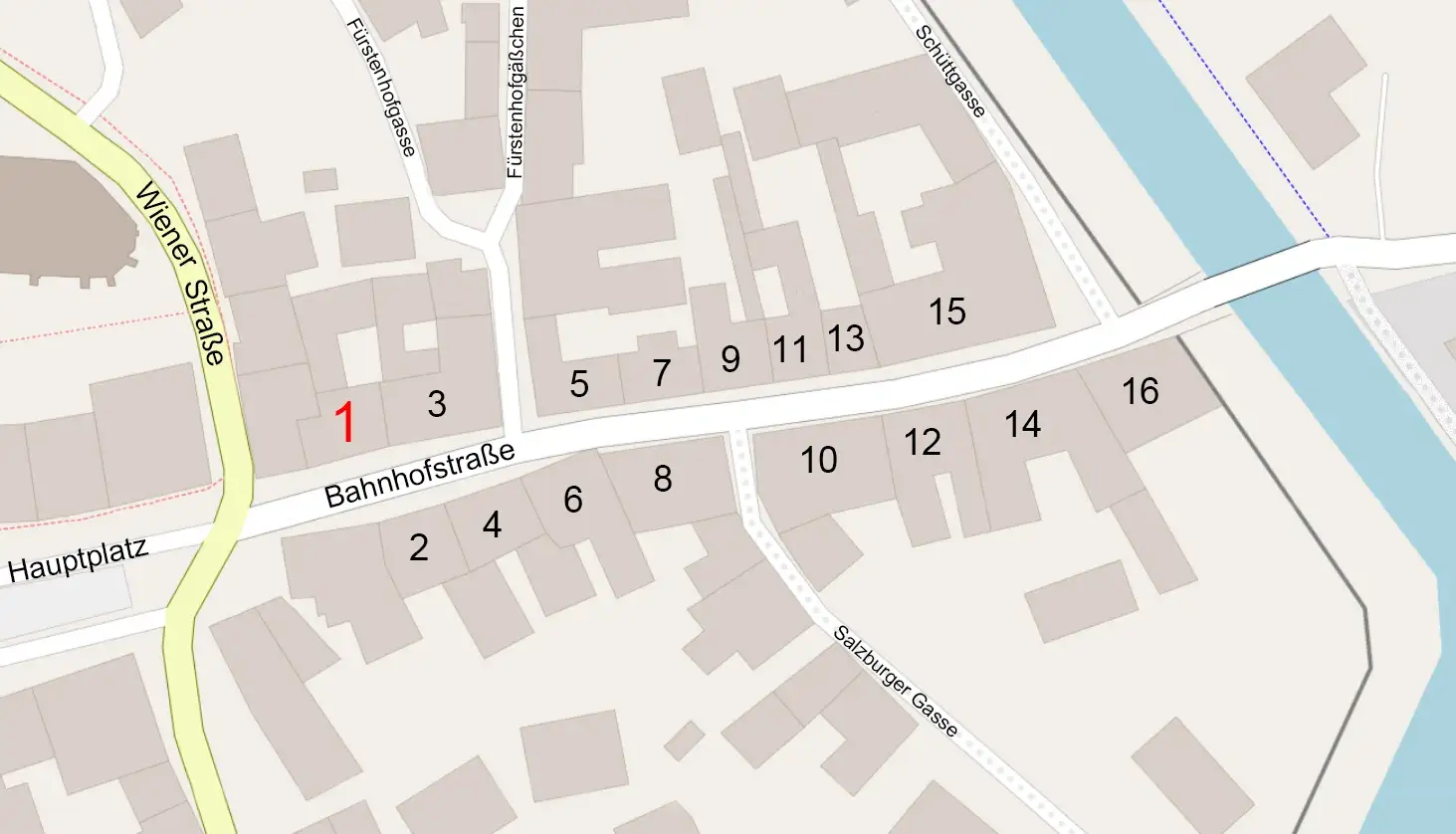
Bahnhofstraße 1 | Townhouse
Functional History
The townhouse at Bahnhofstraße 1 was first documented towards the end of the 18th century when it was owned by a shopkeeper.
During the 19th century, the property belonged to a baker, indicating a long-standing mixed residential and commercial use.
Architectural History
The present structure largely dates from the 18th century, incorporating some earlier masonry.
Its facade and extensions were redesigned in the 19th century.
The modern shopfront was added in the 1970s.
Architectural Description | Exterior
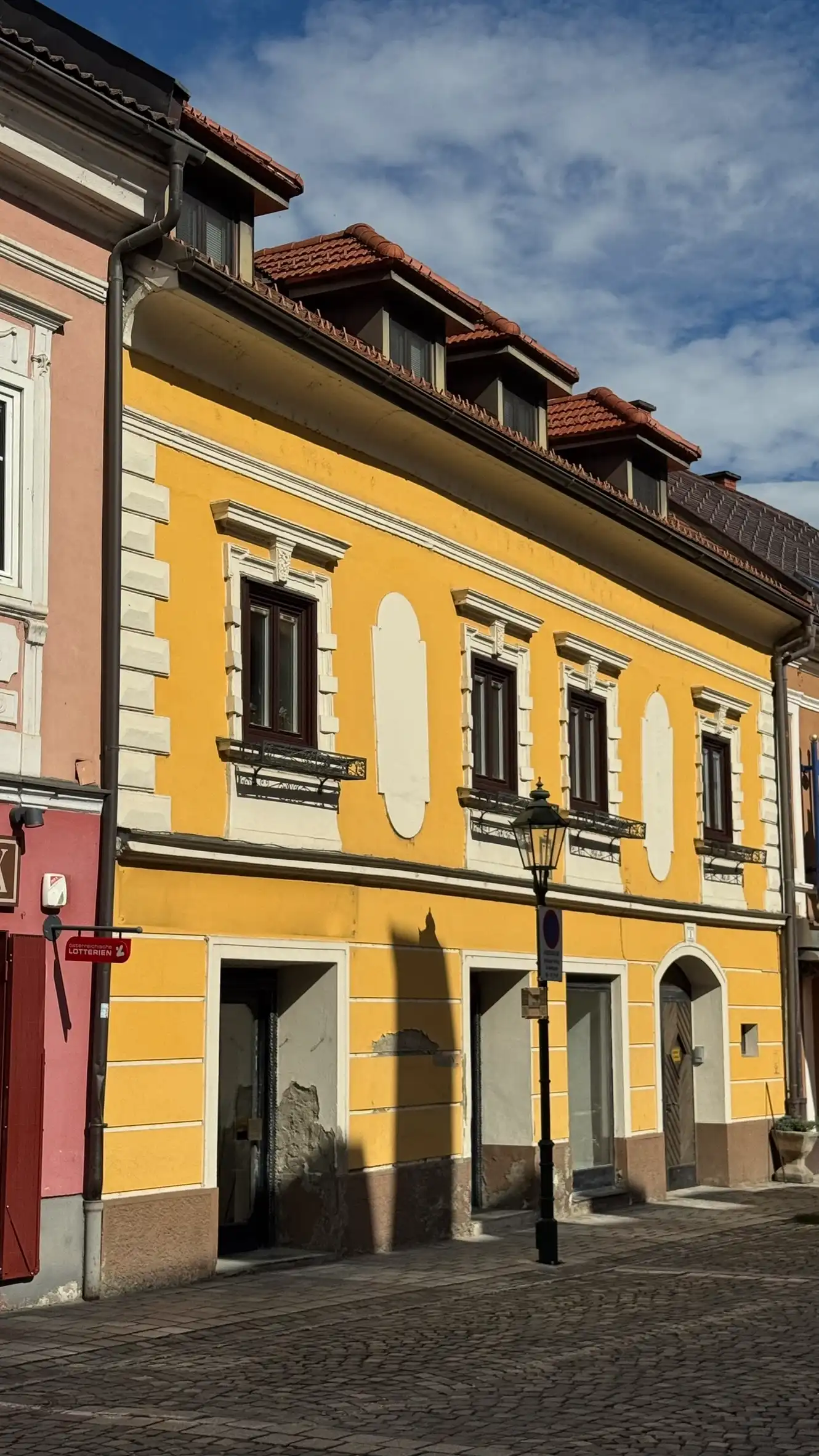
The facade, dating from the final quarter of the 19th century, displays a Historicist design
with refined Neo-Renaissance details on the upper floor.
Notable elements include diamond-rusticated corner stones and delicately profiled cornices.
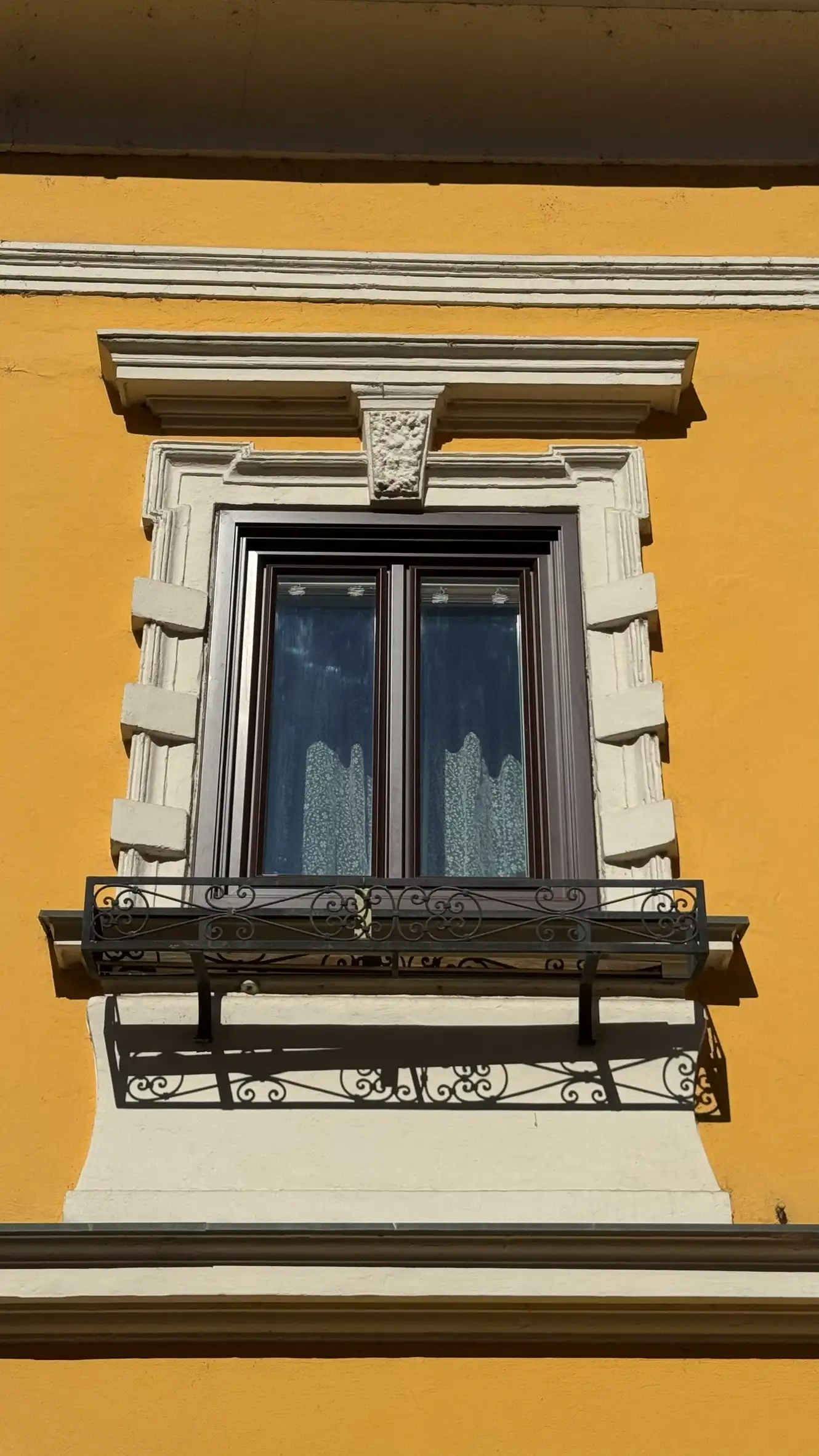
The upper-storey windows feature banded plaster surrounds, ornamented consoles, straight pediments, and profiled sills. The parapet panels beneath the windows are plain.
In the rusticated ground floor, modern shopfronts were inserted during the 1970s.
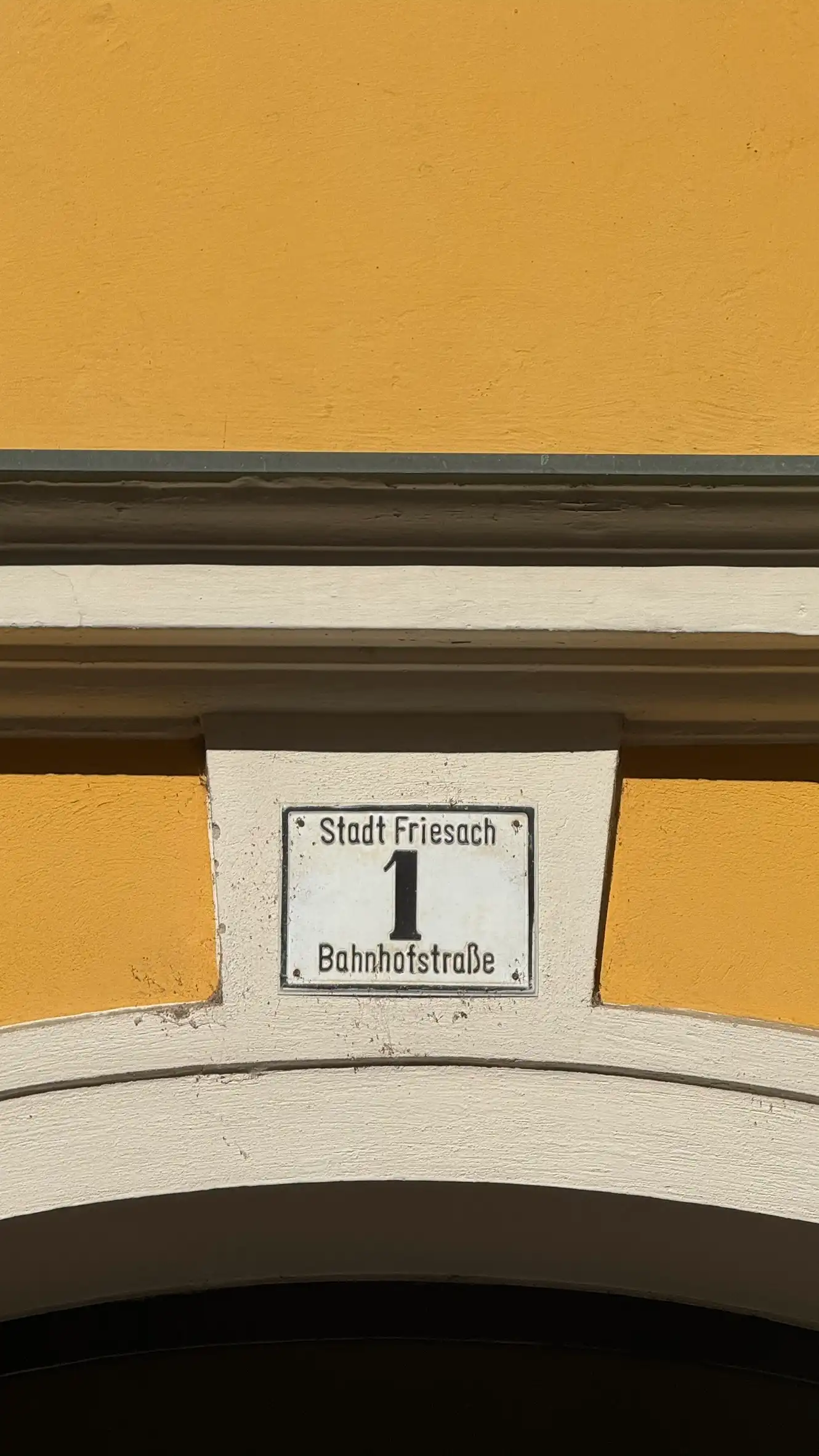
A segmental-arched portal dating from the early 19th century occupies the fourth axis (from left to right).
The building is topped by a saddle roof with dormer windows.
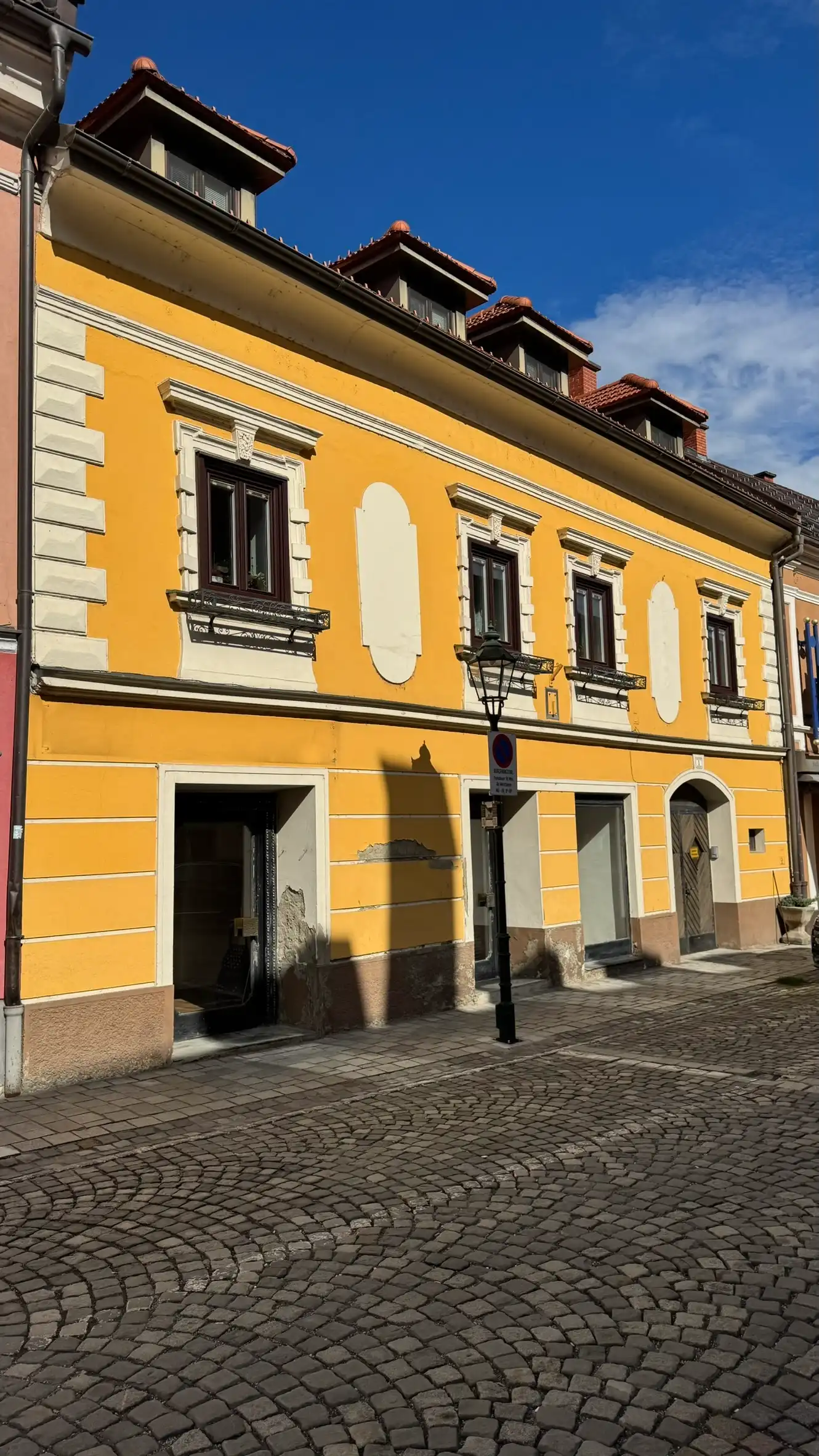
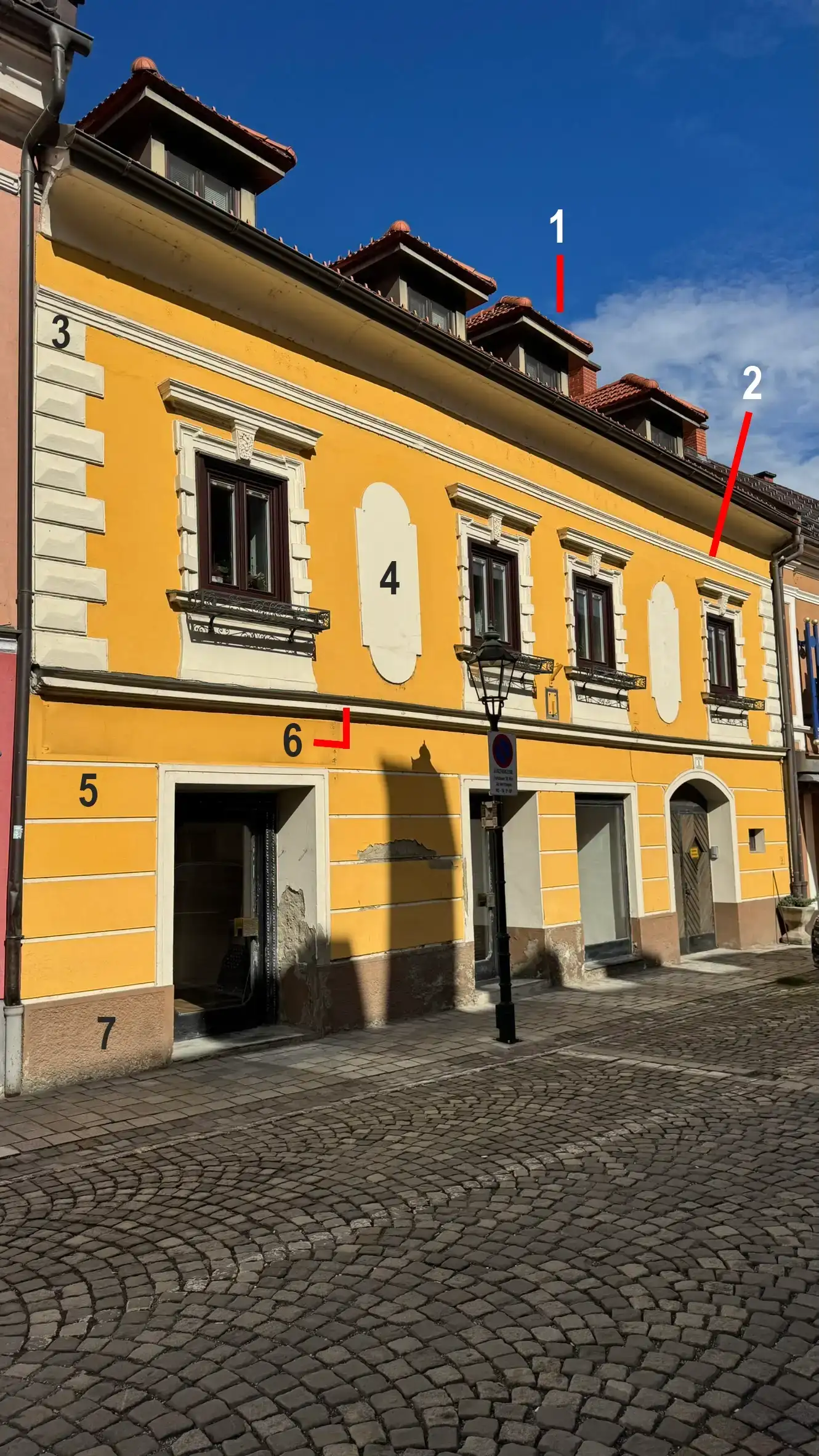
1 dormer window | 2 string course |
3 diamond rustication | 4 cartouche |
5 banded rustication | 6 cornice | 7 plinth course
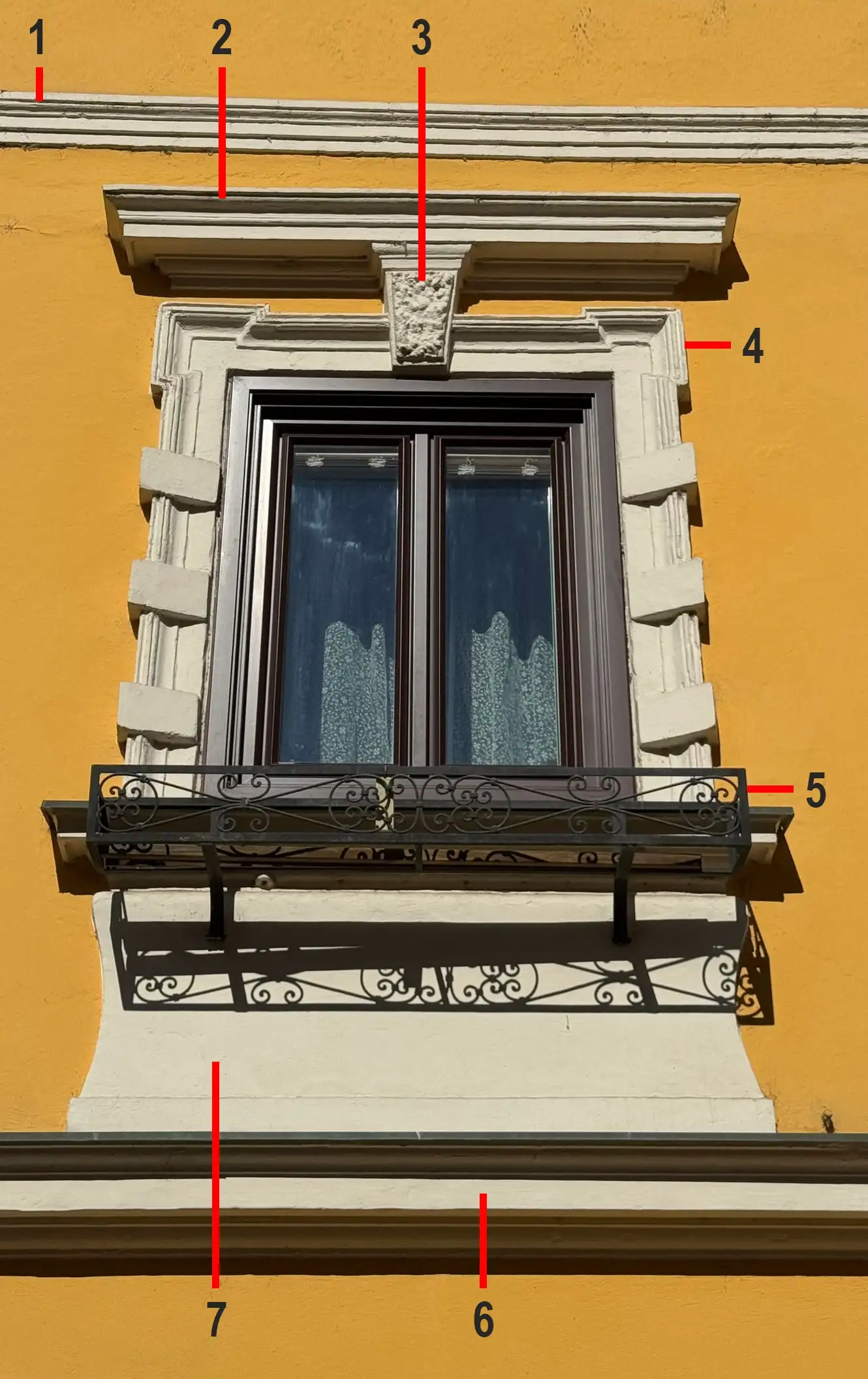
1 string course | 2 window cornice | 3 console |
4 decorated surround | 5 wrought-iron flower box |
6 cornice | 7 plasterwork panel
Details of the Window Section
String Course – A narrow horizontal band visible above the window section.
Window Cornice – The projecting element above the window, lending the composition a classical note.
Console – A single, decorative bracket positioned centrally under the window cornice, giving it visual support.
Decorated Surround – The window is framed with a pronounced, rusticated plaster surround.
Wrought-Iron Flower Box – A wrought-iron feature mounted below the sill, combining utility with ornamental refinement.
Cornice – A horizontally projecting moulding below the window and marking the upper termination of its design.
Plasterwork Panel – The smooth plaster field beneath the window and above the lower cornice, providing balance within the composition.
The window design at Bahnhofstraße 1 reflects a refined blend of Neoclassical and late Historicist influences. The rusticated plaster surround and console-supported cornice recall the vocabulary of classical architecture, while the warm ochre facade and wrought-iron flower box lend the composition a Biedermeier charm. Together, these elements create an elegant yet restrained urban facade, characteristic of 19th-century Central European townhouses.