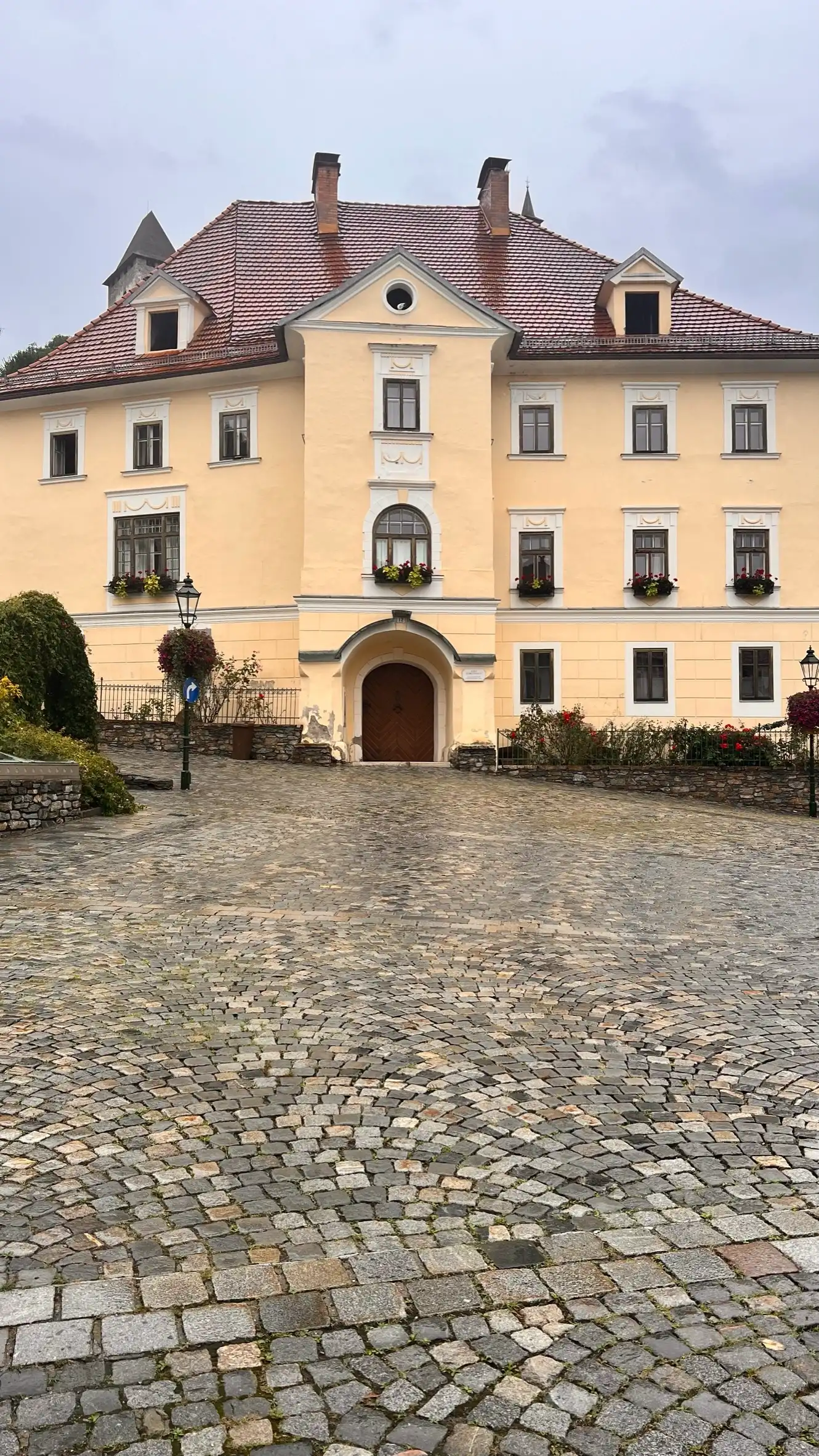
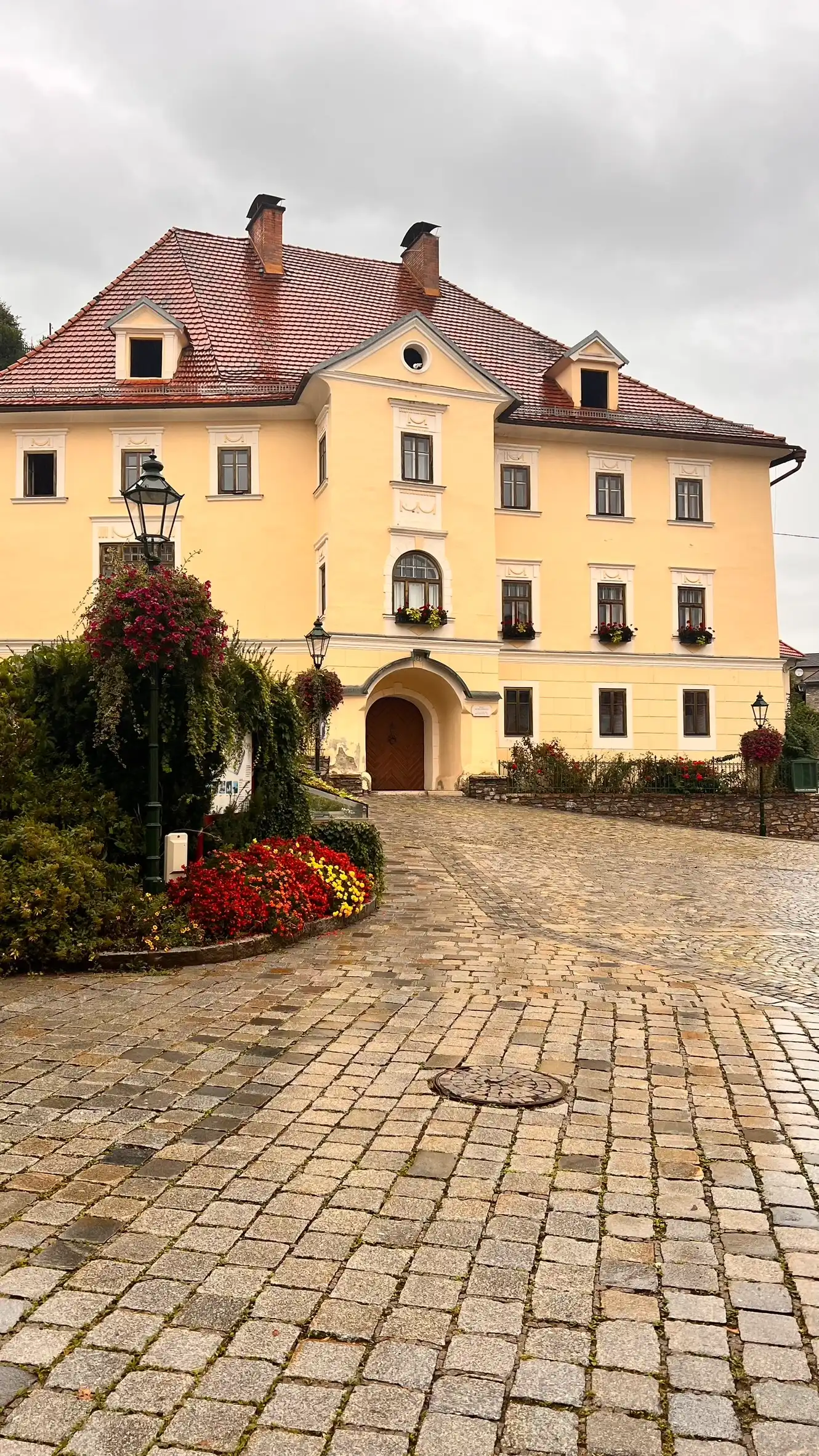
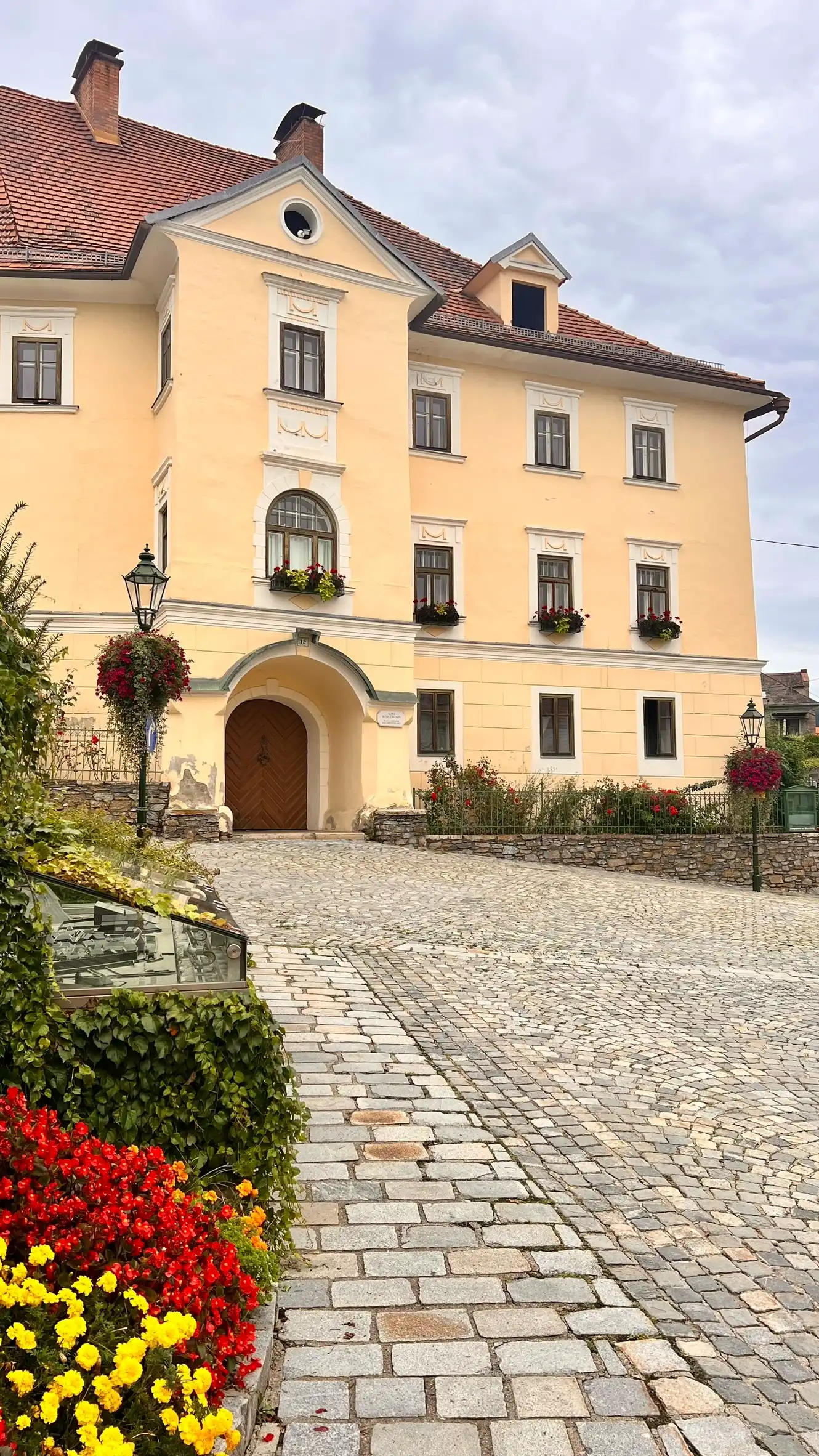
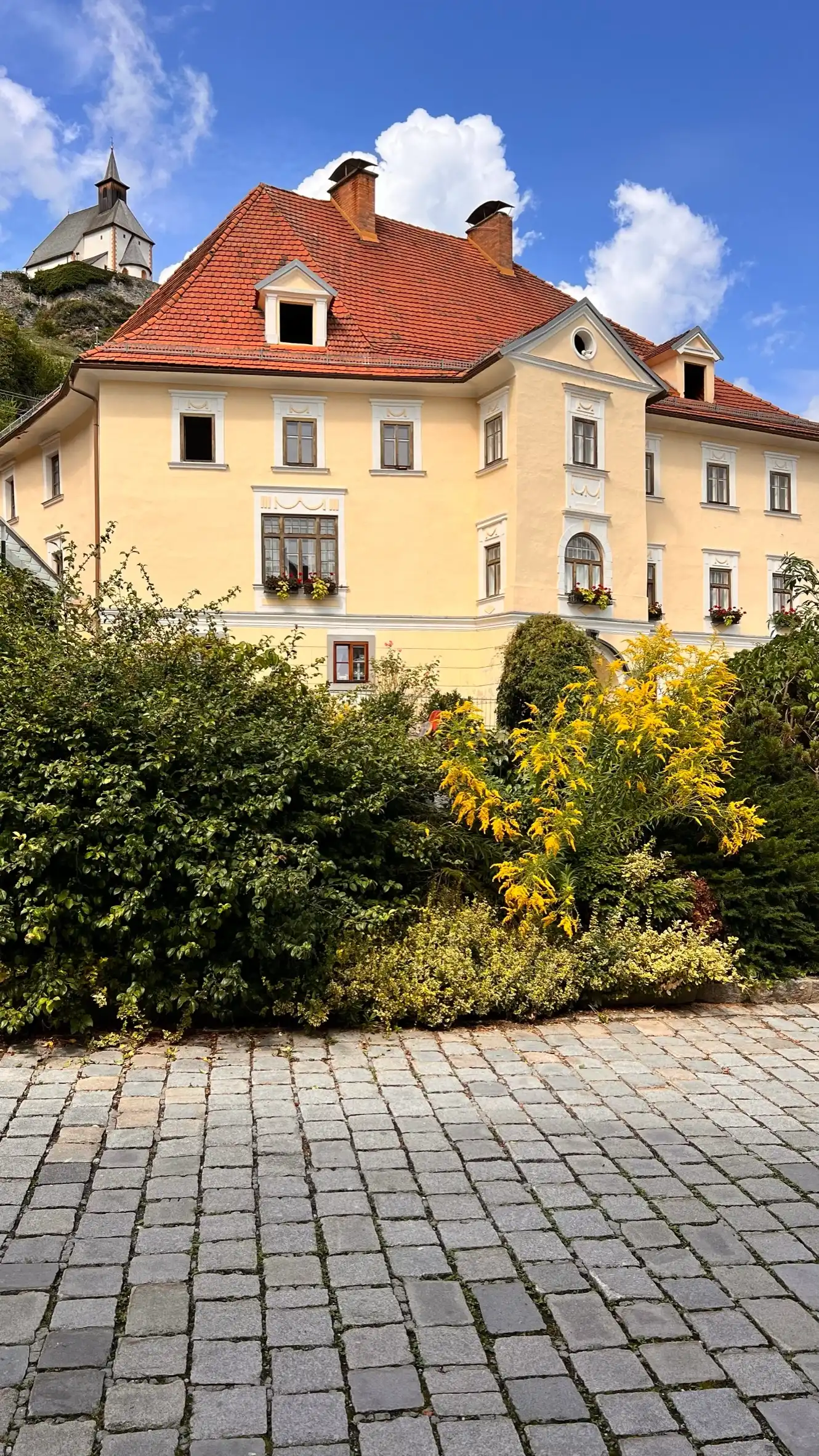
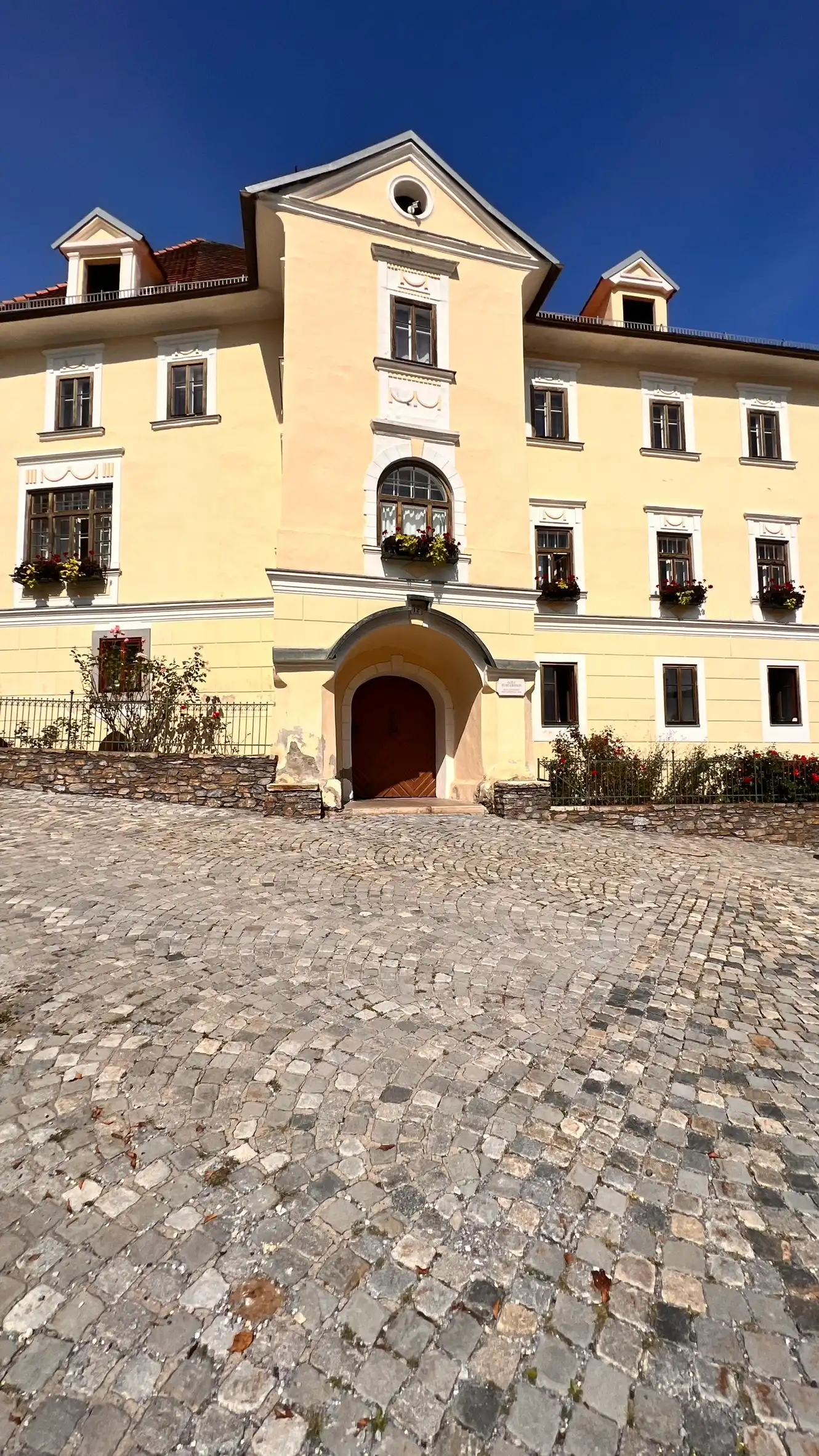
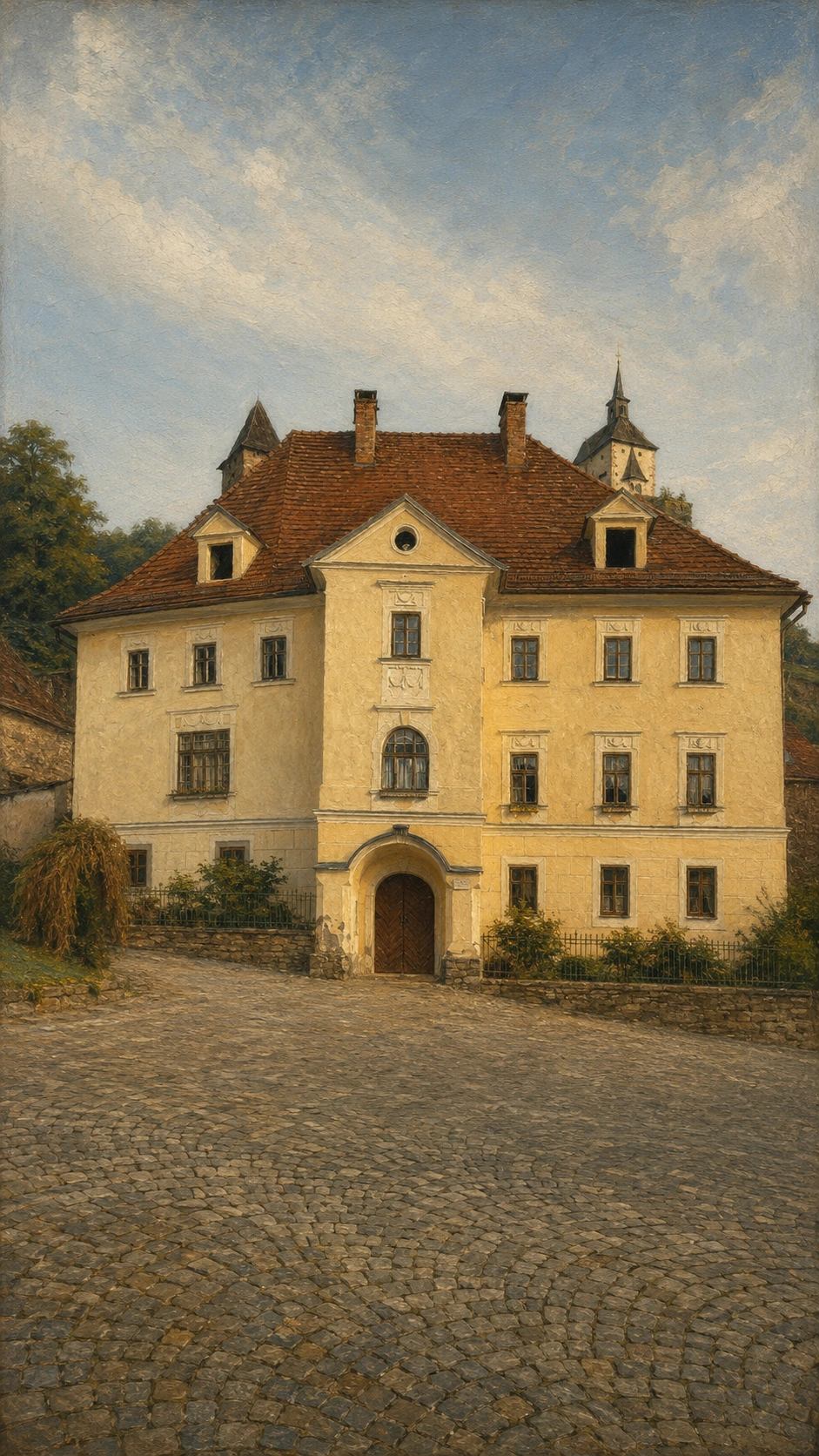
Hauptplatz 12
History
1600
Around 1600, the building belonged to Augustin Postler, as documented in archival sources.
1700
From around 1700, the property was owned by a master mason and later came into the possession of the gingerbread maker Franz.
1813
In 1813, the gingerbread maker sold the property to the Imperial Royal Salt Office (K. K. Salzamt) in Friesach.
Location
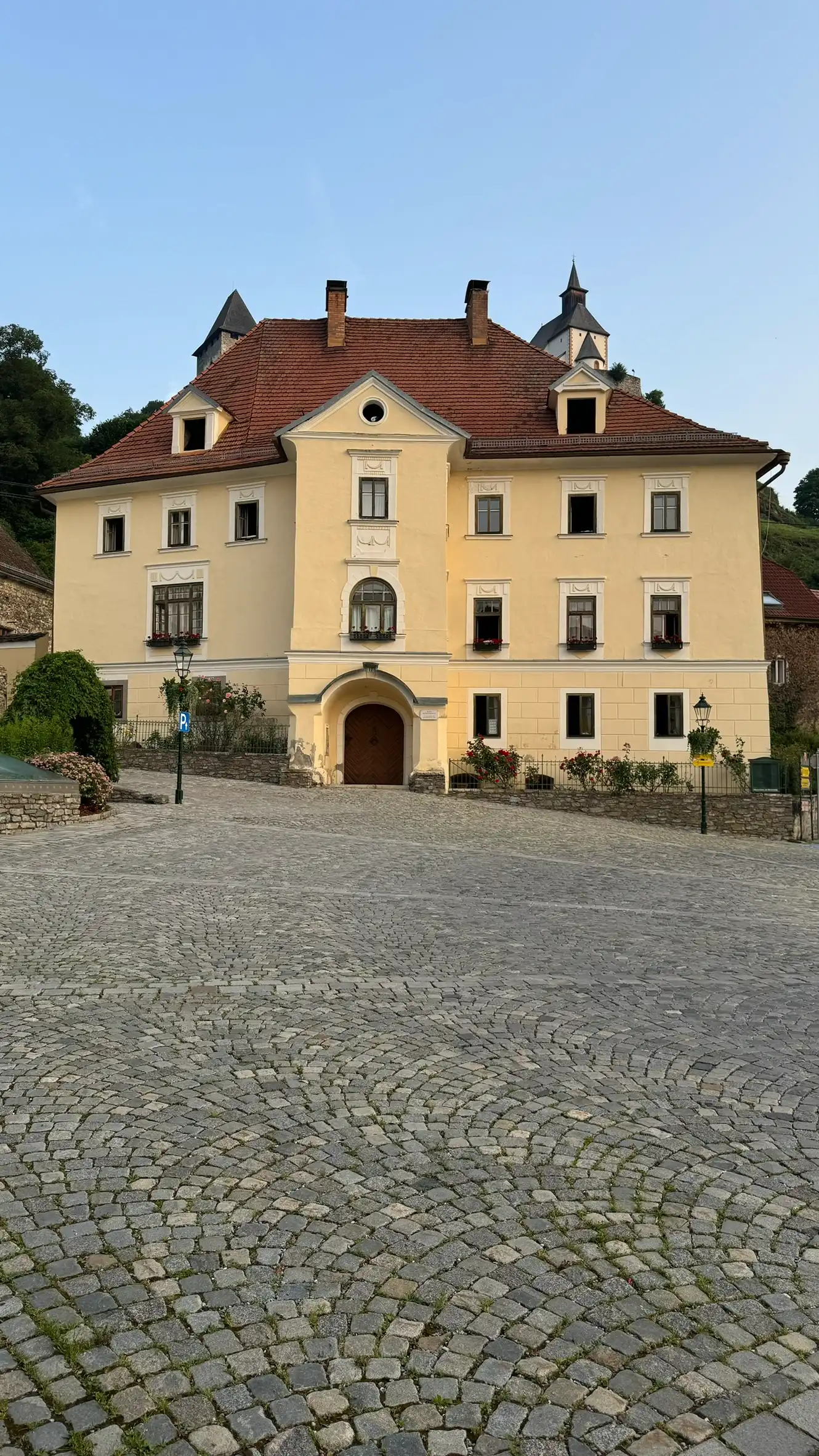
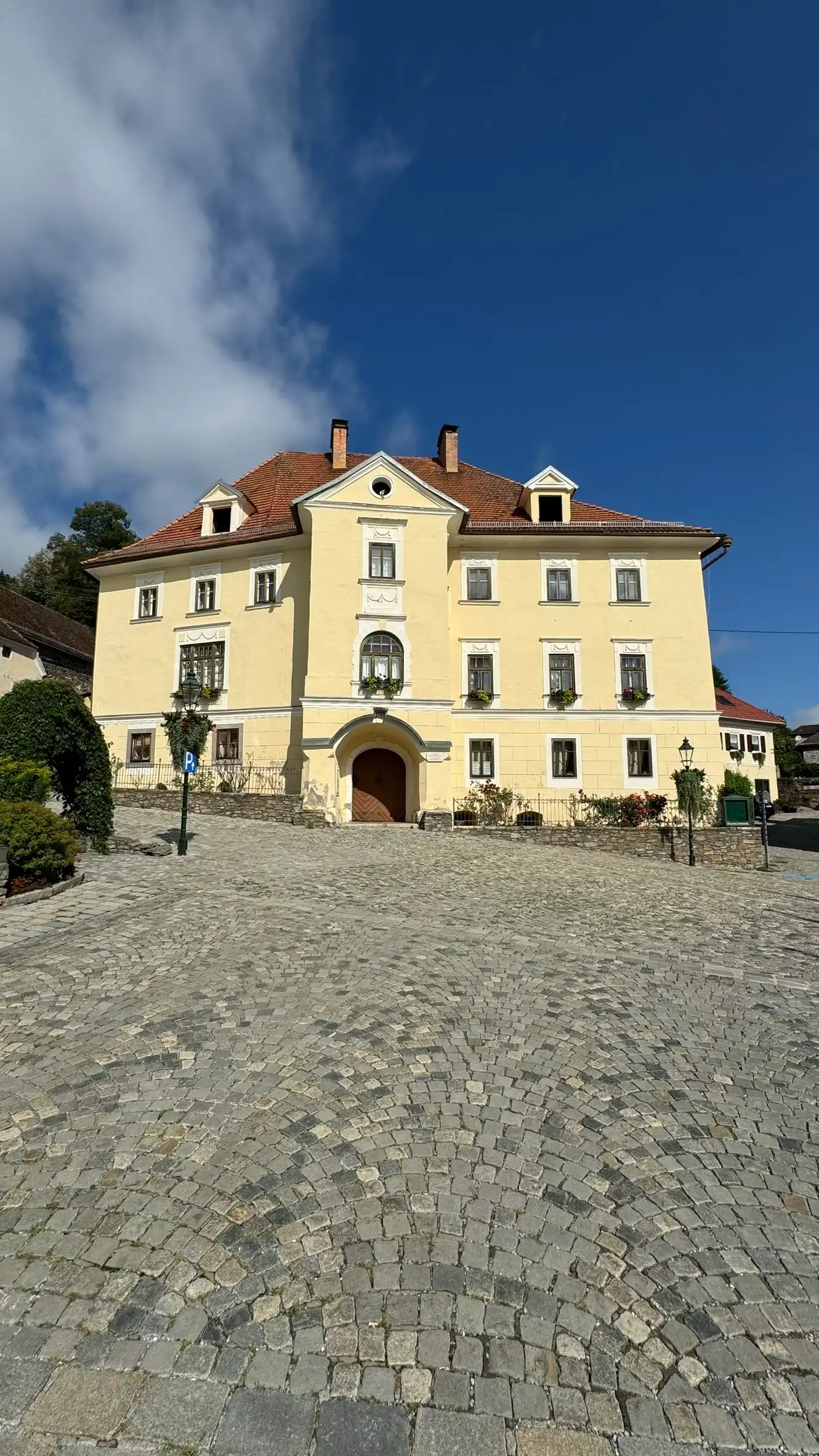
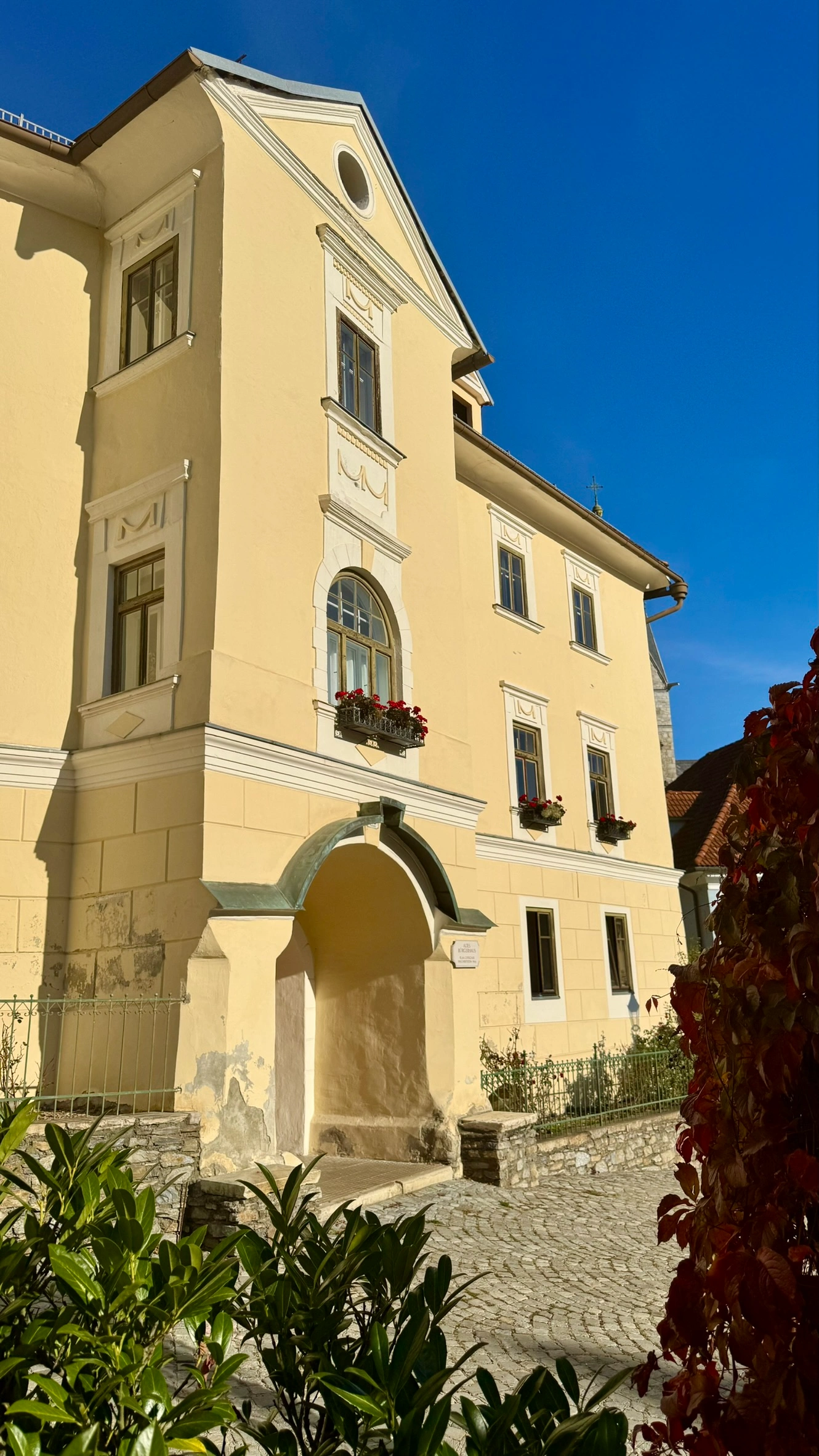
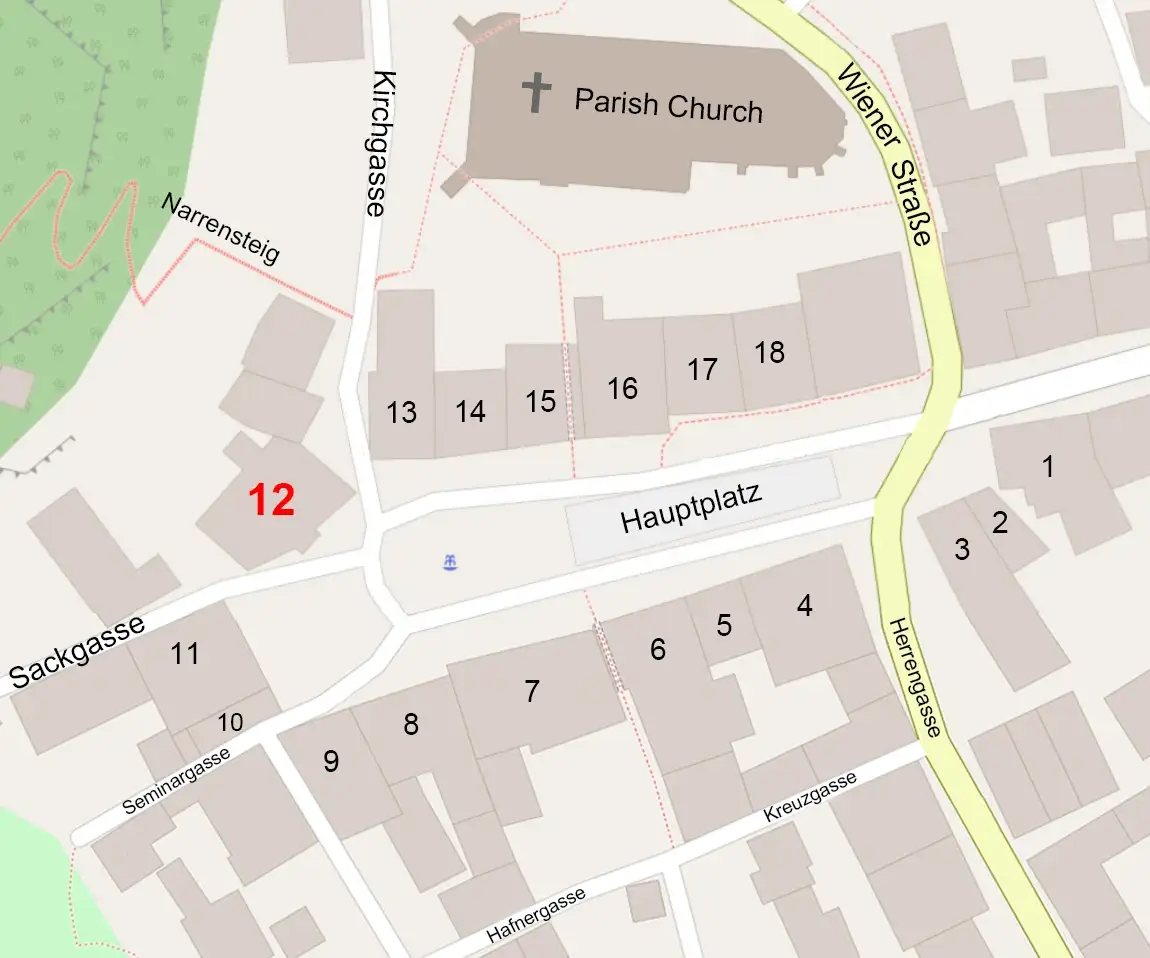
It is a freestanding, monumental structure dominating the north-west corner of the main square.
Architectural History
High Middle Ages
Its earliest construction phase dates back to the first half of the 13th century.
Late Middle Ages
It was expanded in several phases during the Late Middle Ages.
16th and 18th Century Alterations
Alterations were carried out in the 16th century and the 18th century.
1800
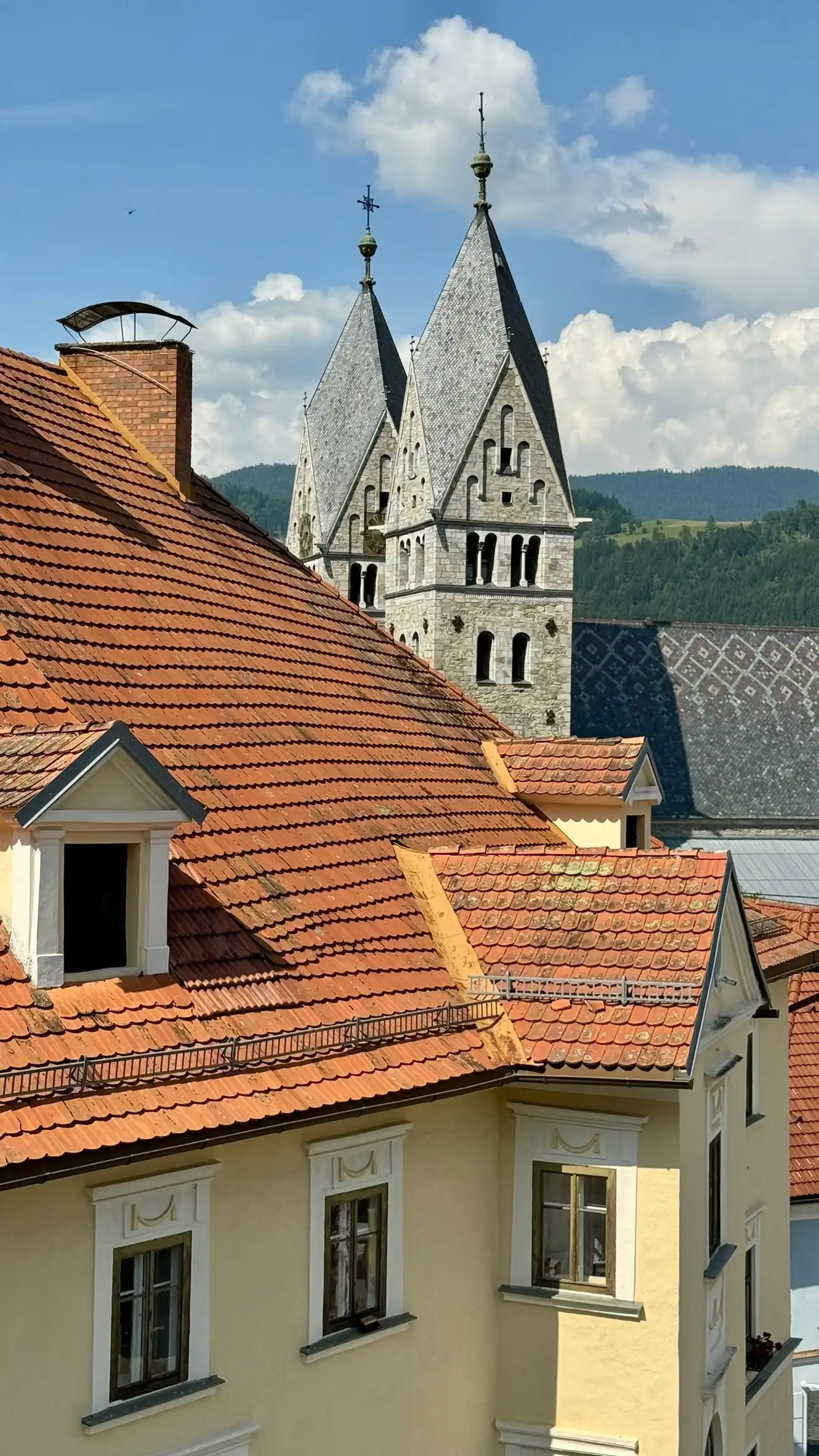
The facade and the tall hipped roof with dormer projection date from around 1800.
Architectural Description
Exterior
Late Neoclassical–Josephinian Facade
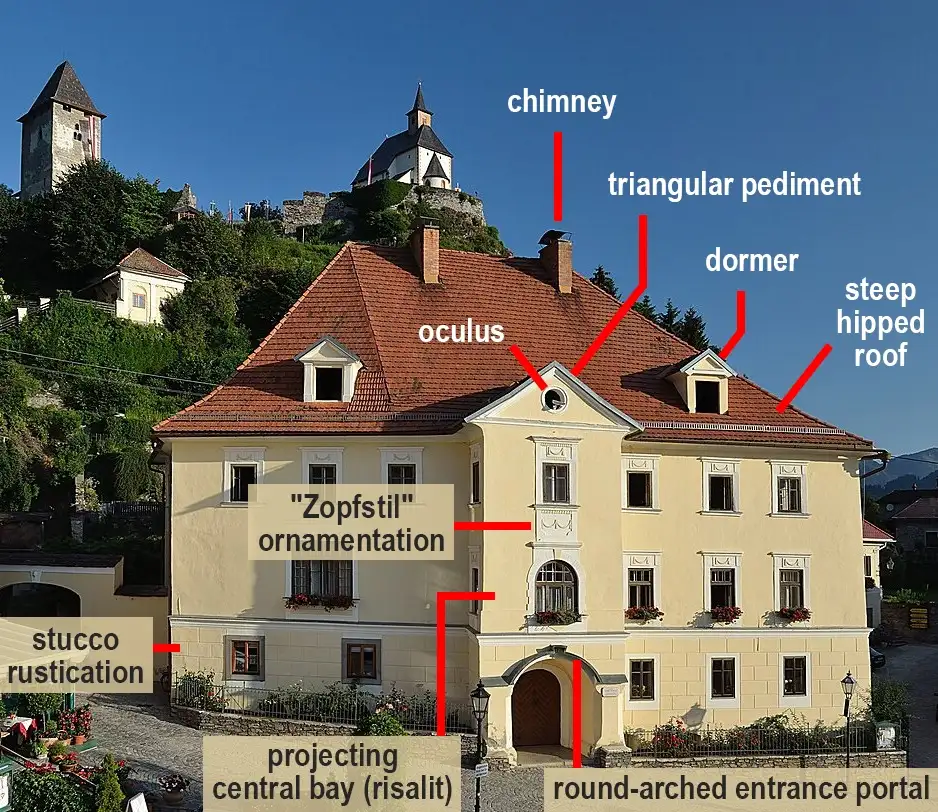
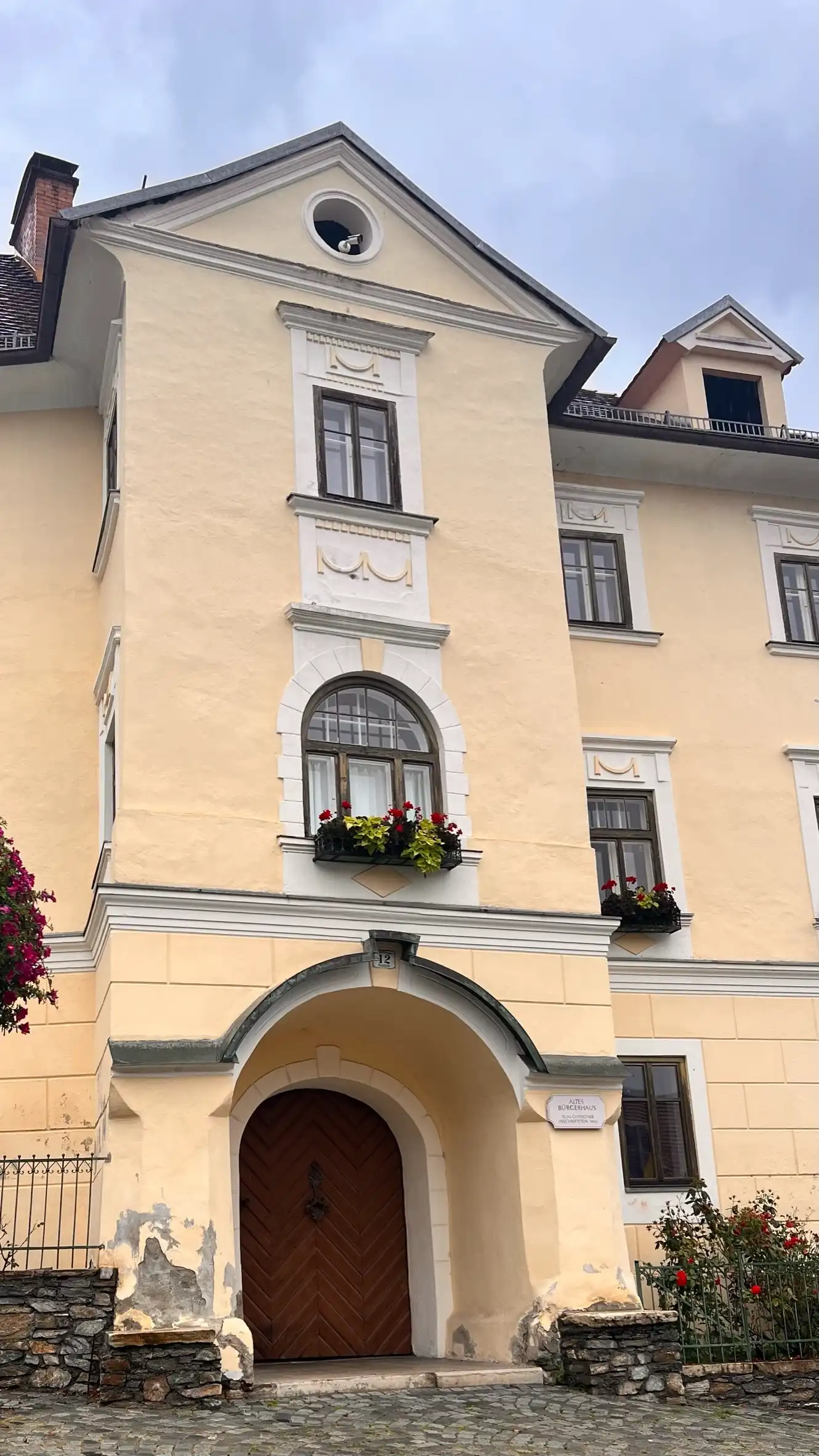
The massive medieval building received its present facade around 1800, executed in simple yet refined Late Neoclassical–Josephinian style.
Three-Storey Building
The dominating structure with its three storeys overlooks the main square.
Central Risalit
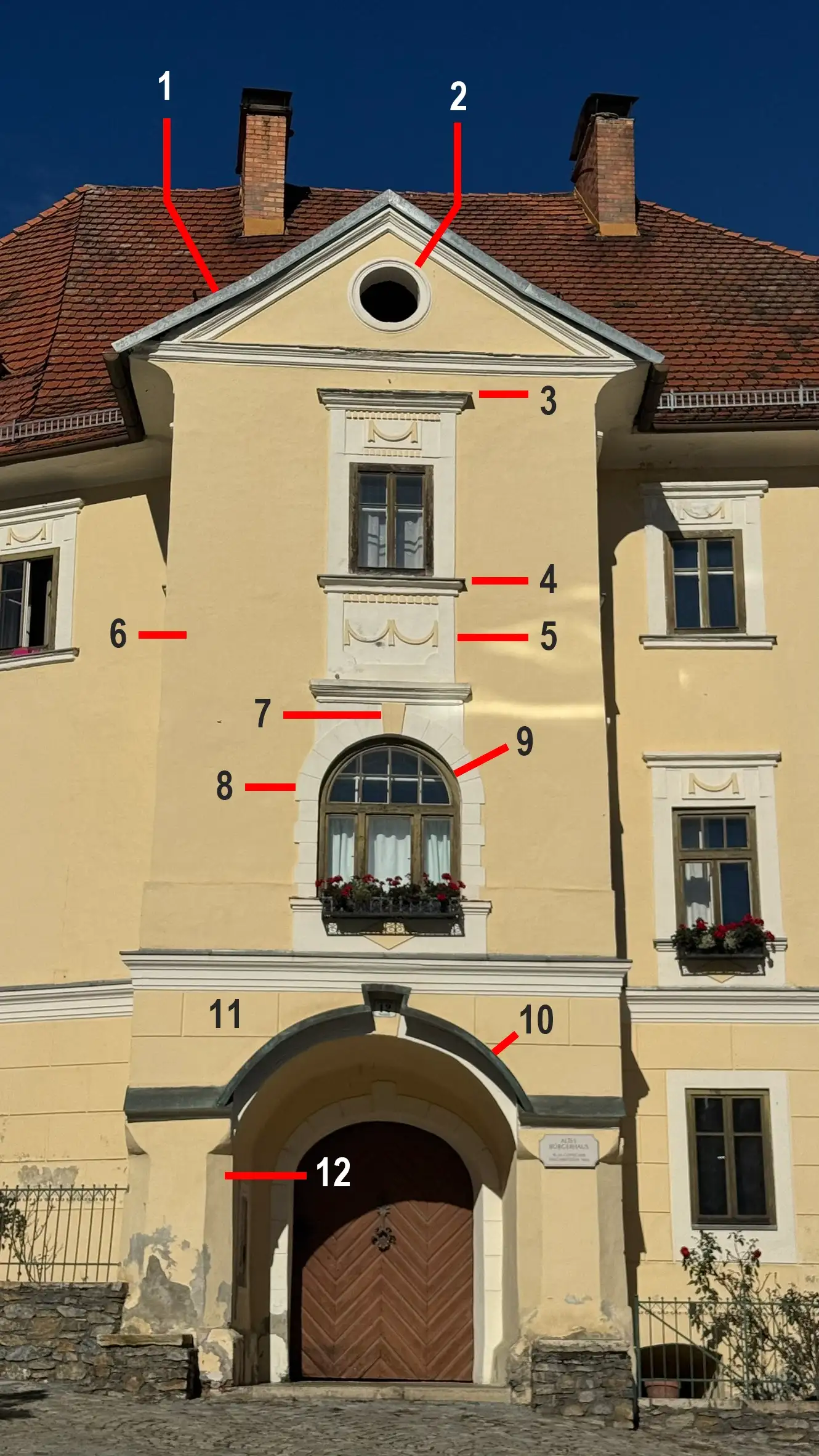
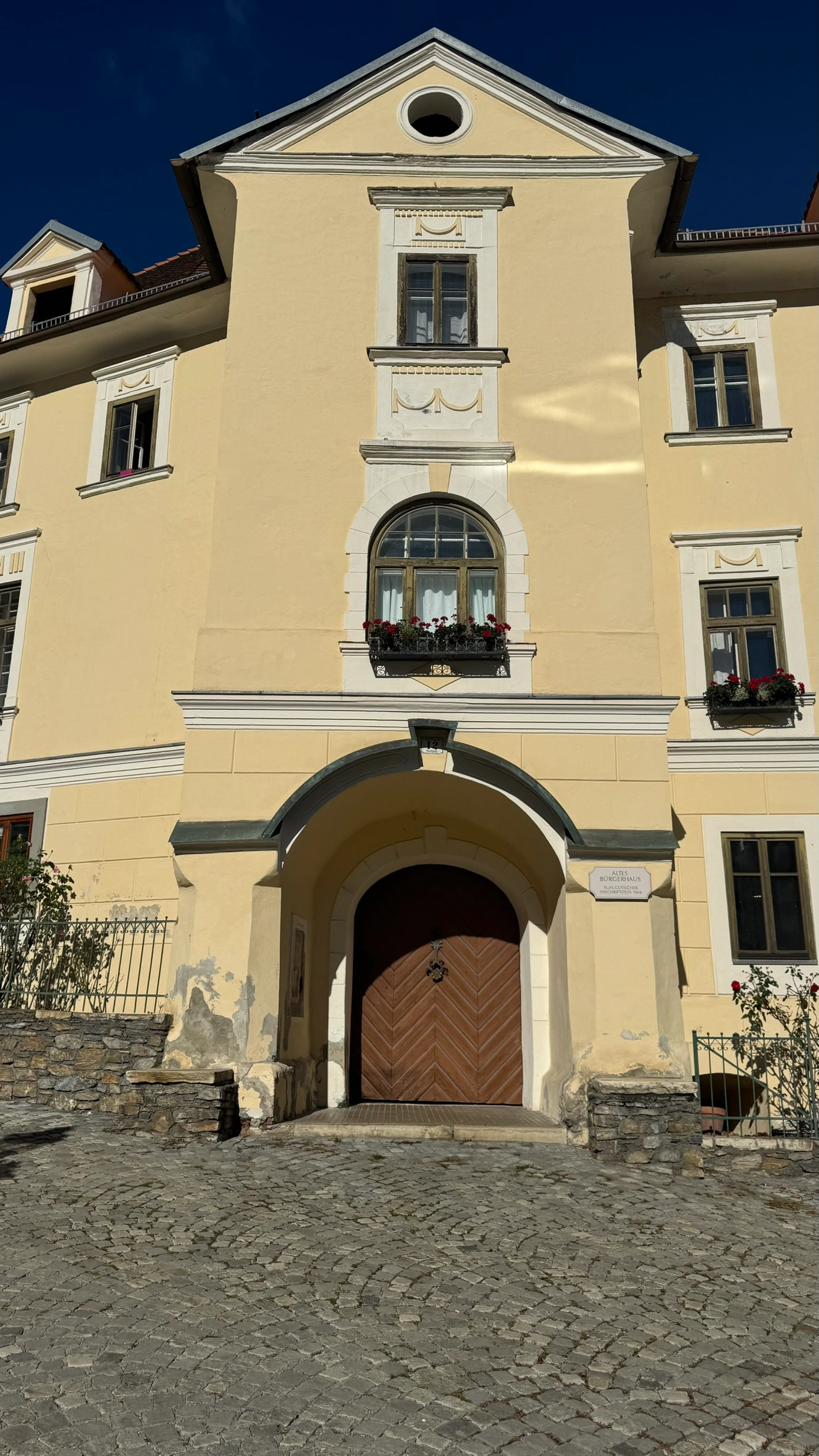
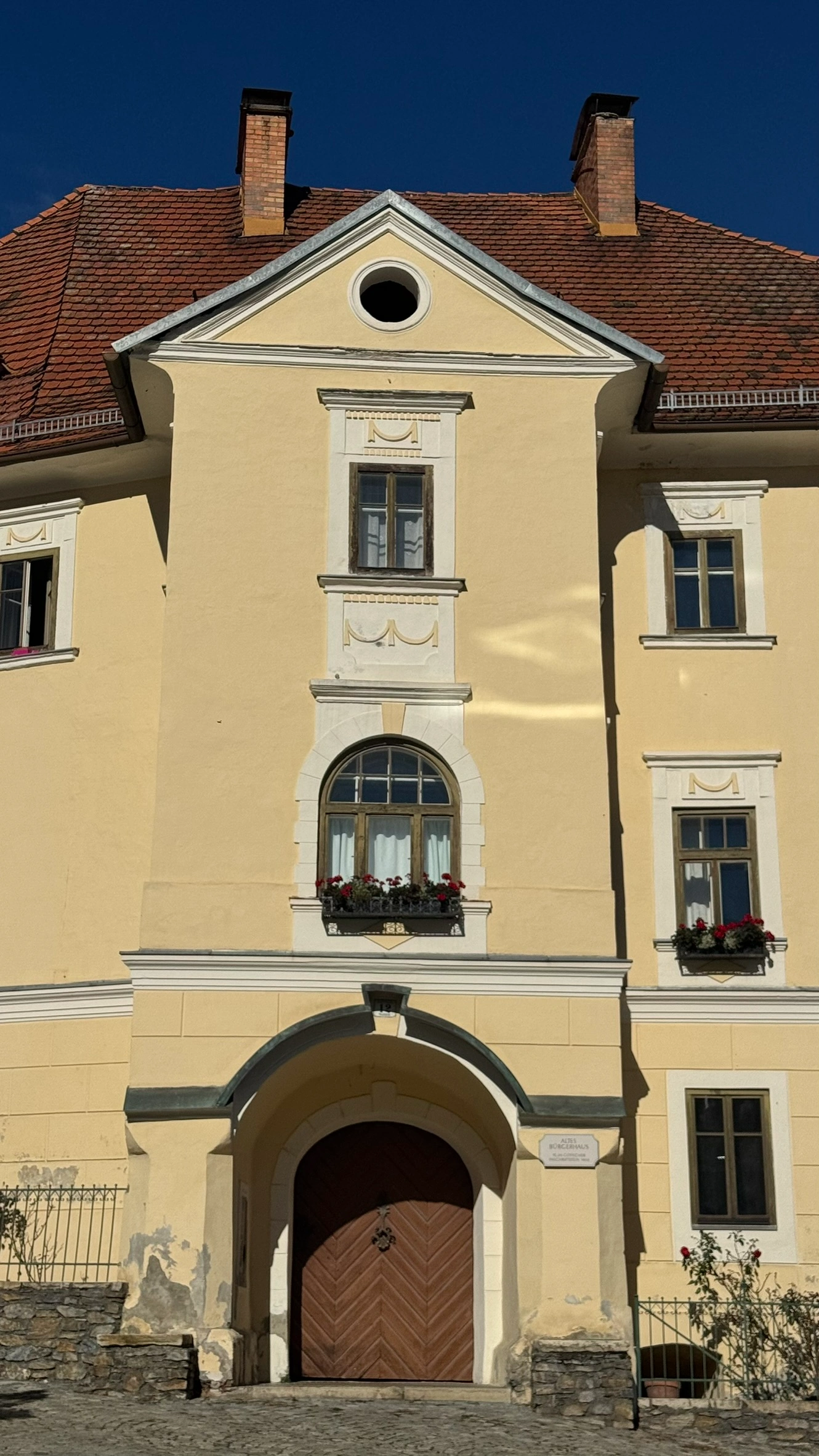
The obtusely angled square-front elevation is dominated at the bend by a single-bay central risalit of Late Medieval origin. The risalit contains an open entrance hall on the ground floor with a broad outer segmental-arched opening flanked by chamfered wall piers (Late Medieval). A round-arched window was cut into the central risalit around 1900. It is surmounted by a triangular pediment with a round opening.
Rendering
The ground floor features imitation rustication with quoin-like grooving. The two upper floors are smoothly rendered.
Upper Floor Windows
Rectangular windows are set in plain rendered frames, with straight, slender cornice hoods or sills on the upper floors. Window boxes add to the building’s picturesque character. Rhombus-shaped plaster panels appear in the parapets of the principal floor, while the lintel fields show plaited (braided) decoration. Some of the window muntin patterns display Secessionist characteristics.
Inscription Stone
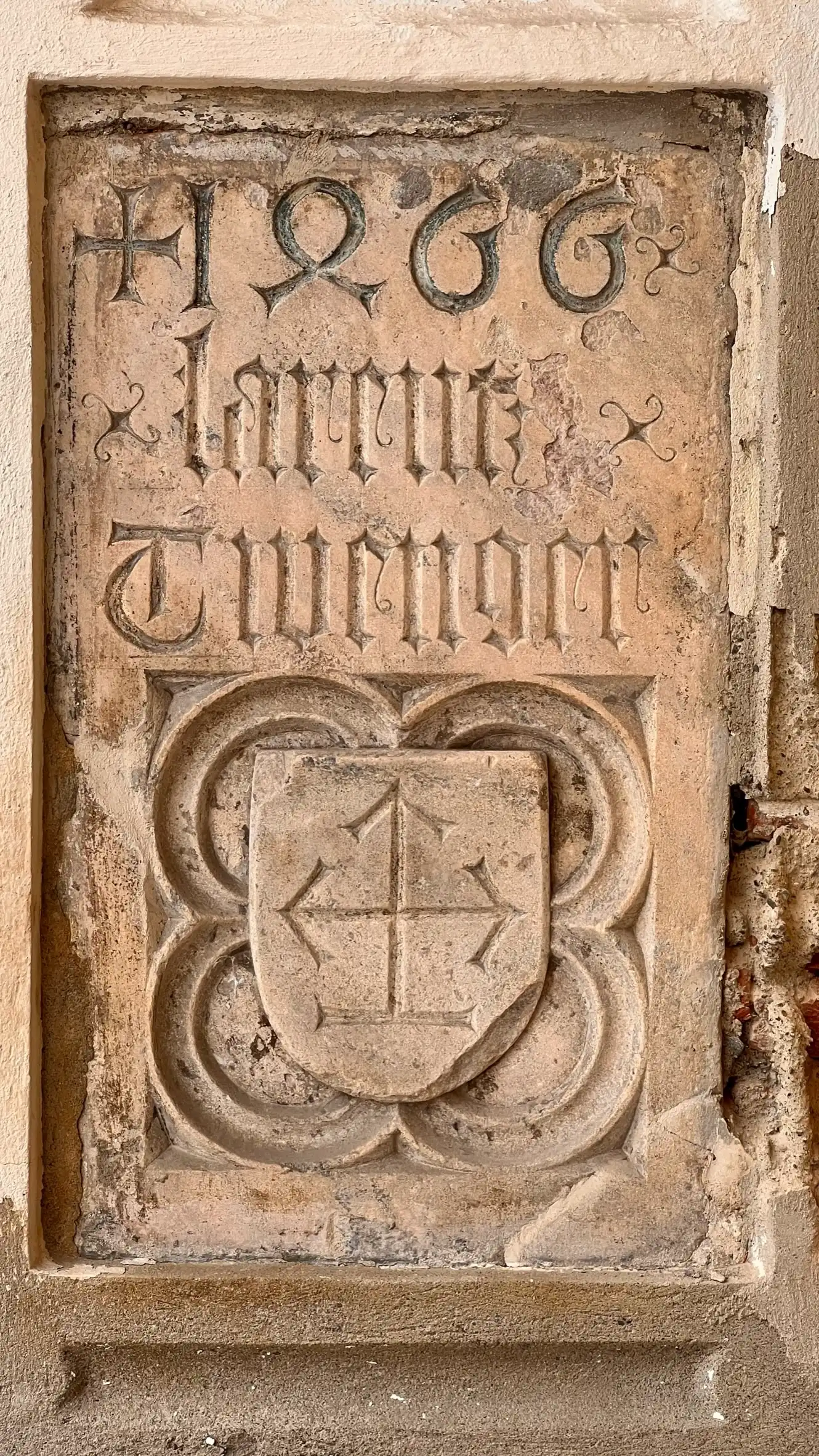
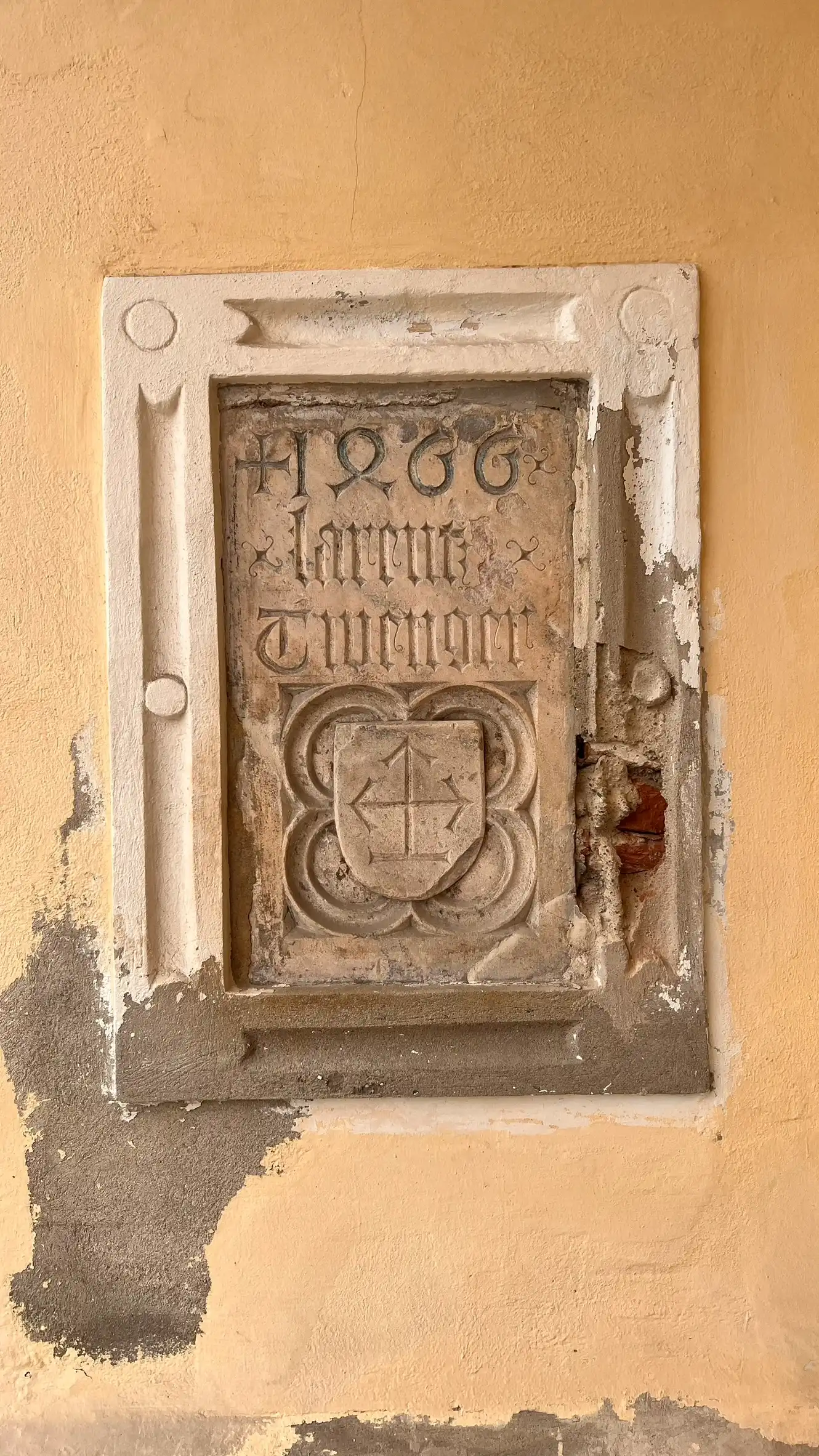
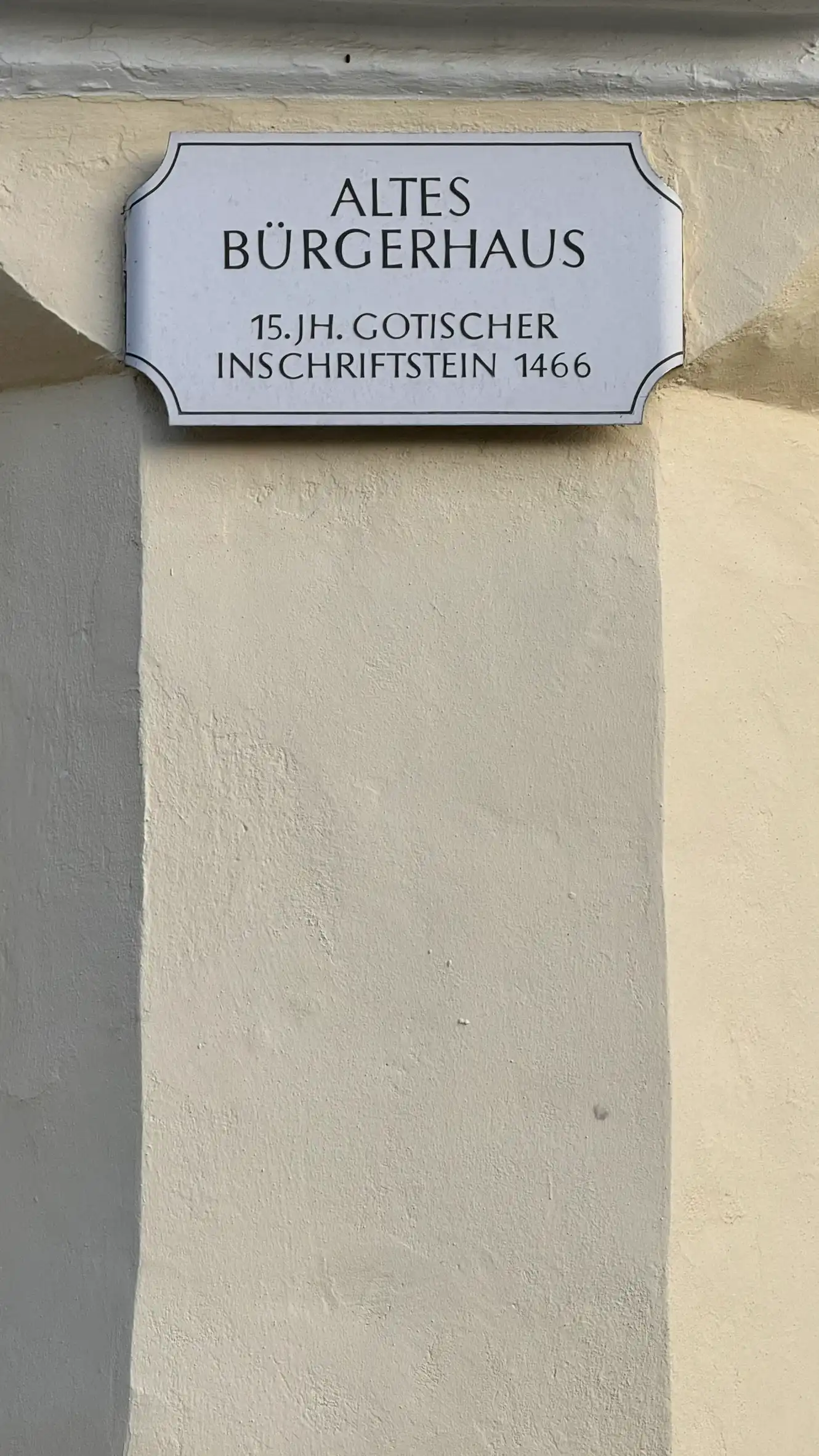
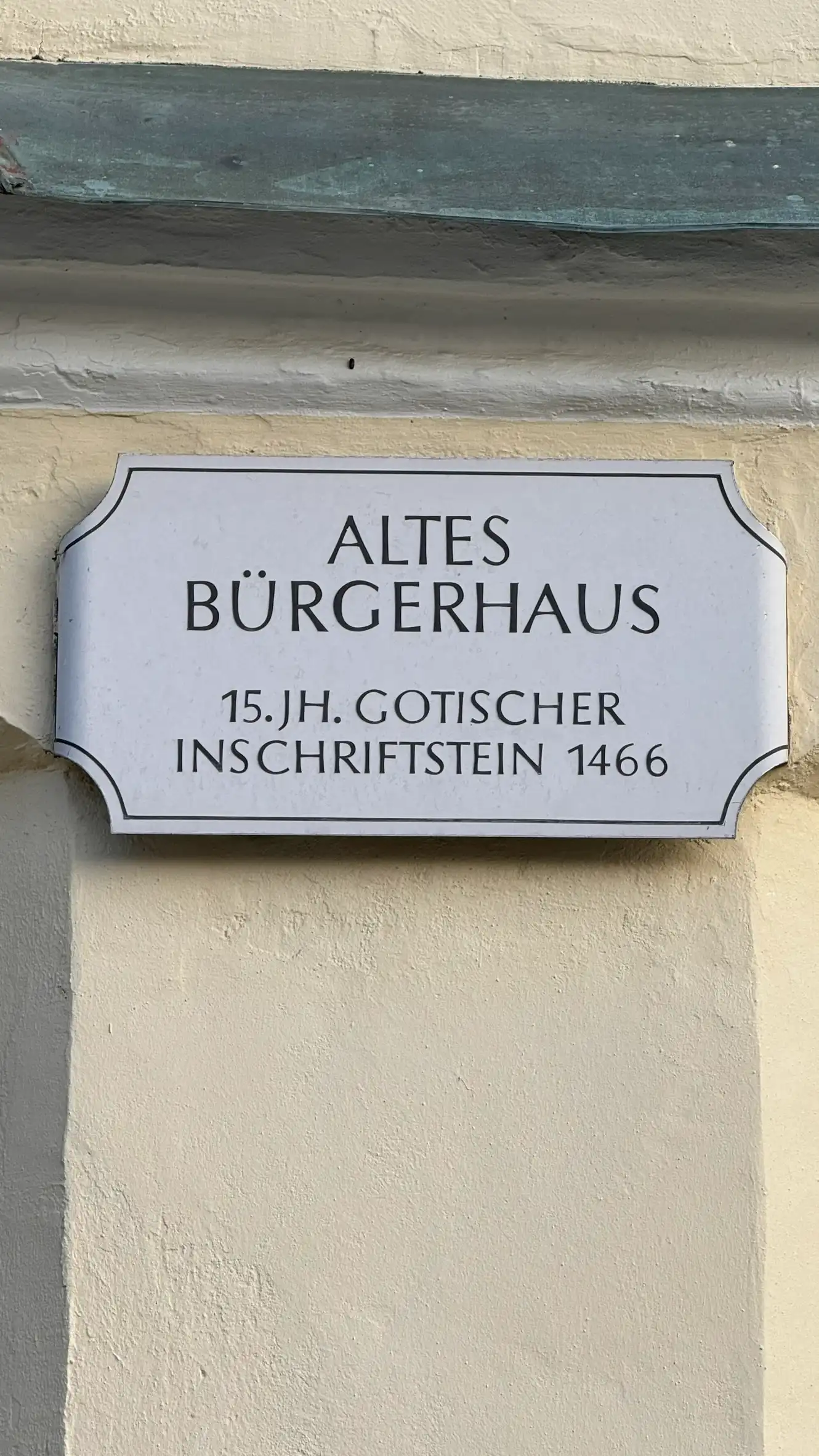
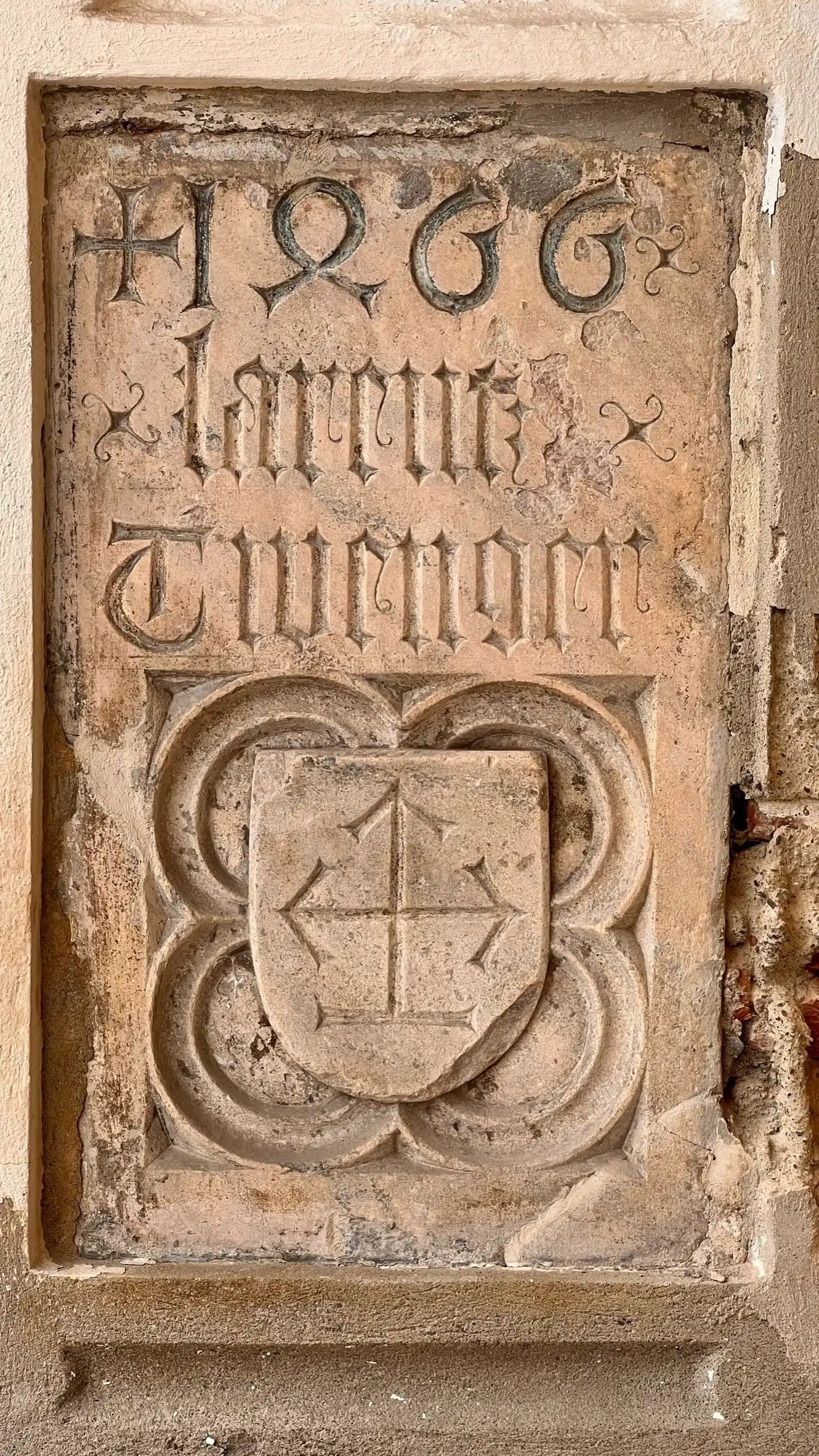
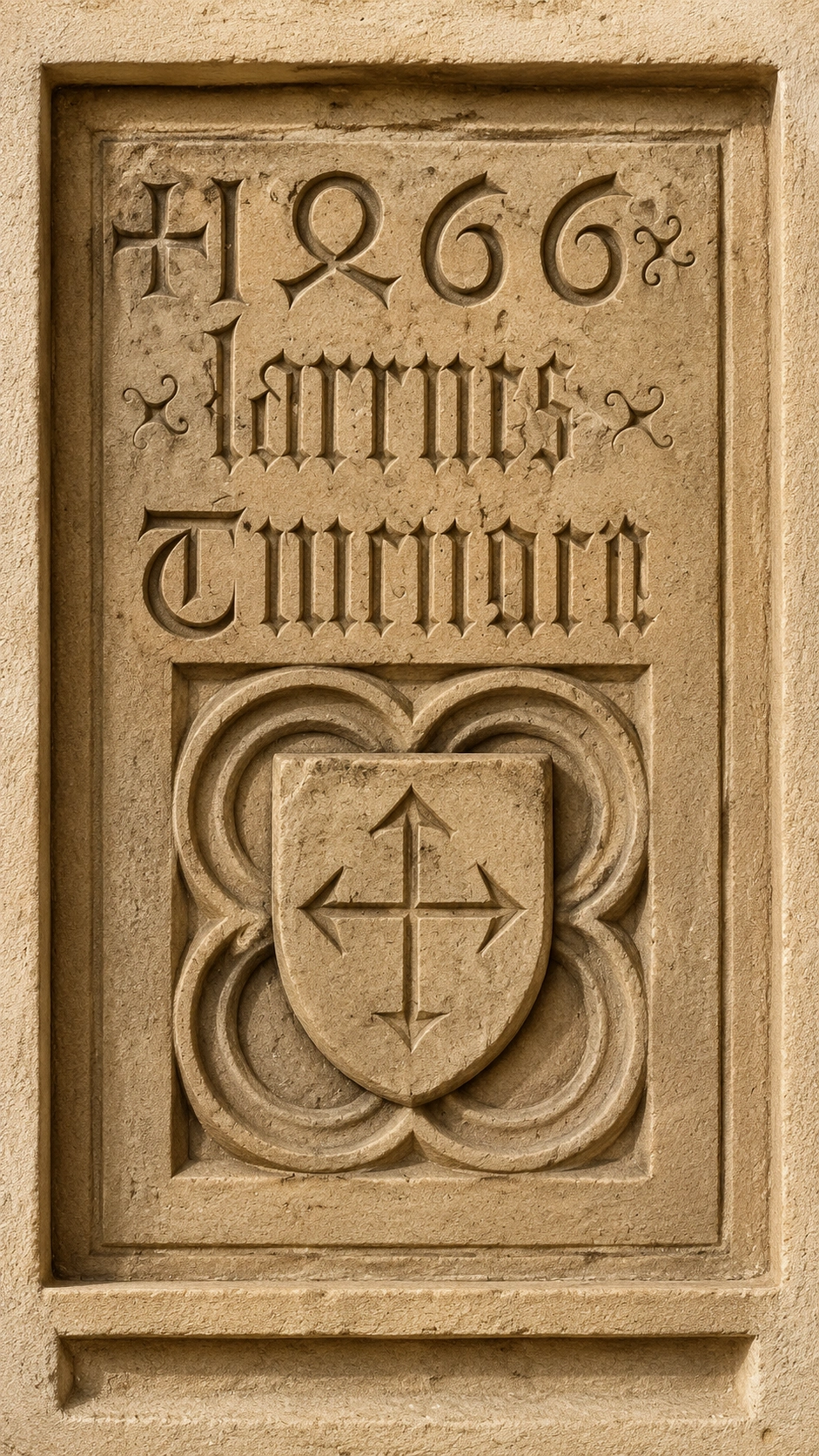
In the entrance hall there is an inscription stone reading “Larentz Twenger 1466”, accompanied by a house mark.
Roof
The steep hipped roof, clad with red tiles, is punctuated by gabled dormer that enliven the roofline.
1 triangular pediment | 2 round opening (oculus)
3 straight pediment | 4 sill
5 plaster panel with braided decoration
6 single-bay central risalit
7 imitation keystone | 8 imitation voussoirs
9 round-arched window
10 segmental-arched opening
11 imitation rustication | 12 chamfered wall pier