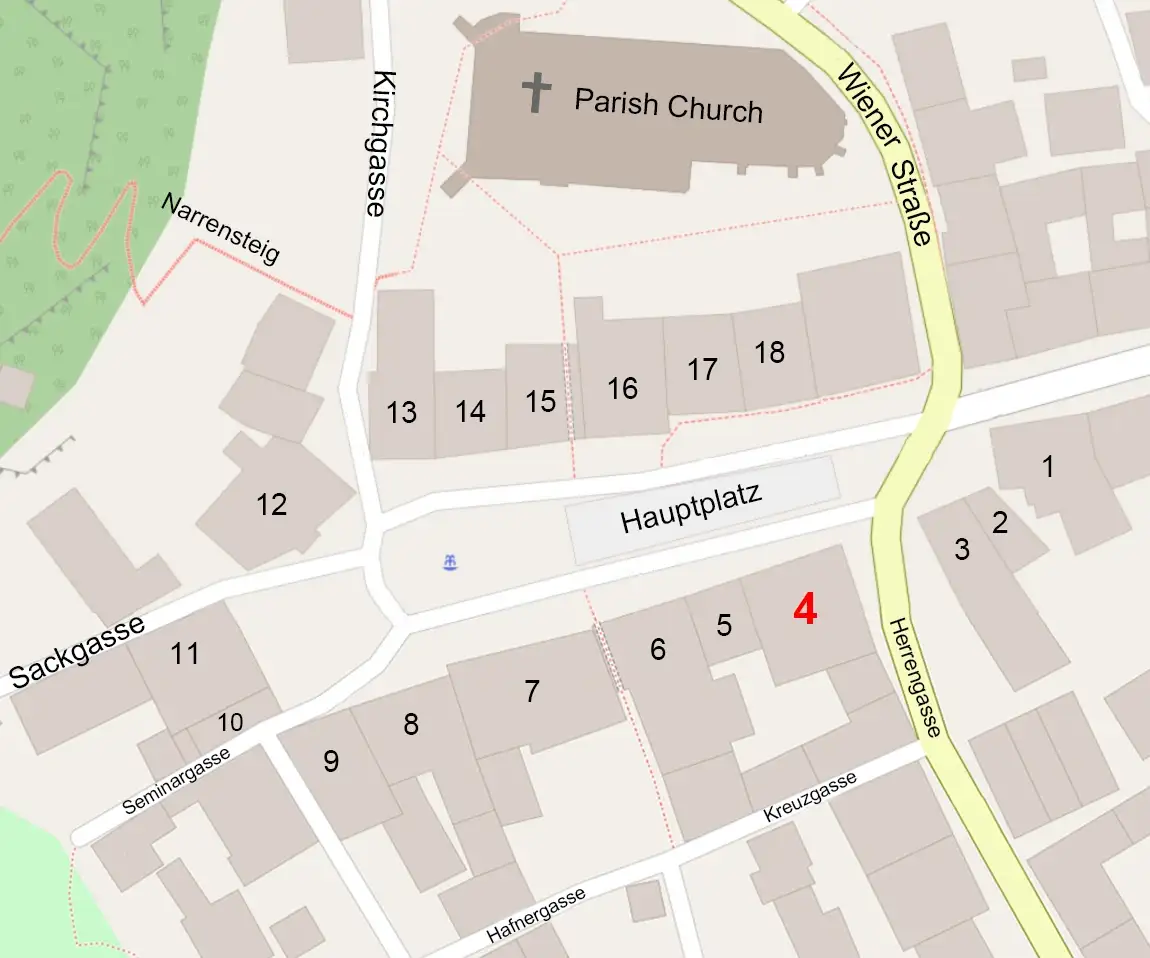
At the beginning of the 18th century, the building was owned by the gingerbread baker Johann Hofer.
In 1890, the property was documented as an inn operated by Lorenz Primig.
Architectural History
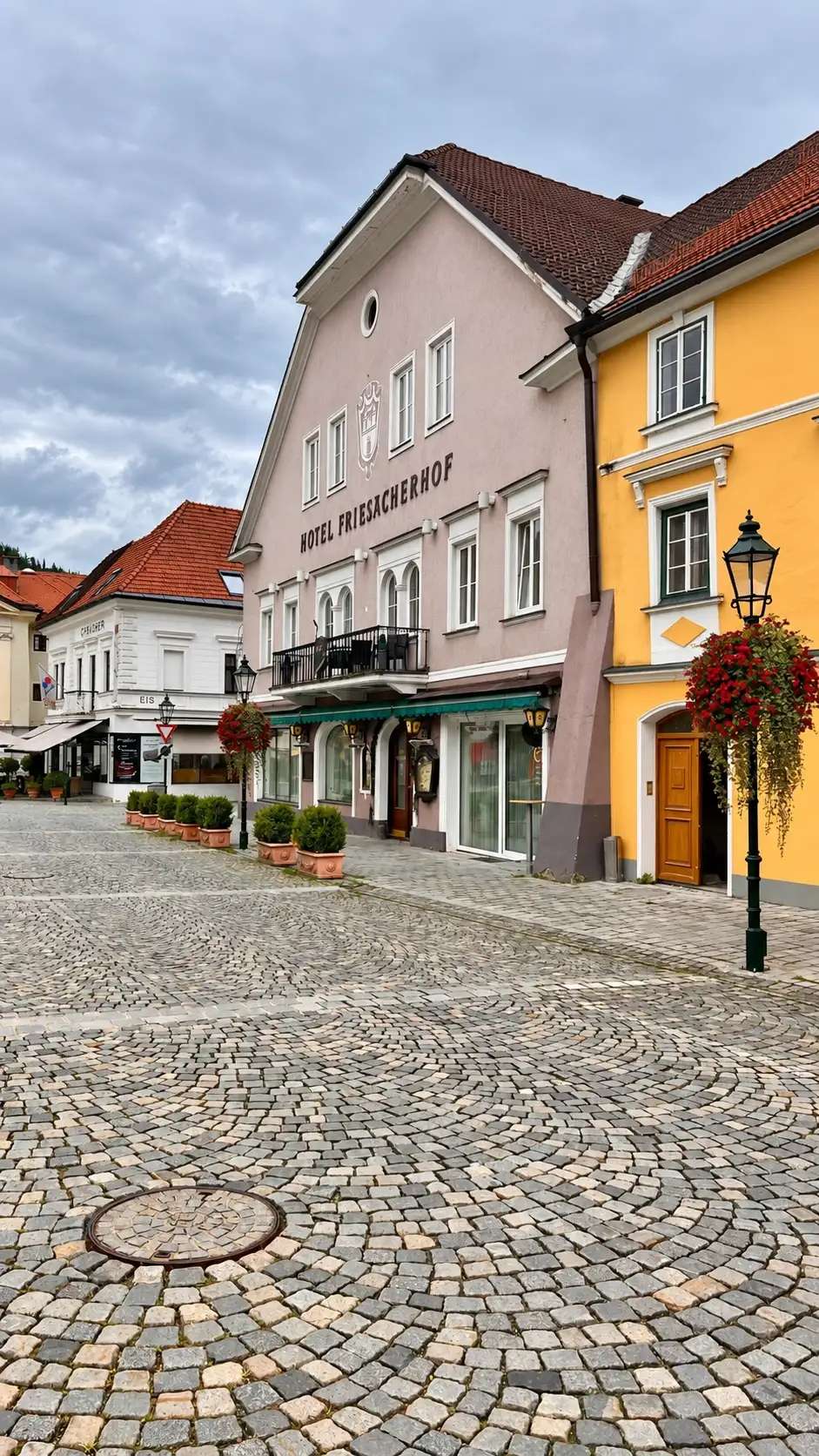
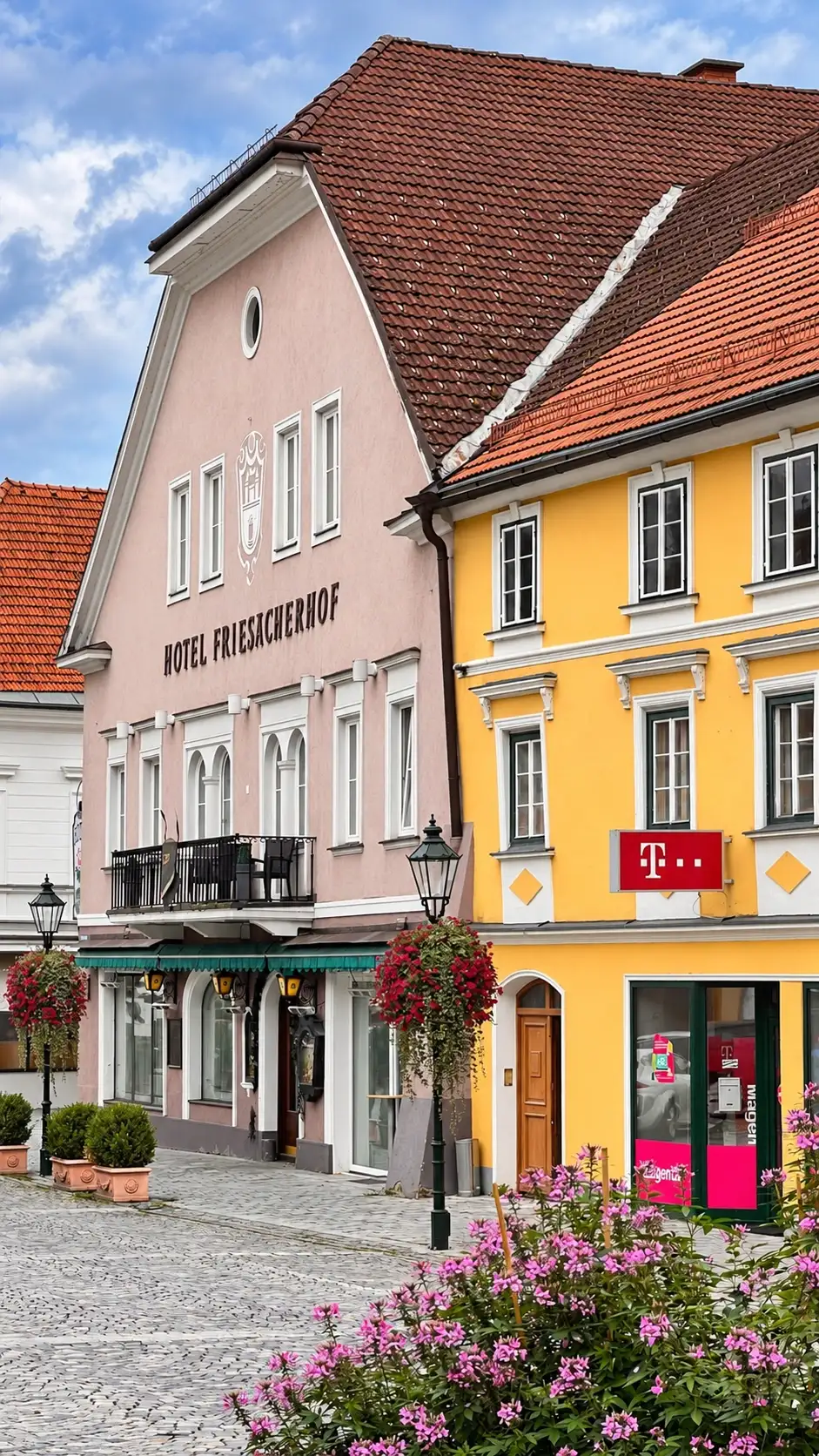
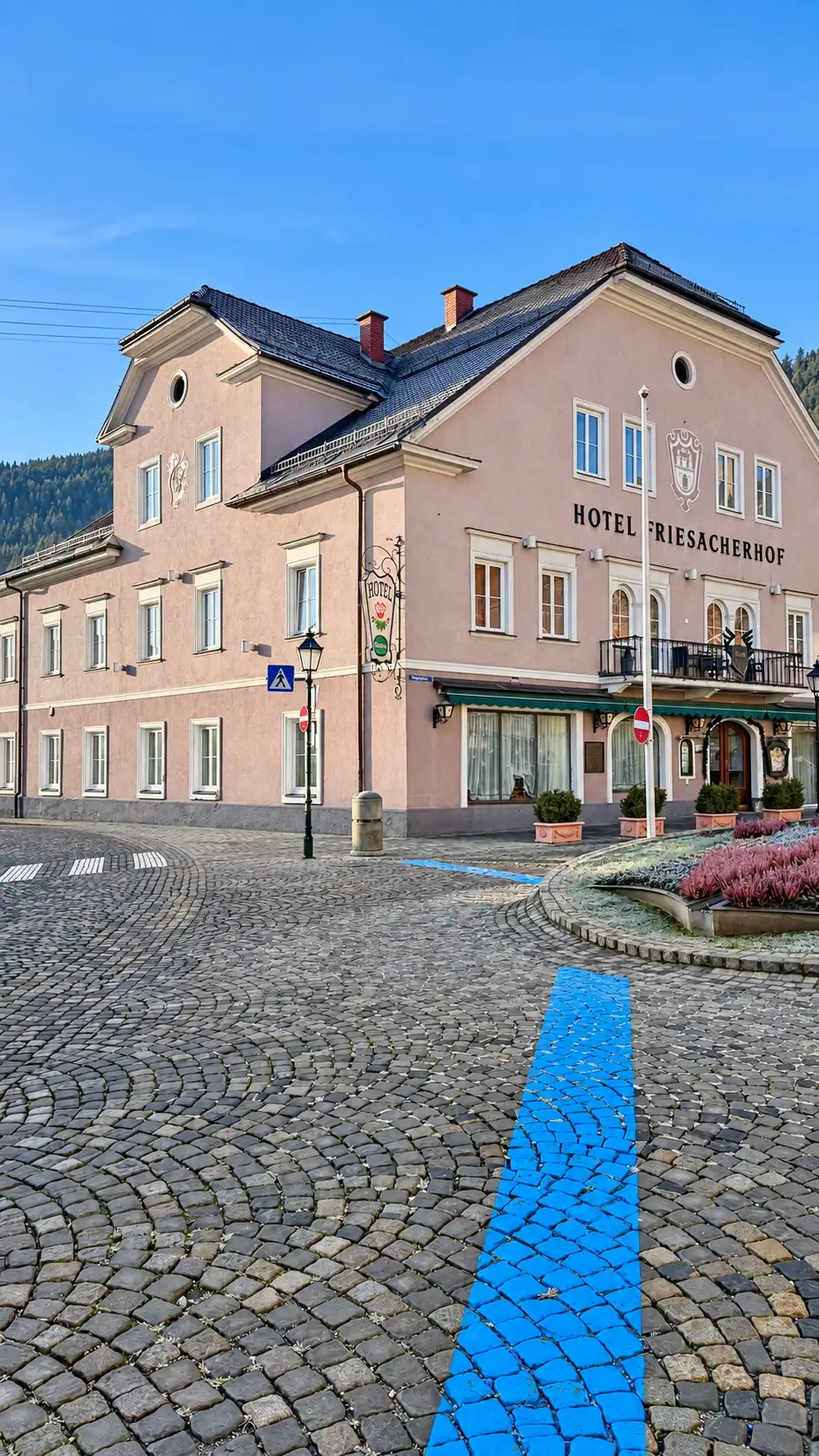
The property presents itself as a representativecorner building constructed on a U-shaped ground plan, with a structural core dating back to the 16th century.
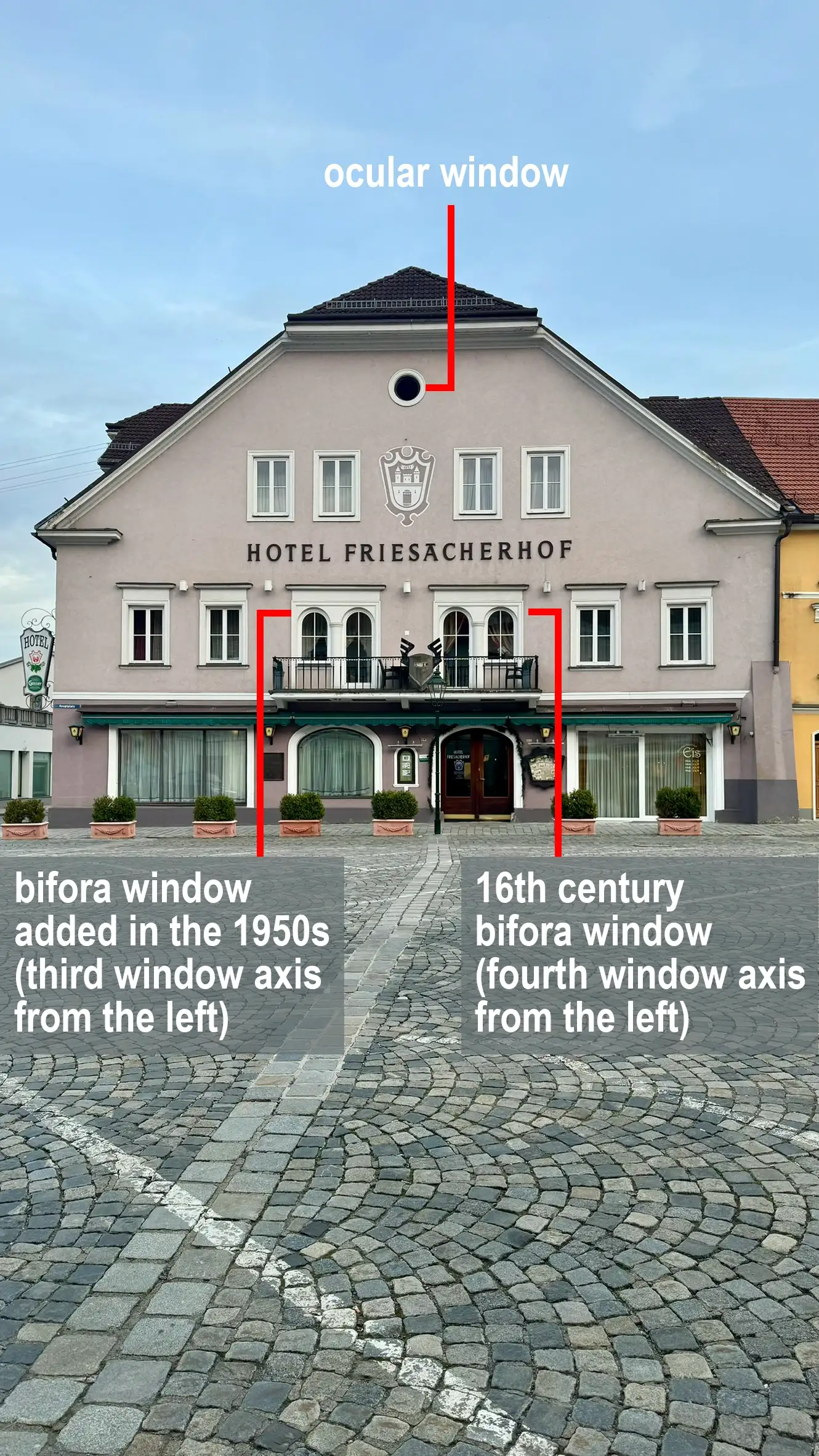
Dating from the 16th century are a bifora window, the groin‑vaulted hall on the first floor, and the arcades in the courtyard.
Over the course of the 20th century, the building underwent several alterations.
Architectural Features | Exterior
Rendering
The building is rendered in a soft, neutral tone.
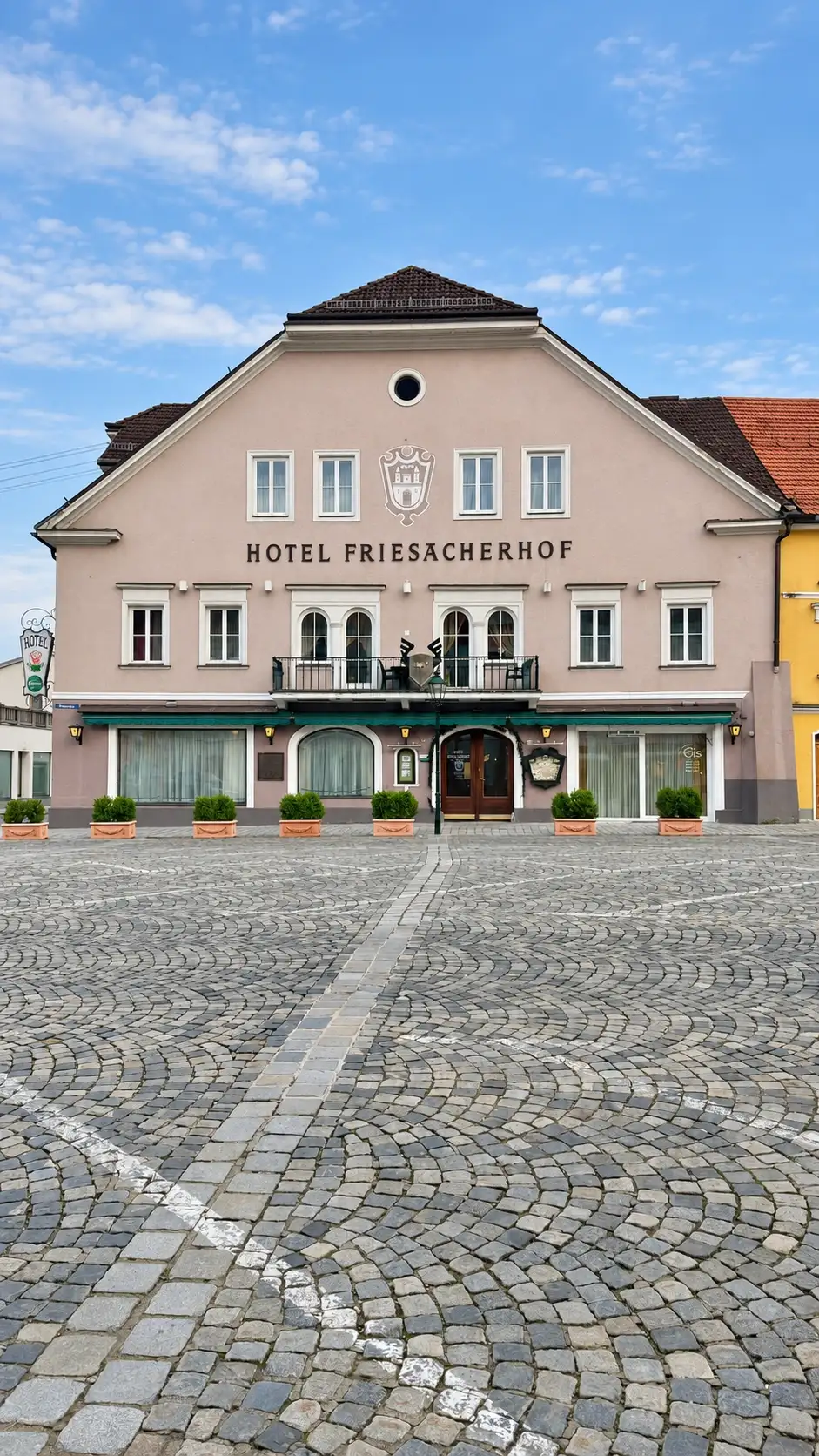
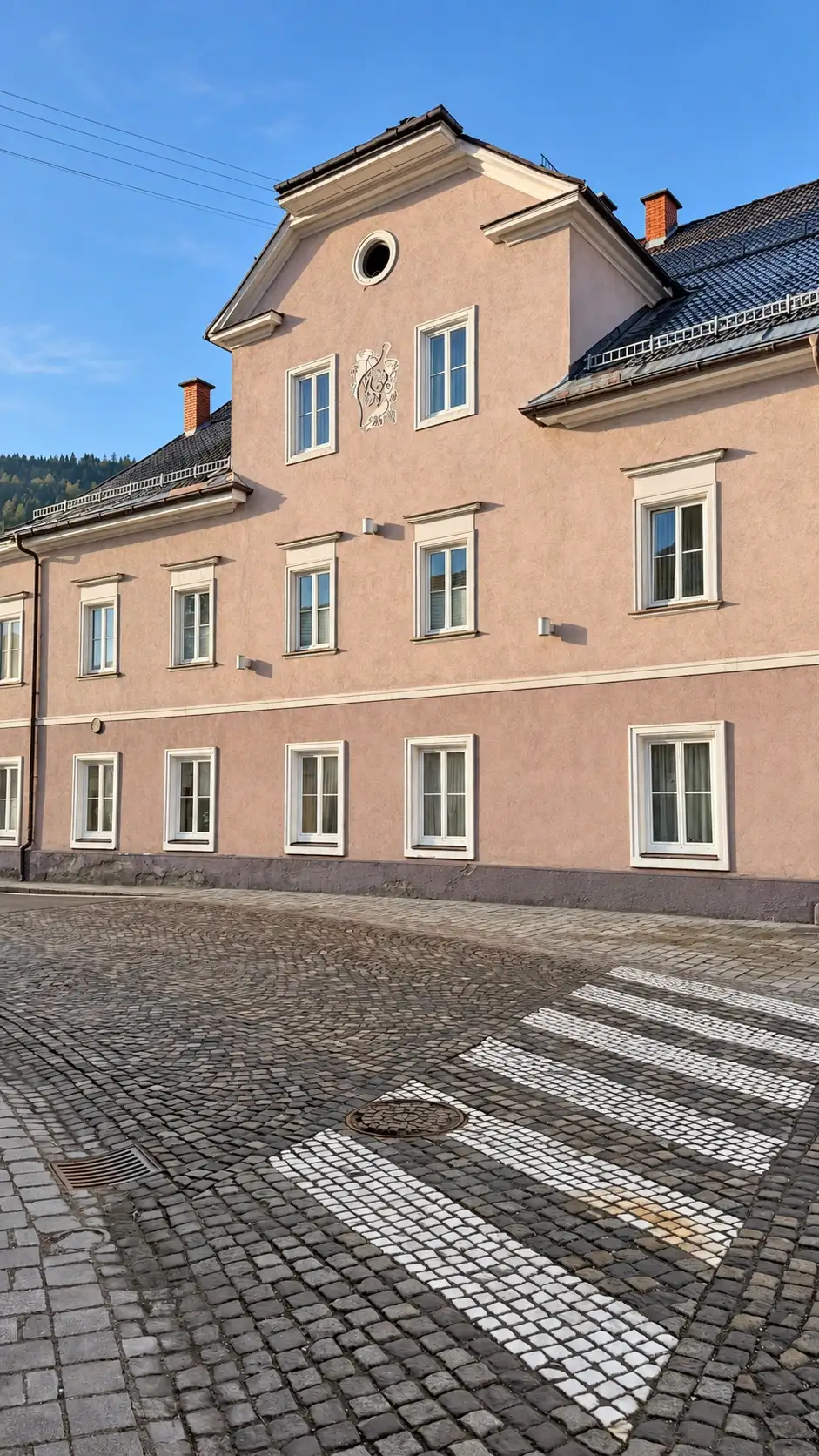
Facade facing the Main Square
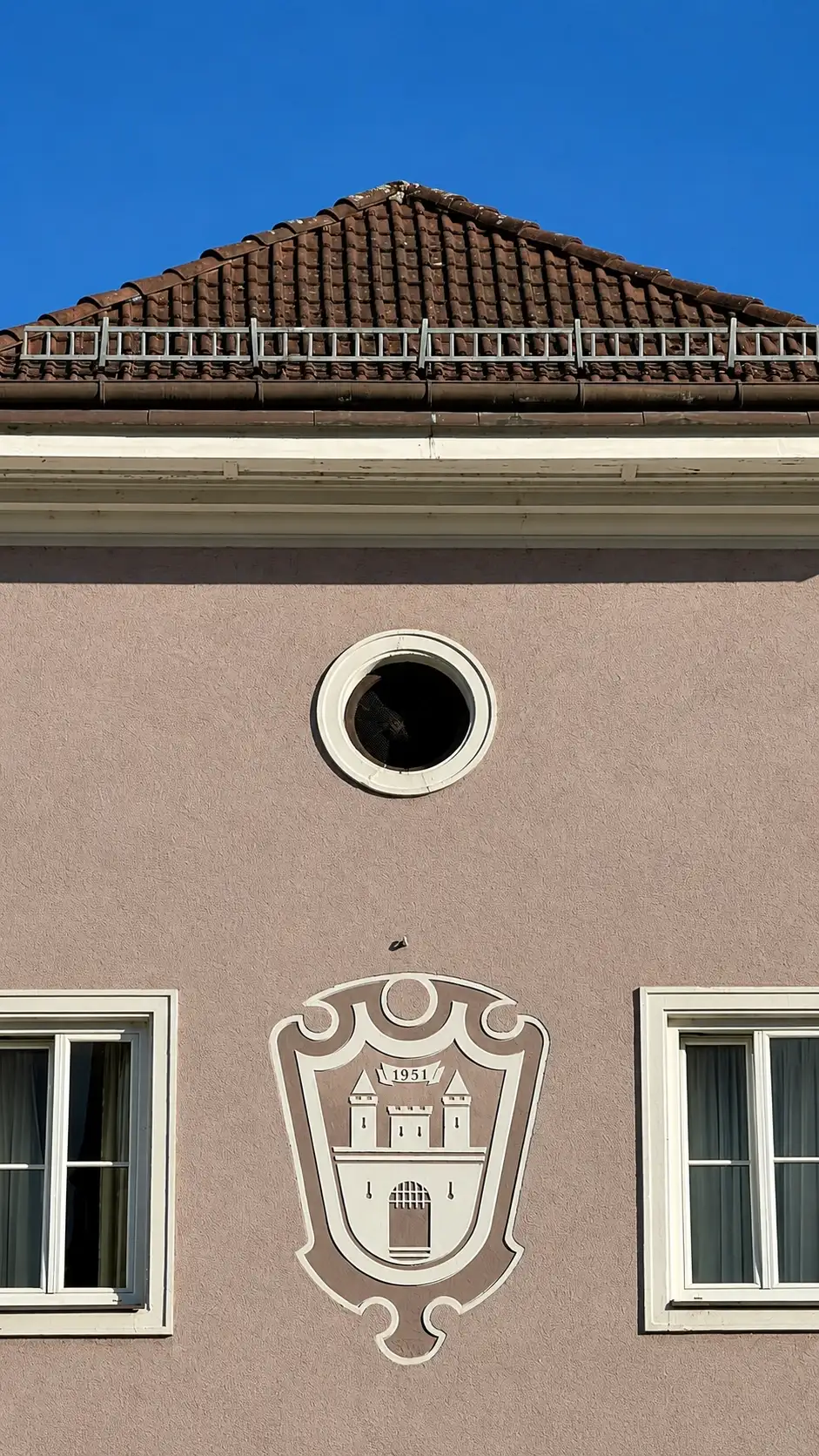
The facade facing the main square was fundamentally altered in the 1950s.
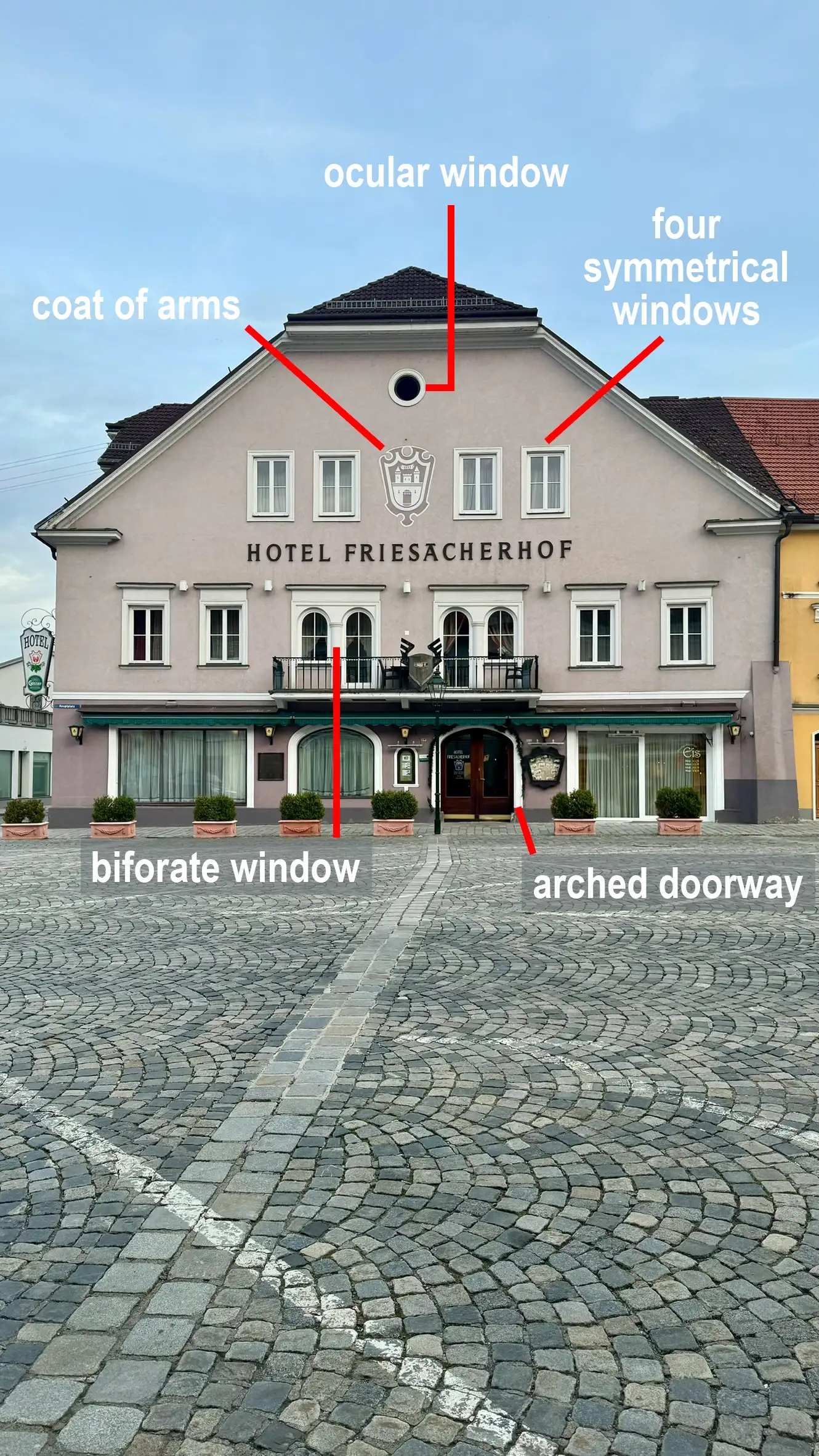
These alterations included: – the expansion of the gable storey – the addition of a third window axis from the left, into which a bifora window was inserted.
On the first floor, the fourth axis from the left retains a bifora window dating from the 16th century.
A balcony is positioned in front of the two central windows.
The ground floor was significantly remodelled in 1972.
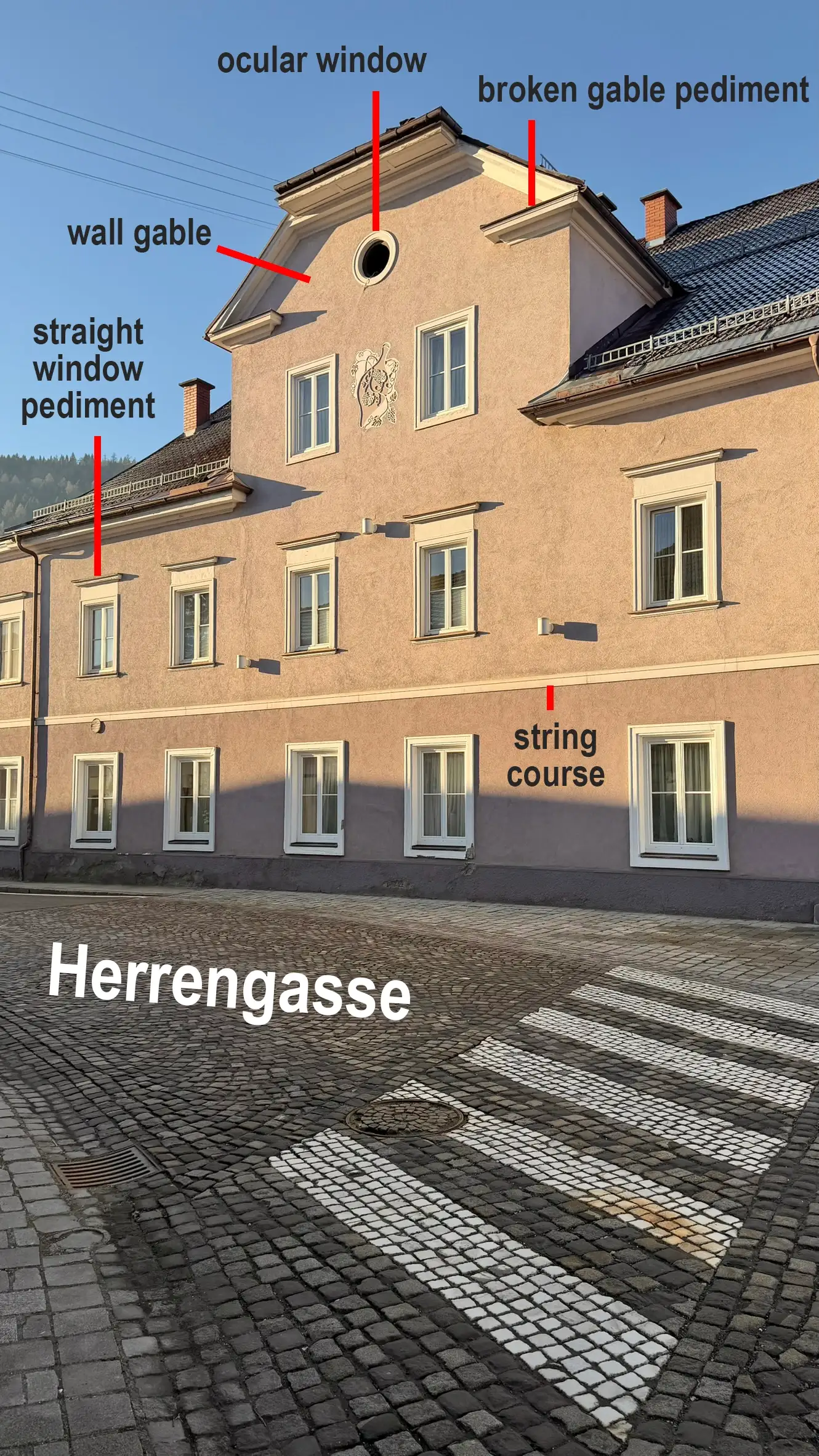
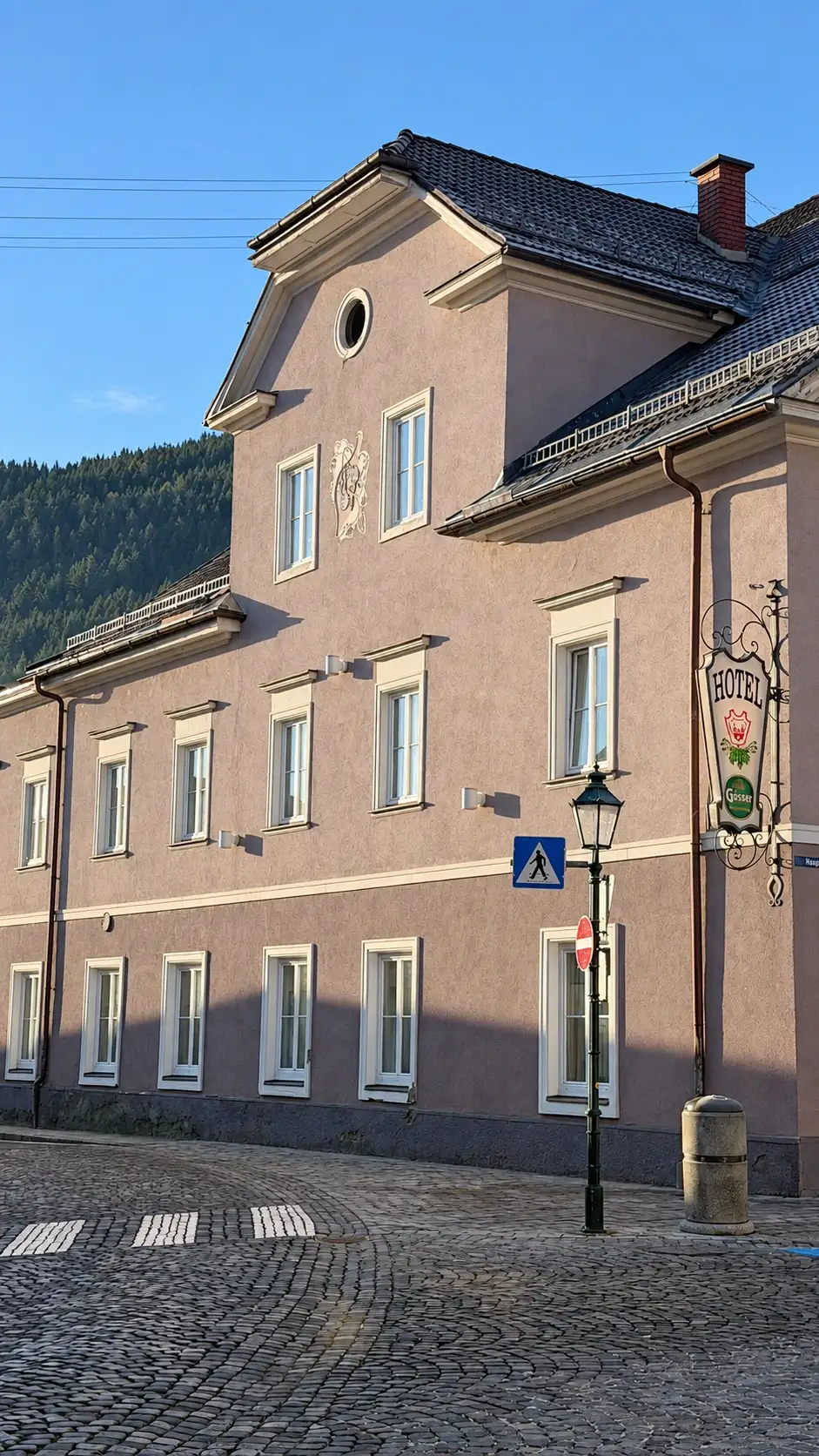
Facade facing Herrengasse
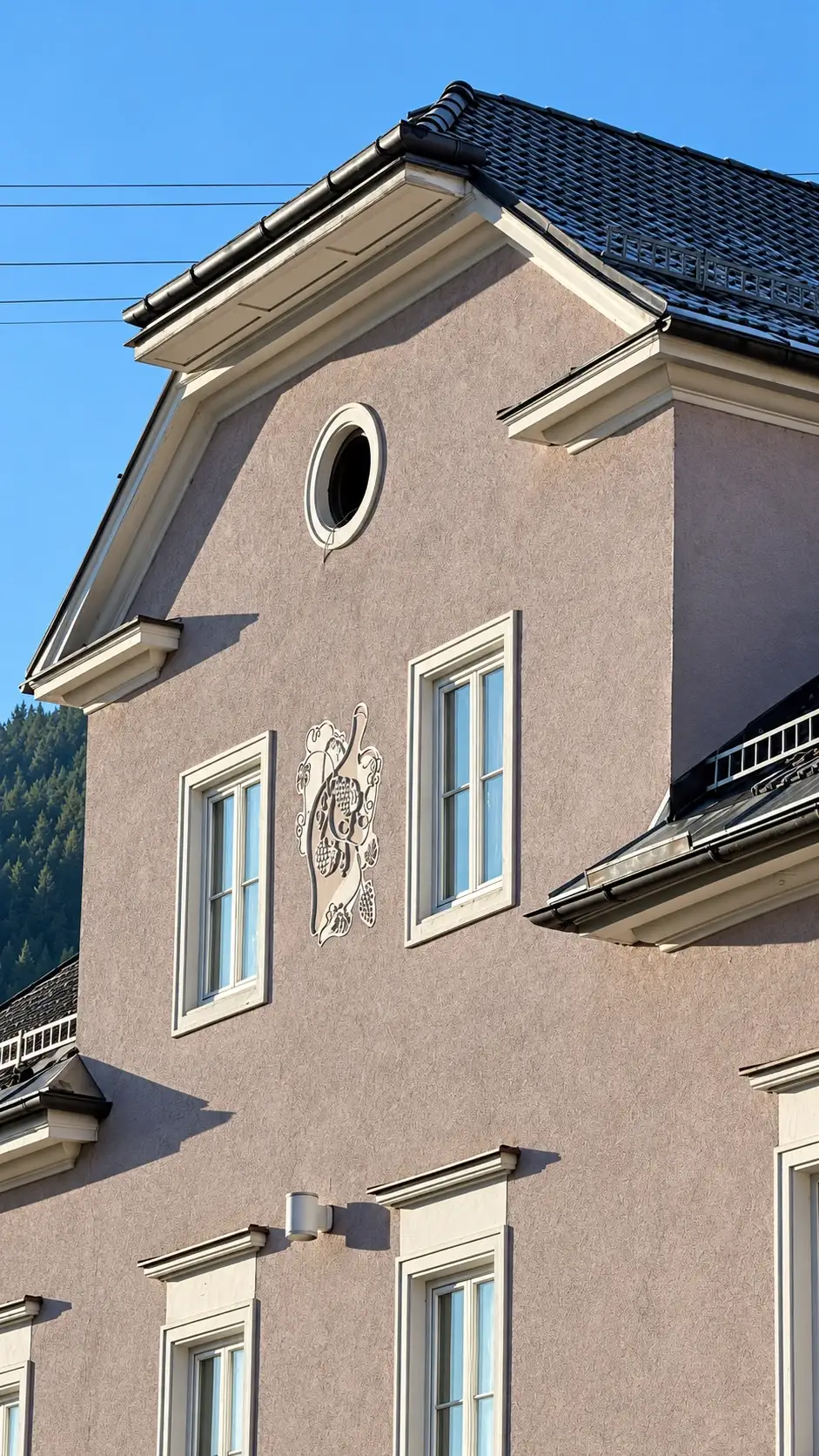
The Herrengasse facade is articulated by a two-axis central wall gable.
The windows are fitted with straight pediments.
Courtyard Facade
The courtyard facade was remodelled in the 20th century.
It features a terrace as well as a cladding to the arcaded passage with rusticated voussoirs.
Roof
The structure is capped by a half-hipped roof.
Facade facing Main Square
Facade facing Main Square
Facade facing Main Square
Top to bottom: crowning cornice; ocular window; plasterwork heraldic shield
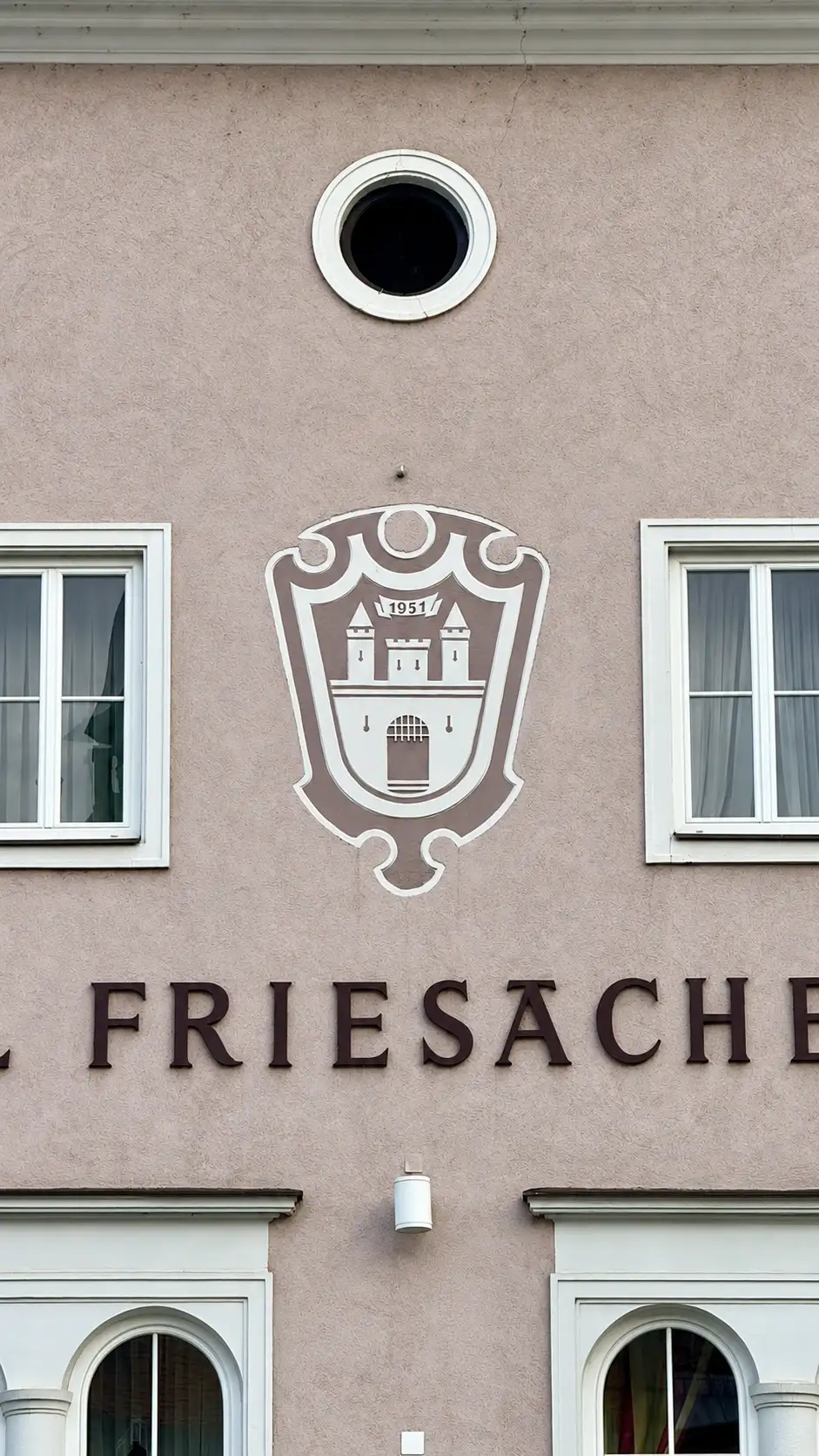
Ocular window and plasterwork heraldic shield
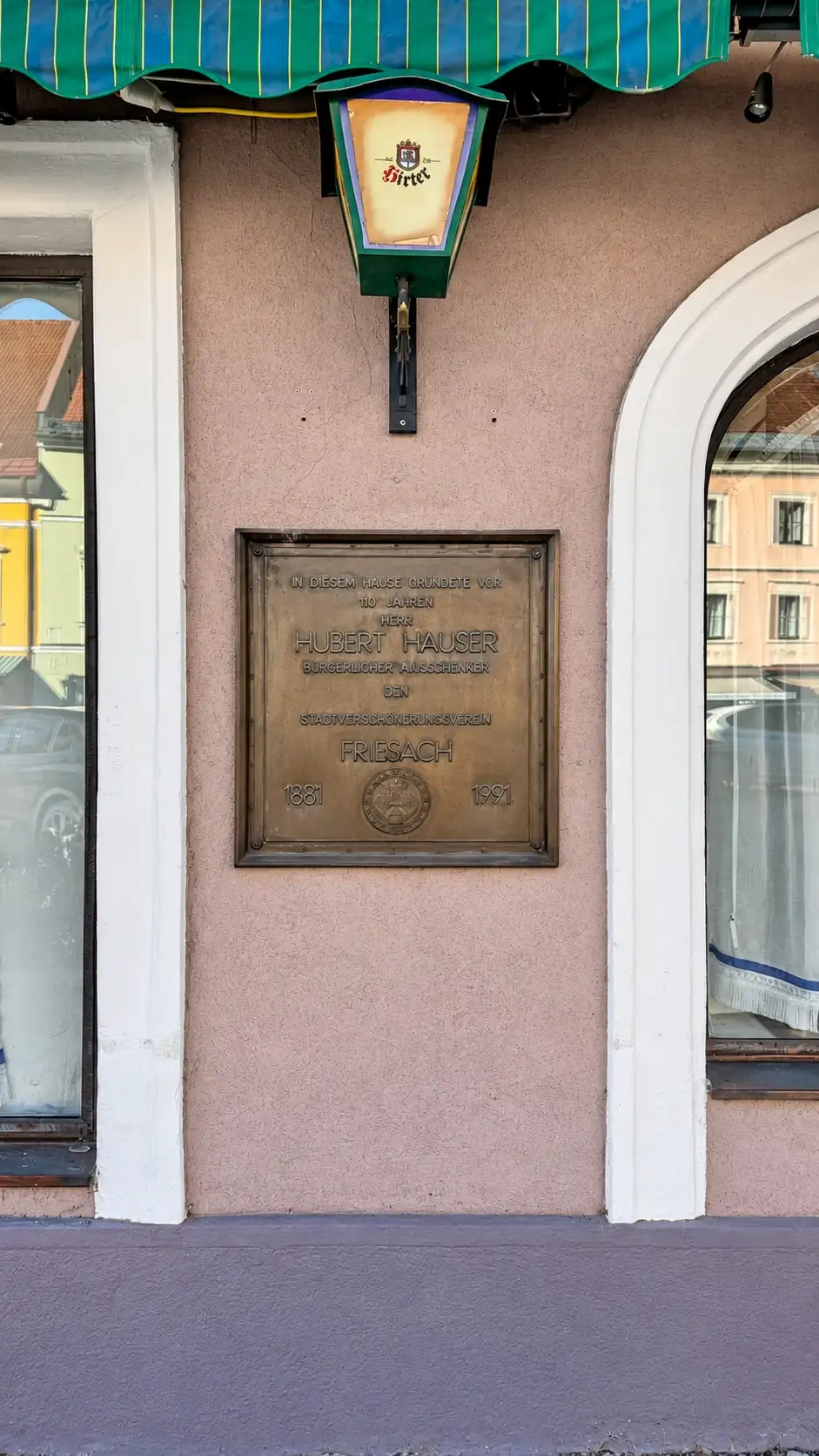
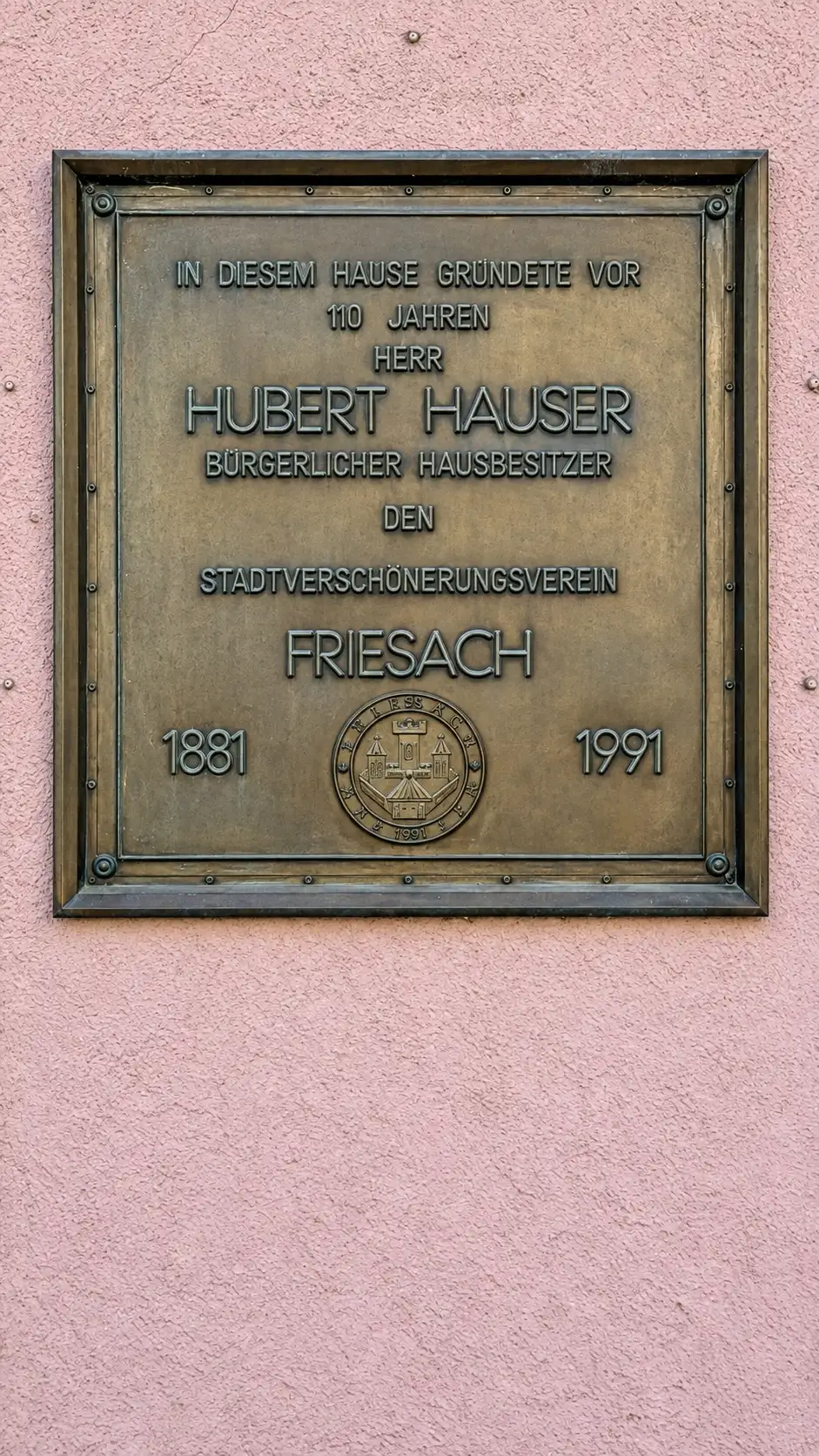
Plaque commemorating the founding of the Friesach Town Beautification Association, 110 years ago
Plaque text: In this house, Mr Hubert Hauser founded the Friesach Town Beautification Association 110 years ago as a private citizen and property owner.
Representative corner building at the junction of Herrengasse and the Main Square
Facade facing Herrengasse
Facade facing Herrengasse featuring two storeys and a wall dormer
Facade facing Herrengasse
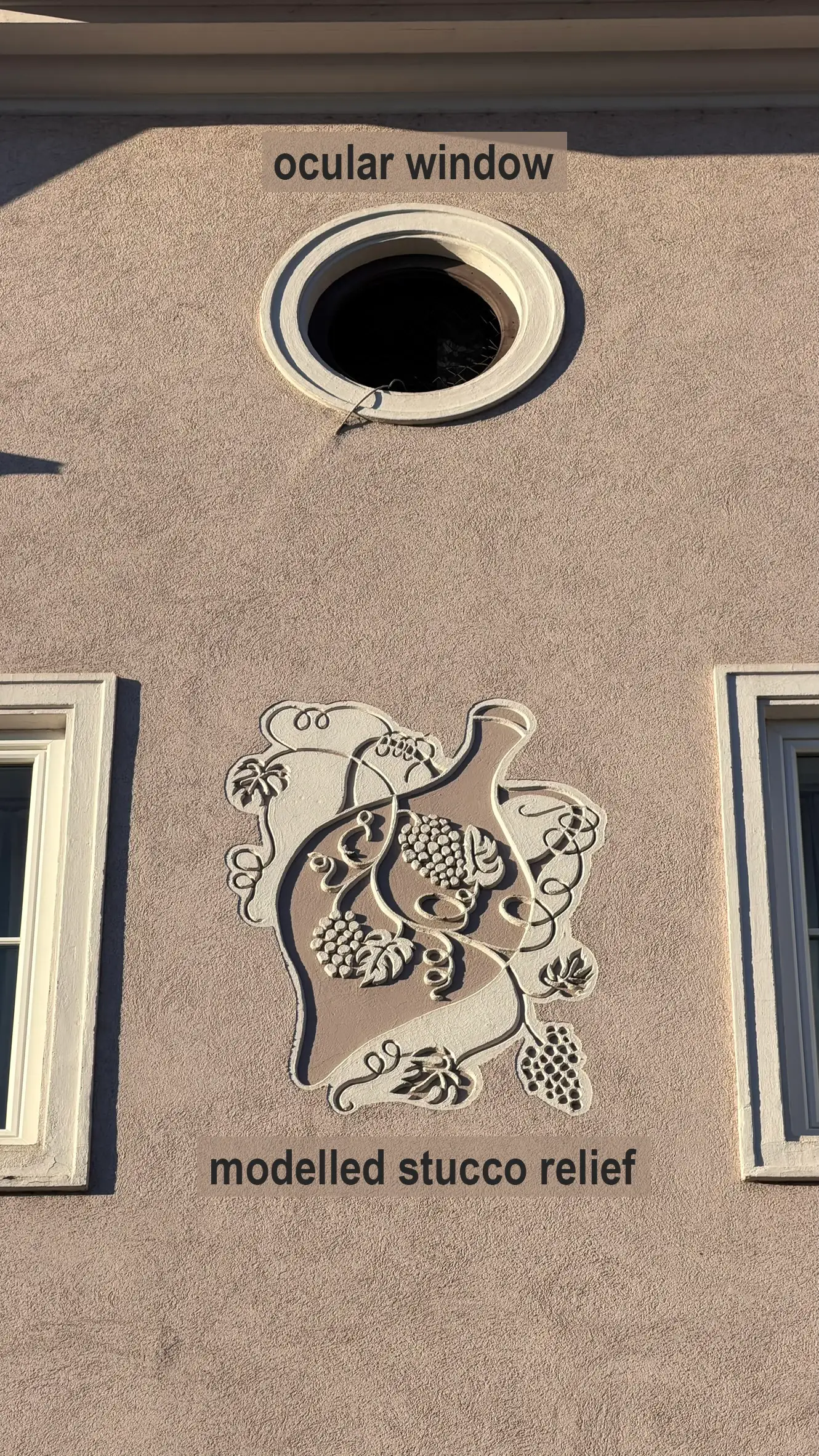
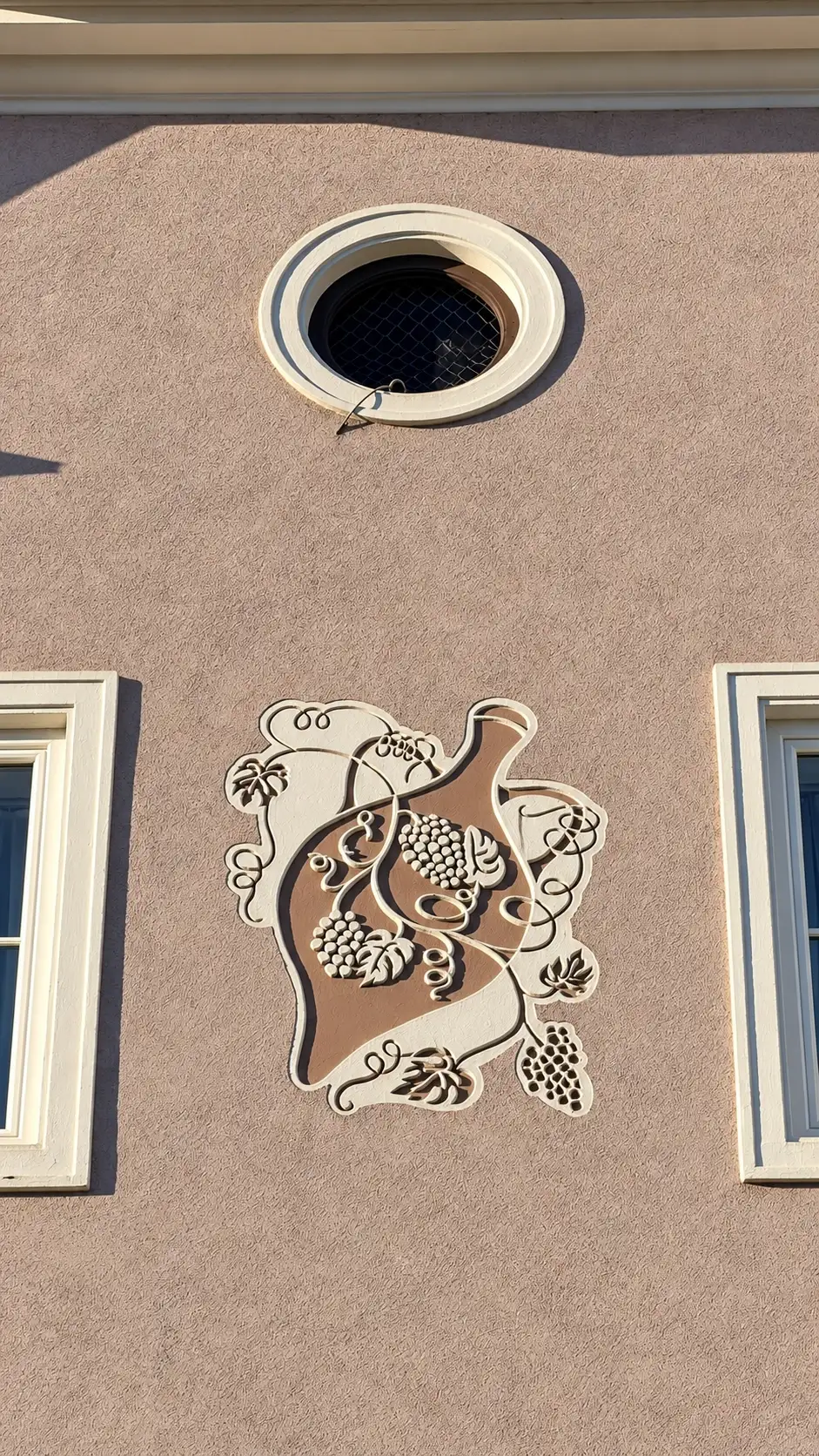
Ocular window and modelled stucco relief
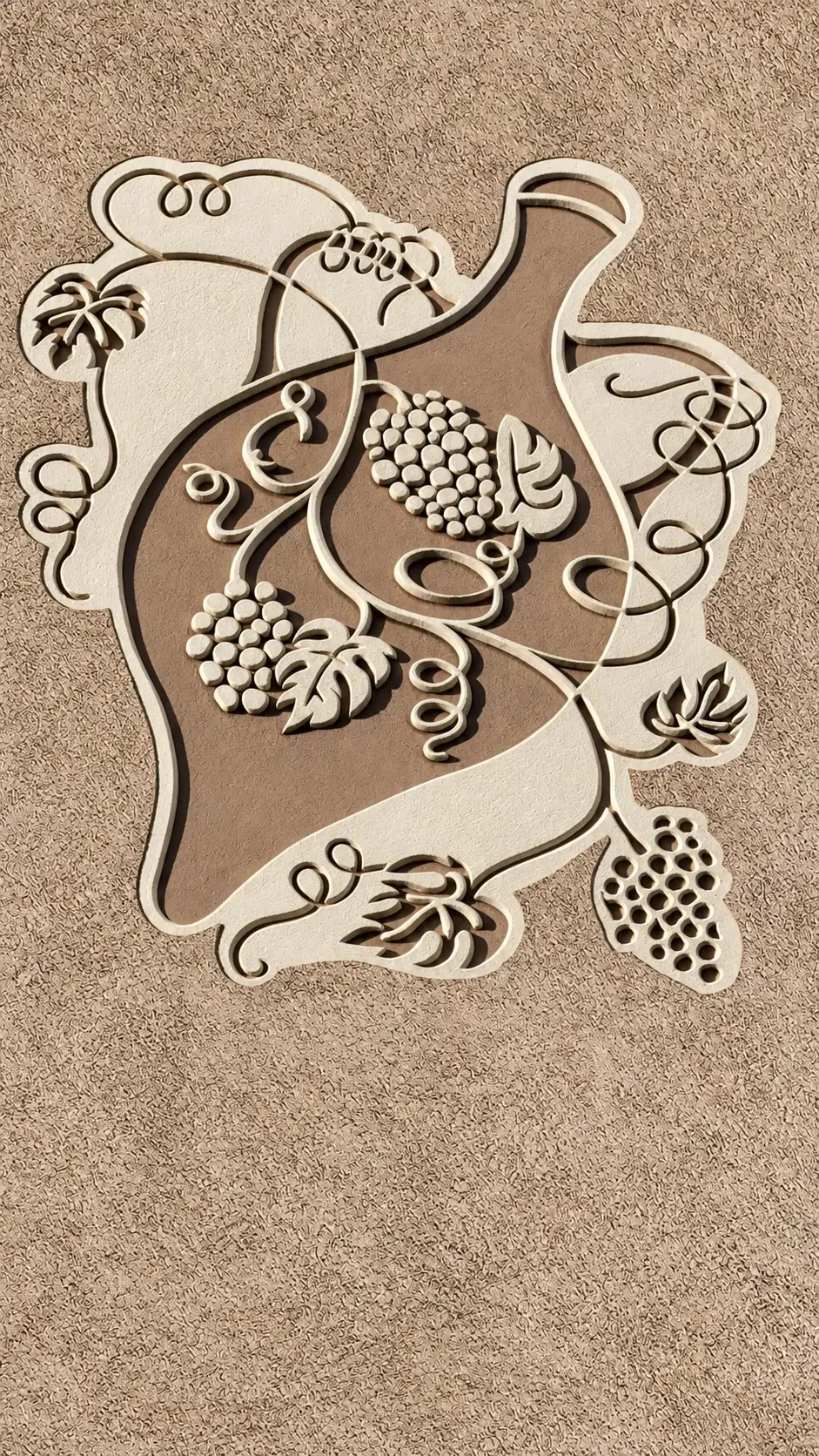
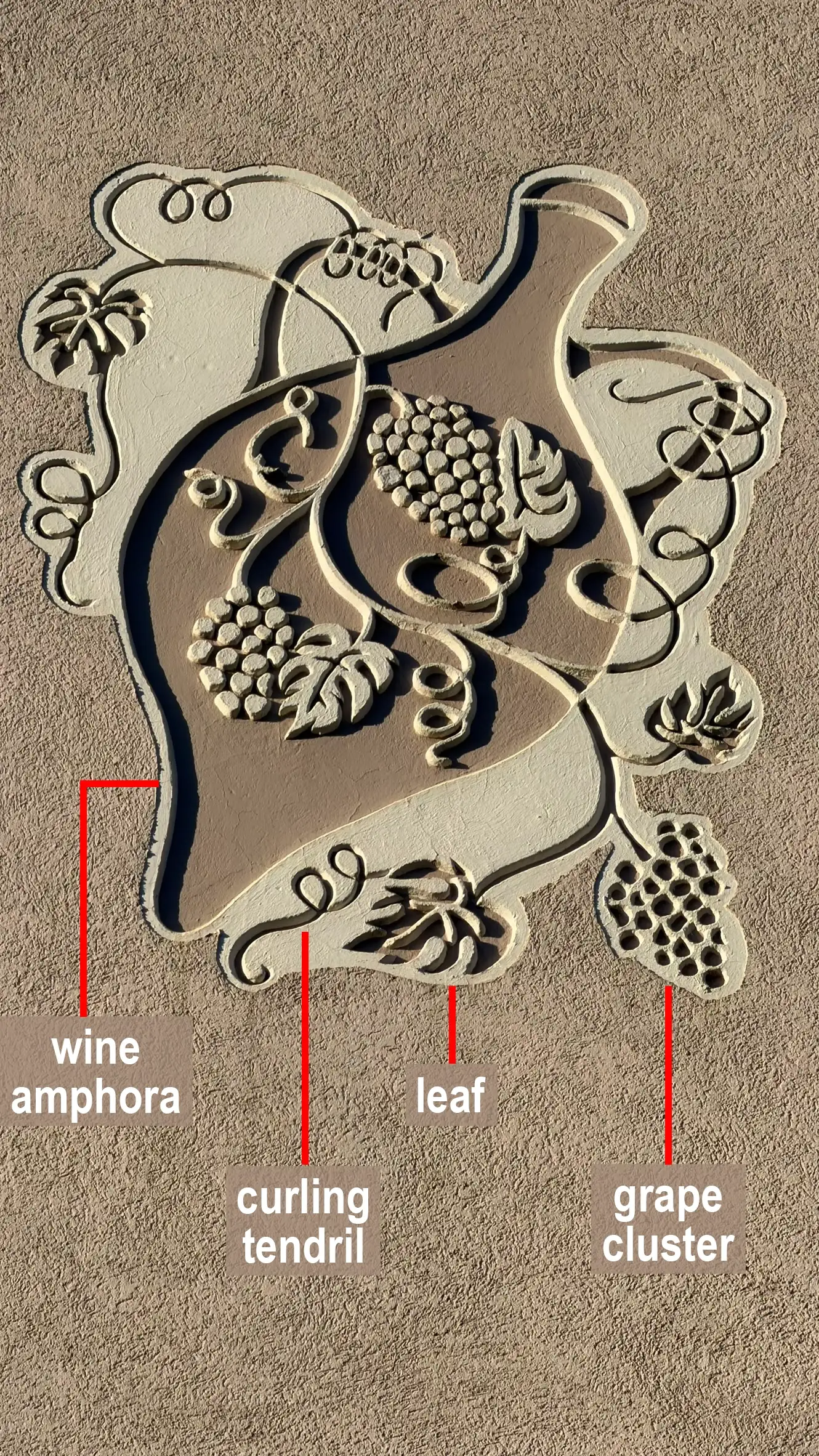
Modelled stucco relief displaying a wine amphora, curling tendrils, leaves and grape clusters
Coat of Arms
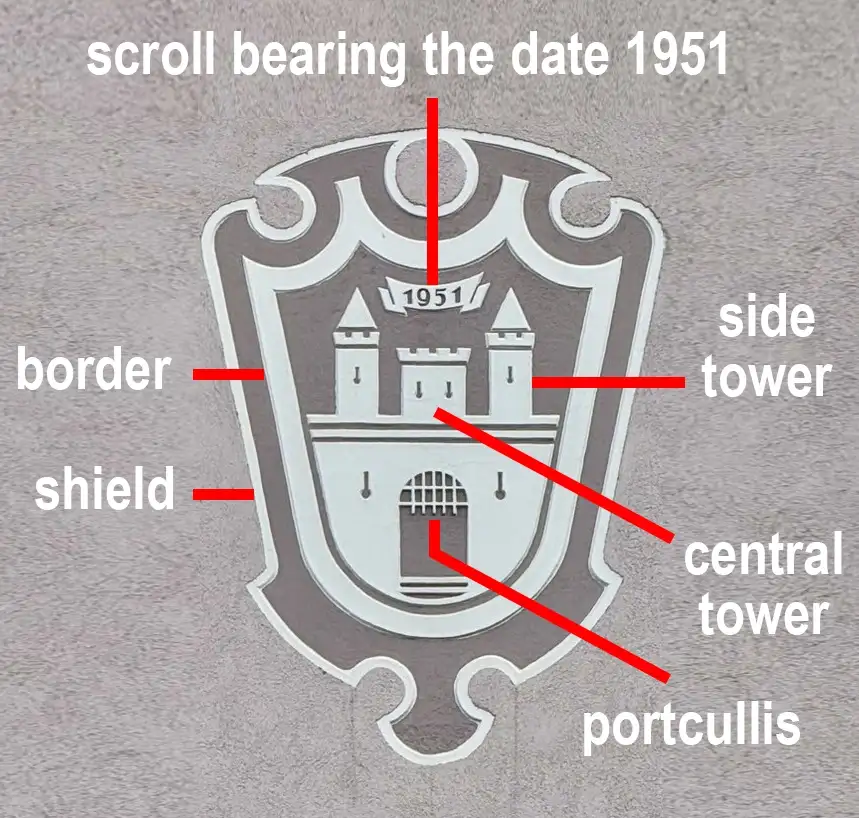
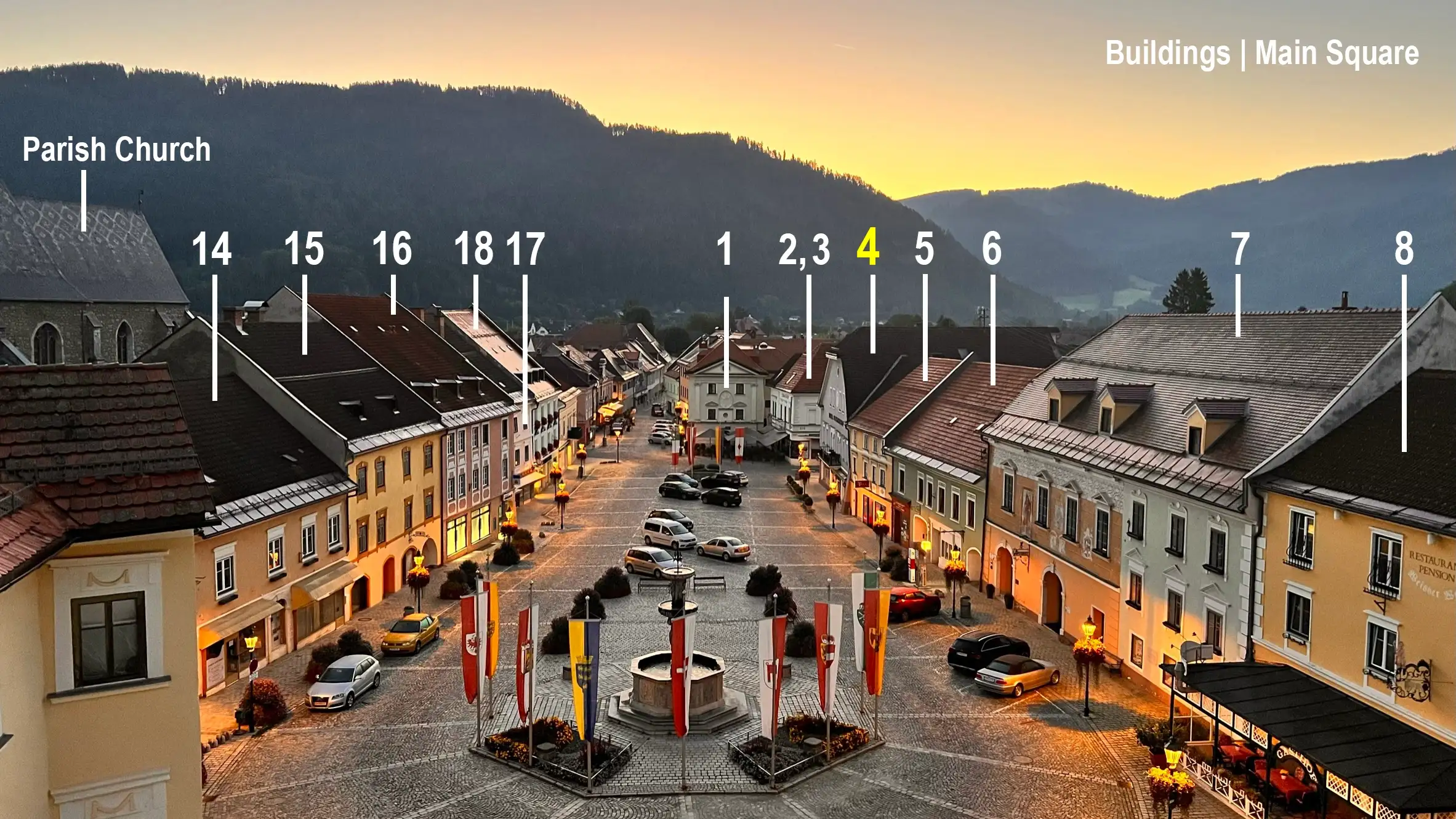
On the facade of Hotel Friesacherhof at Hauptplatz 4 in Friesach, a plasterwork heraldic shield can be seen. It is framed by an ornamental border and shows a stylised fortified gate flanked by two side towers, surmounted by a central tower. The gateway is depicted with a portcullis.
Above the mural, a crown‑like structure appears with a small scroll bearing the date 1951.
The coat of arms on the hotel facade is an adapted version of the official arms of Friesach. It retains the main features – the gate, the side towers, and the central tower – but omits some of the finer details and adds a date that is not part of the original design.
Modelled Stucco Relief
This type of wall stuccowork decoration is known as modelled stucco relief (or relief stuccowork).
Technique
Modelled stucco relief is a decorative technique in which lime-based plaster is applied, shaped and built up in relief on a wall surface to create raised ornamental motifs. Unlike sgraffito, which is cut into layers, this technique is additive, relying on modelling rather than incision. This technique was commonly used on Carinthian townhouses to enrich facades with symbolic or ornamental imagery.
Description of the Stuccowork
This modelled stucco relief is positioned centrally on the wall dormer and faces Herrengasse.
The stucco relief depicts a stylised vine motif, composed of curling tendrils, leaves and clusters of grapes. The design is framed by an undulating outline, giving the composition a lively rhythm.
Symbolically, the vine and grapes are traditionally associated with fertility, abundance, wine-growing and prosperity.