Hauptplatz 1 | Old Town Hall
Shorter Version | Reading Time: 1:00 min
History
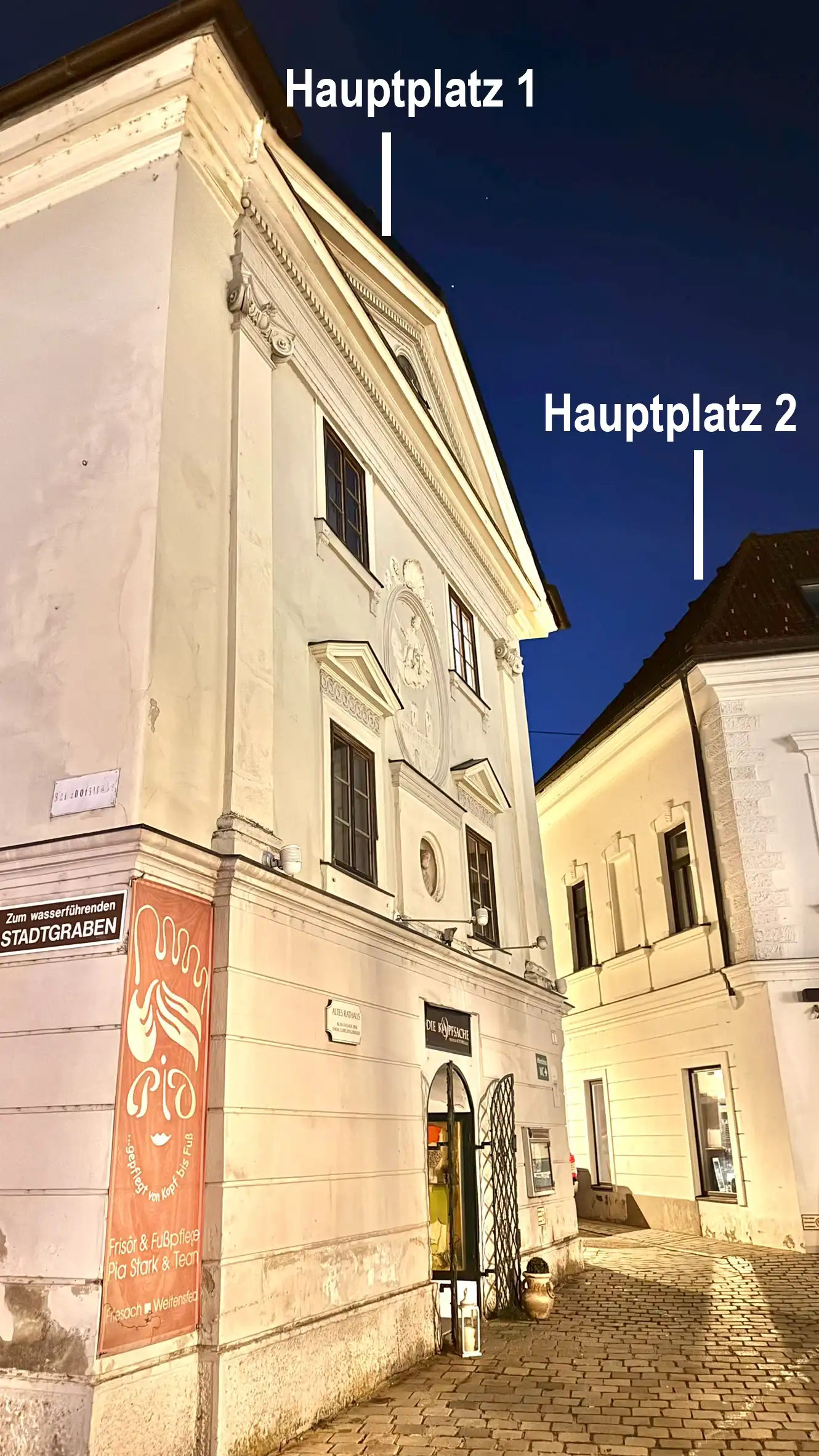
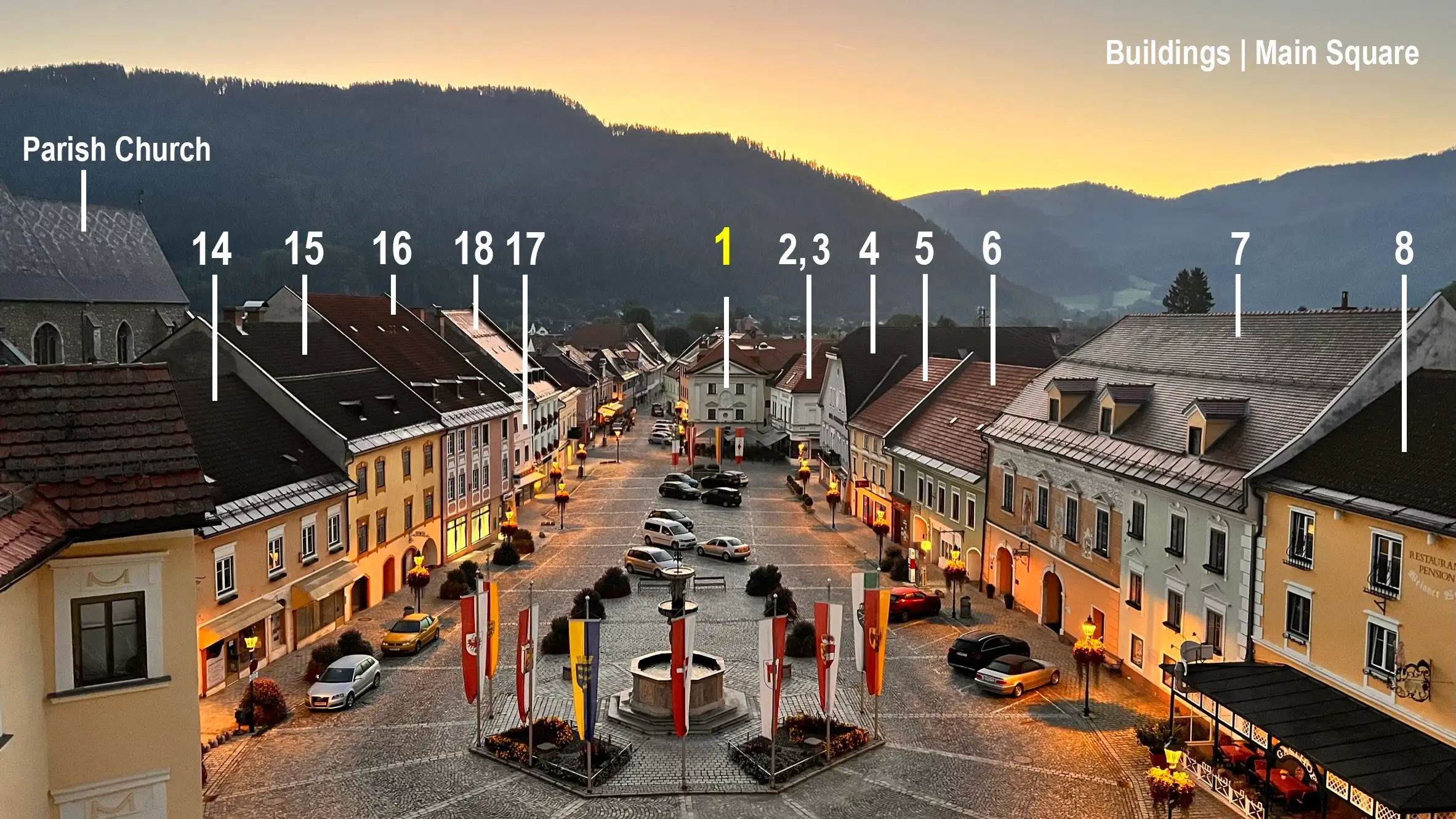
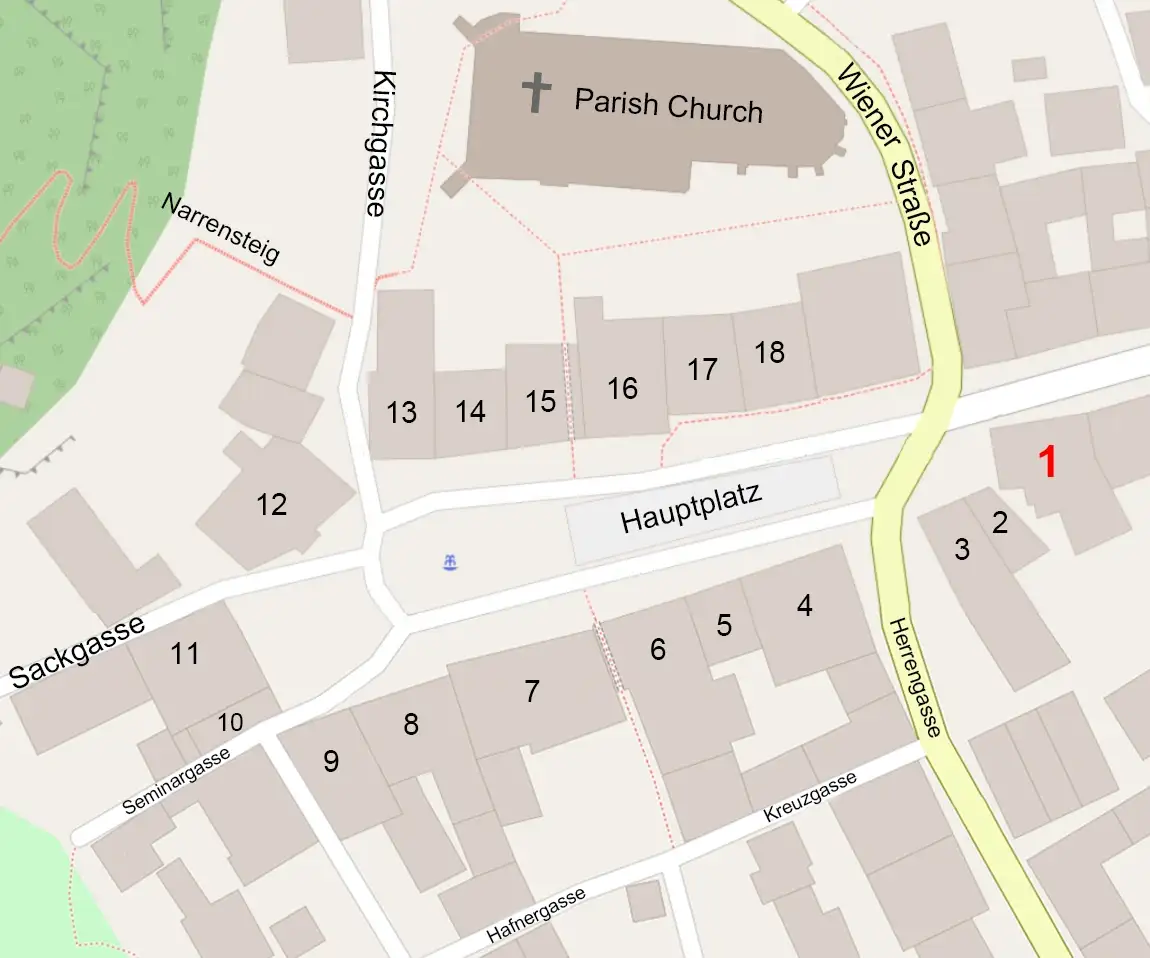
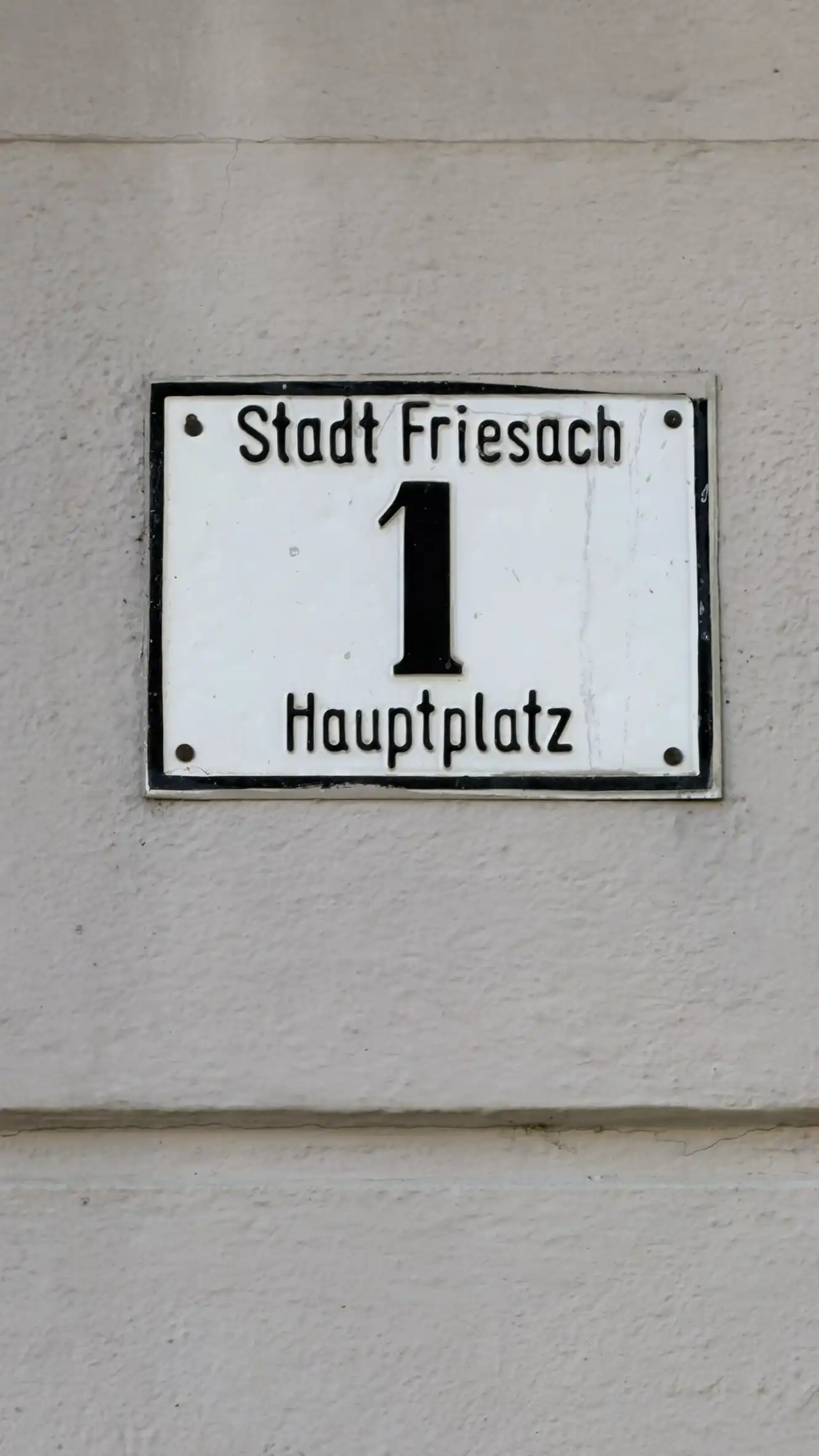
The Old Town Hall stands at the south-eastern corner of the main square of Friesach, at Hauptplatz 1.
The building was first mentioned in the mid-18th century as a soldiers’ guardhouse and from 1770 served as the town hall.
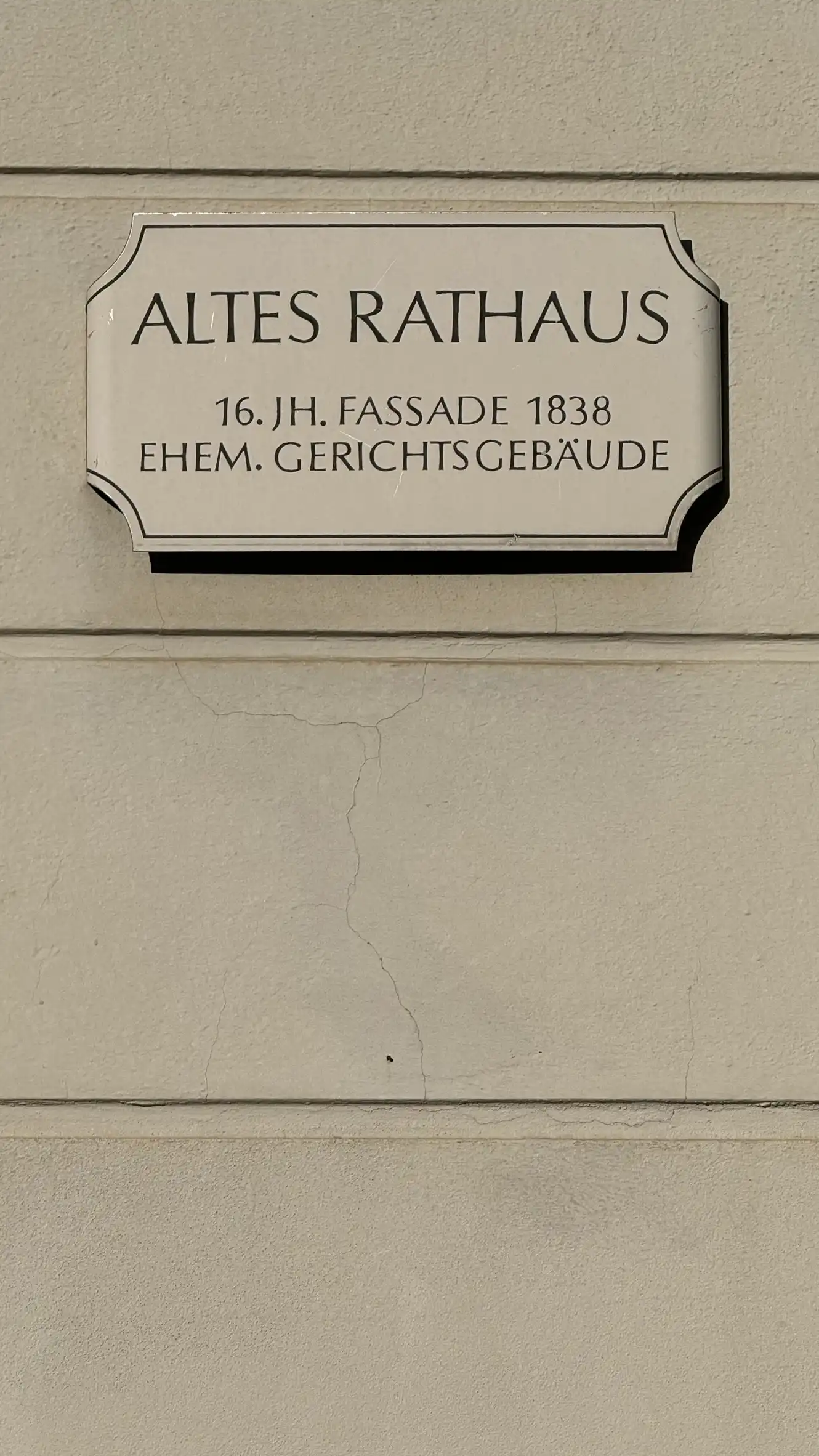
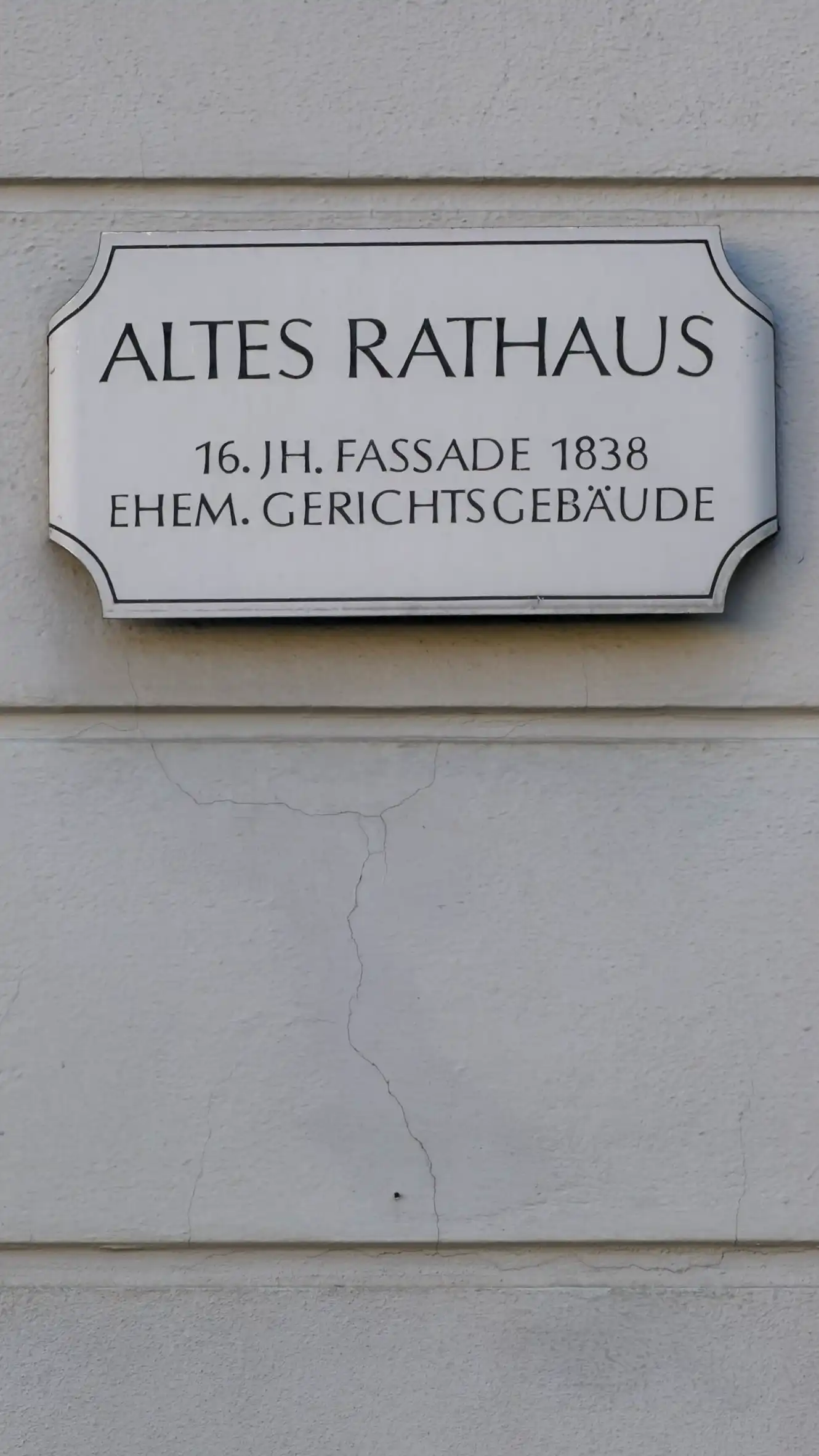
In 1837–1838, it was remodelled and given a new facade by the master builder Jakob Griewieser, based on designs by Valentin Radweger and Joseph Ringer.
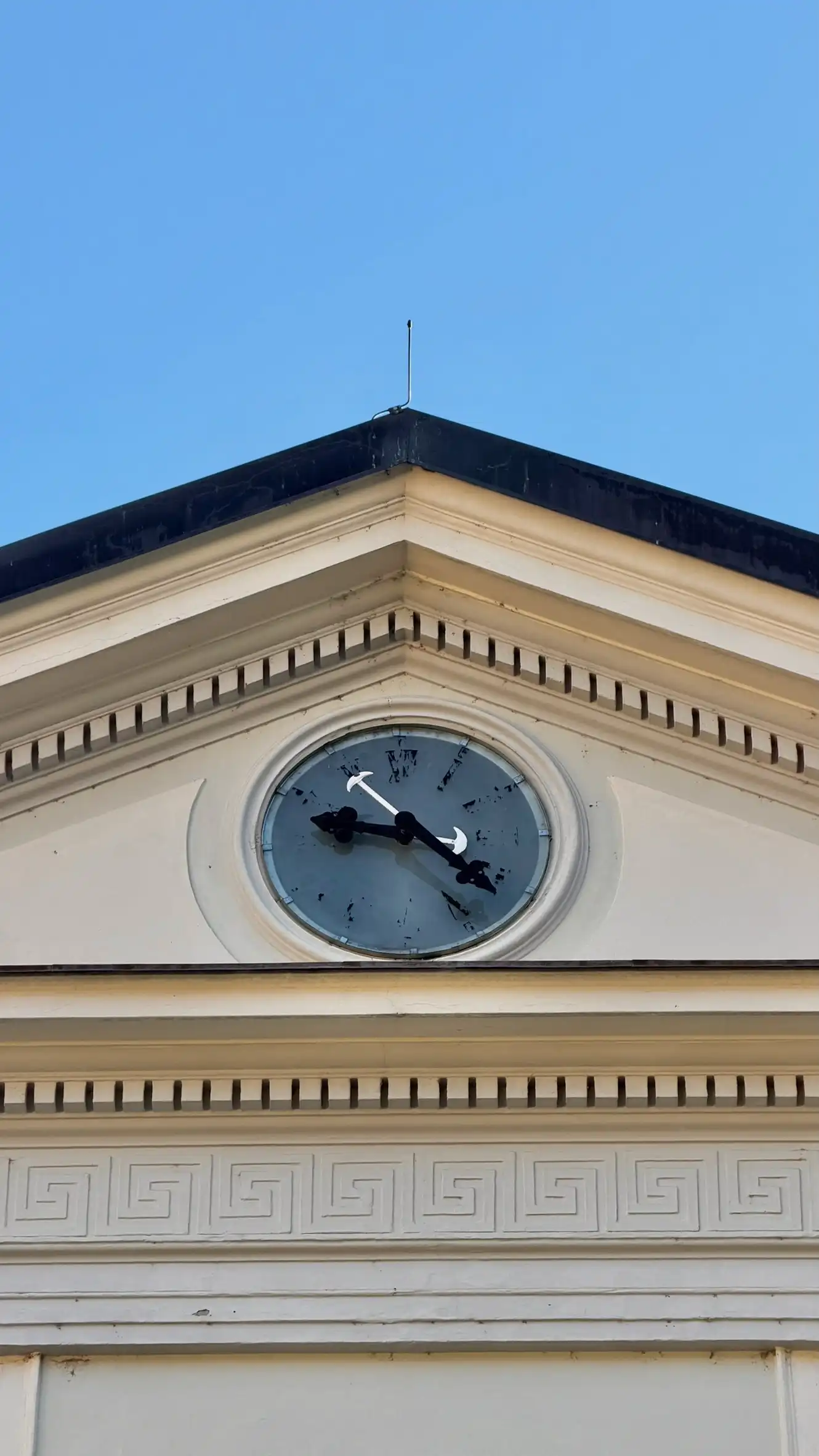
In 1866, Alois Heinzel restored the town hall clock.
In 1867, the building was handed over to the Imperial and Royal District Court.
Architectural Features
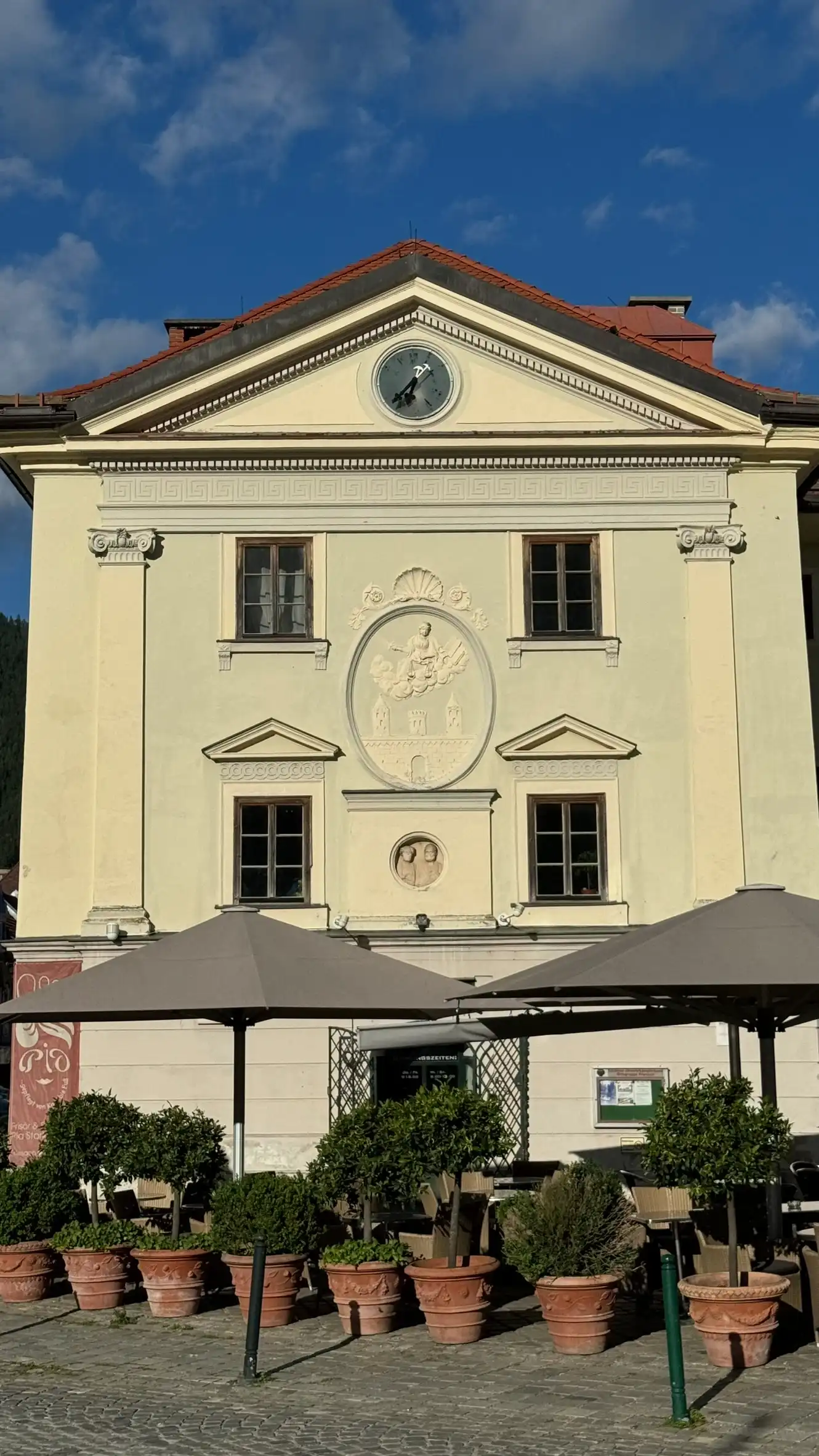
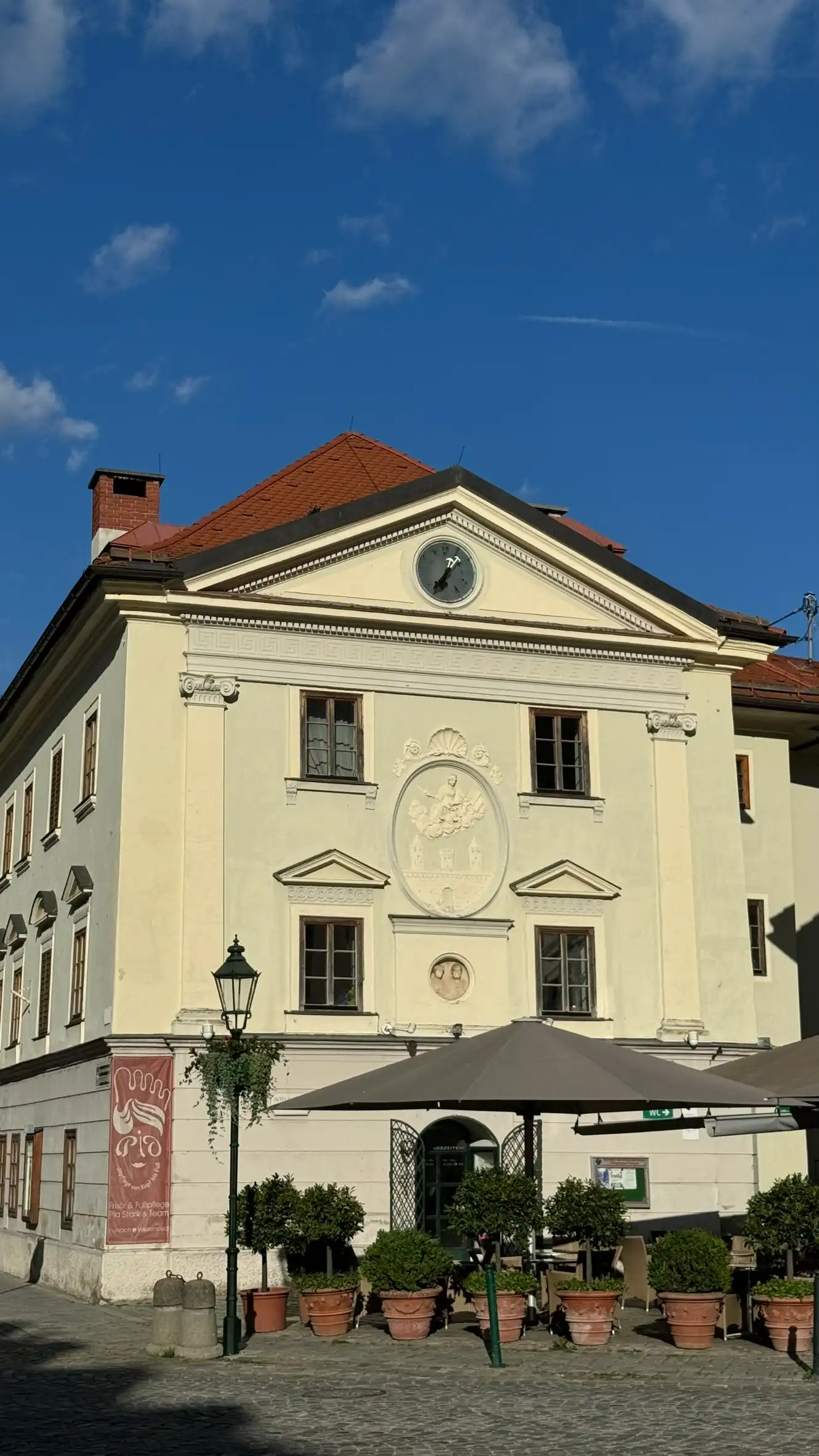
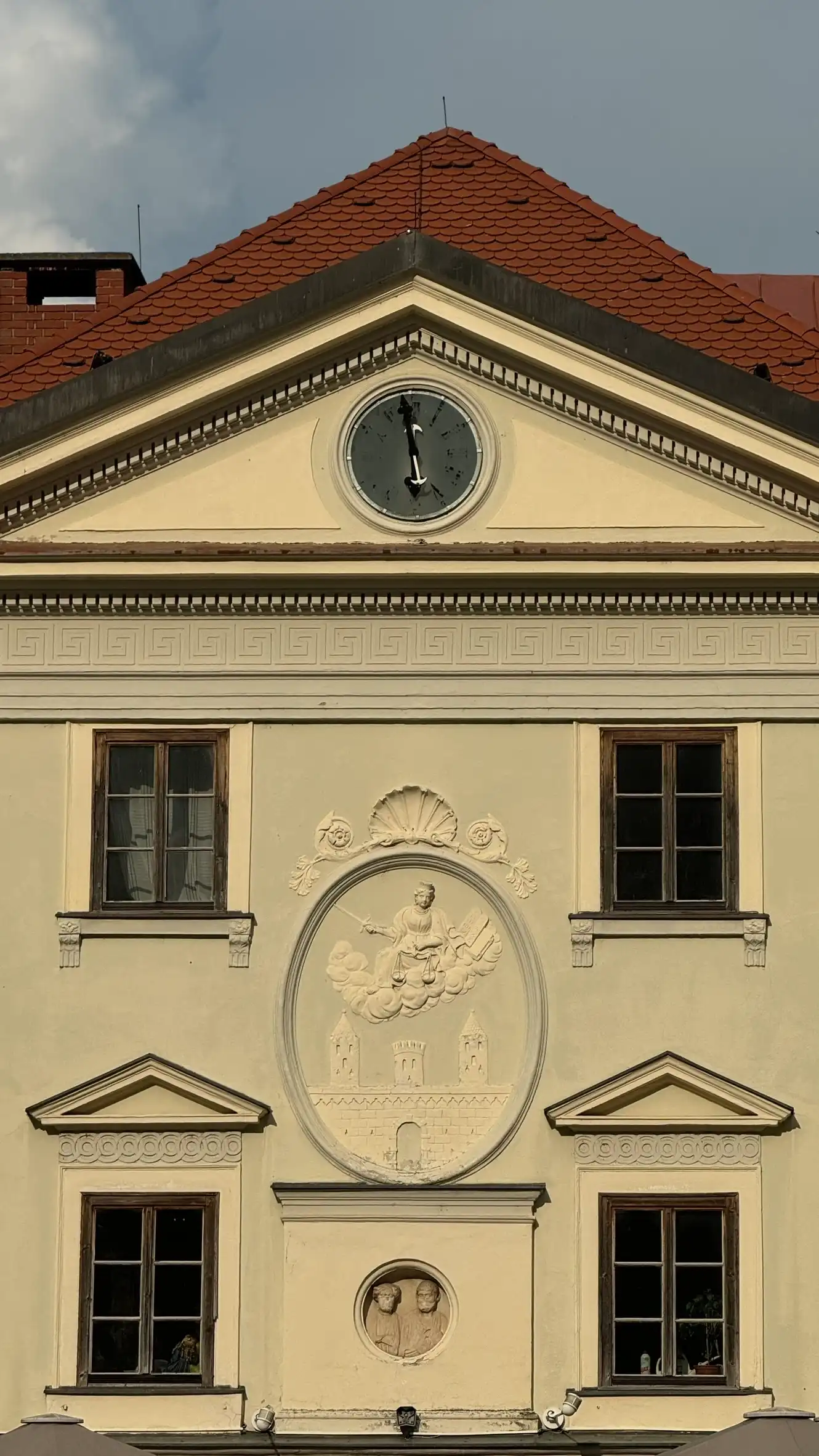
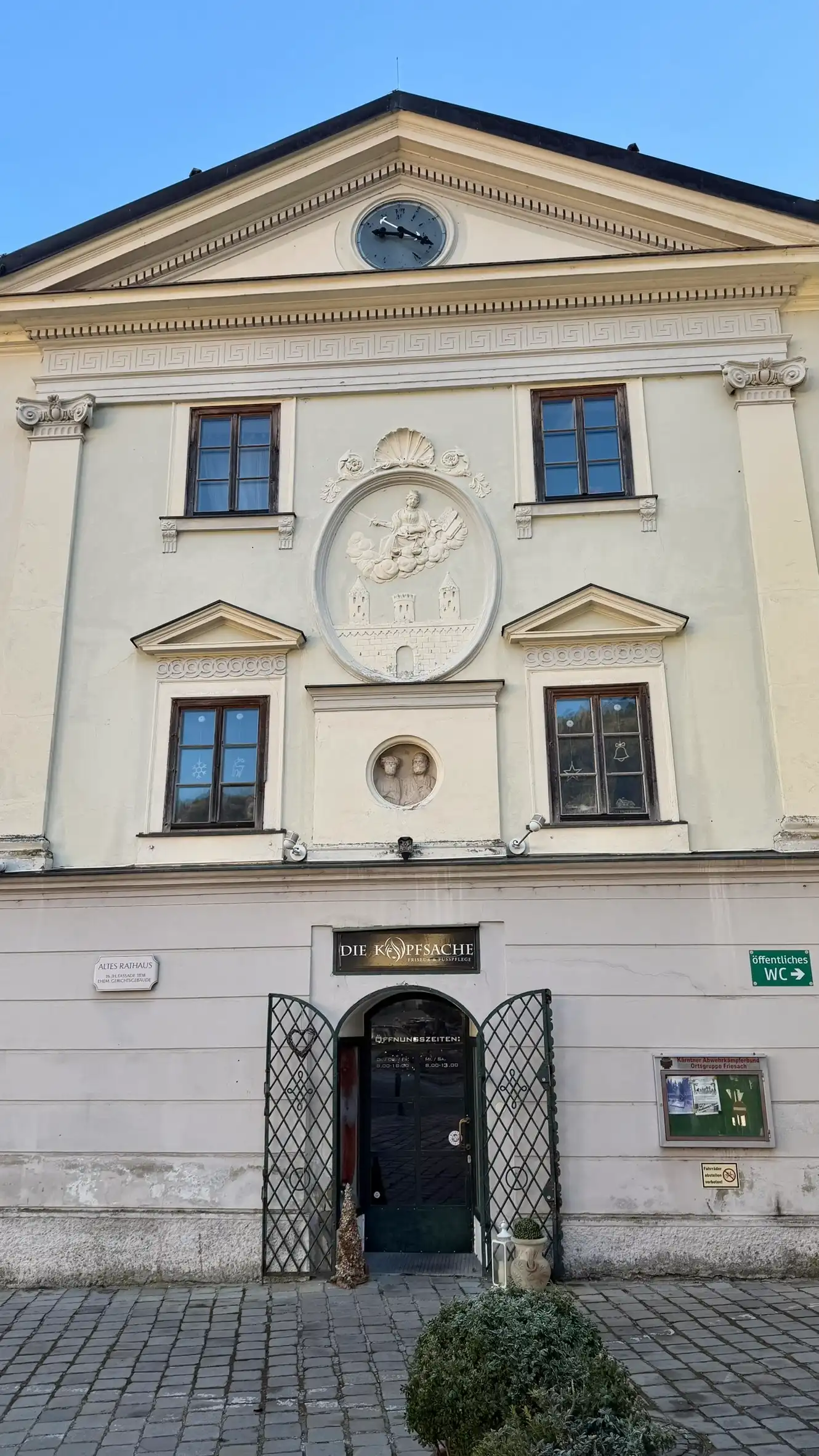
The representative corner building with a Late-Neoclassical facade dates from the first half of the 19th century, incorporating an older core.
The facades are horizontally structured by string and cornice mouldings.
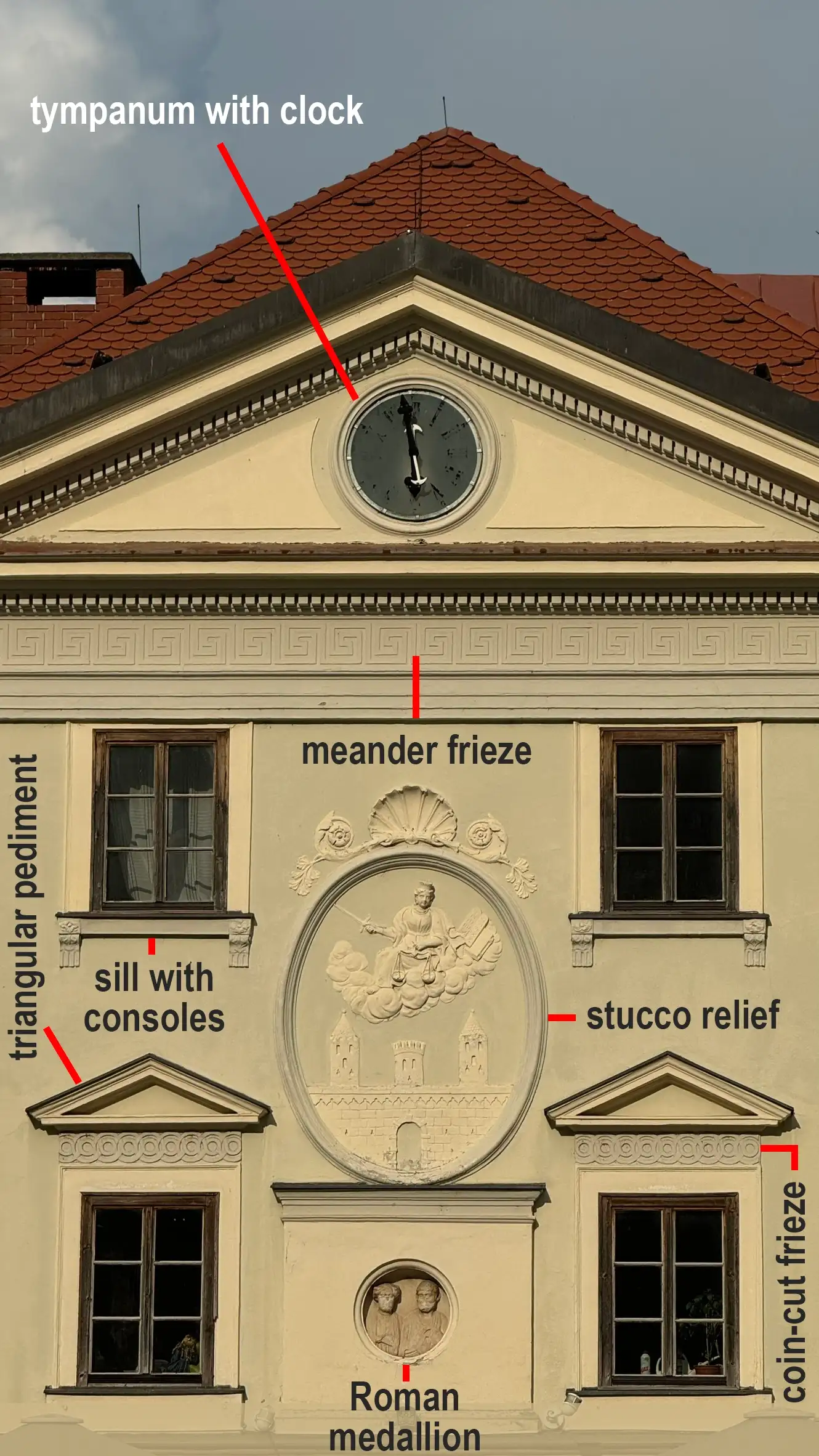
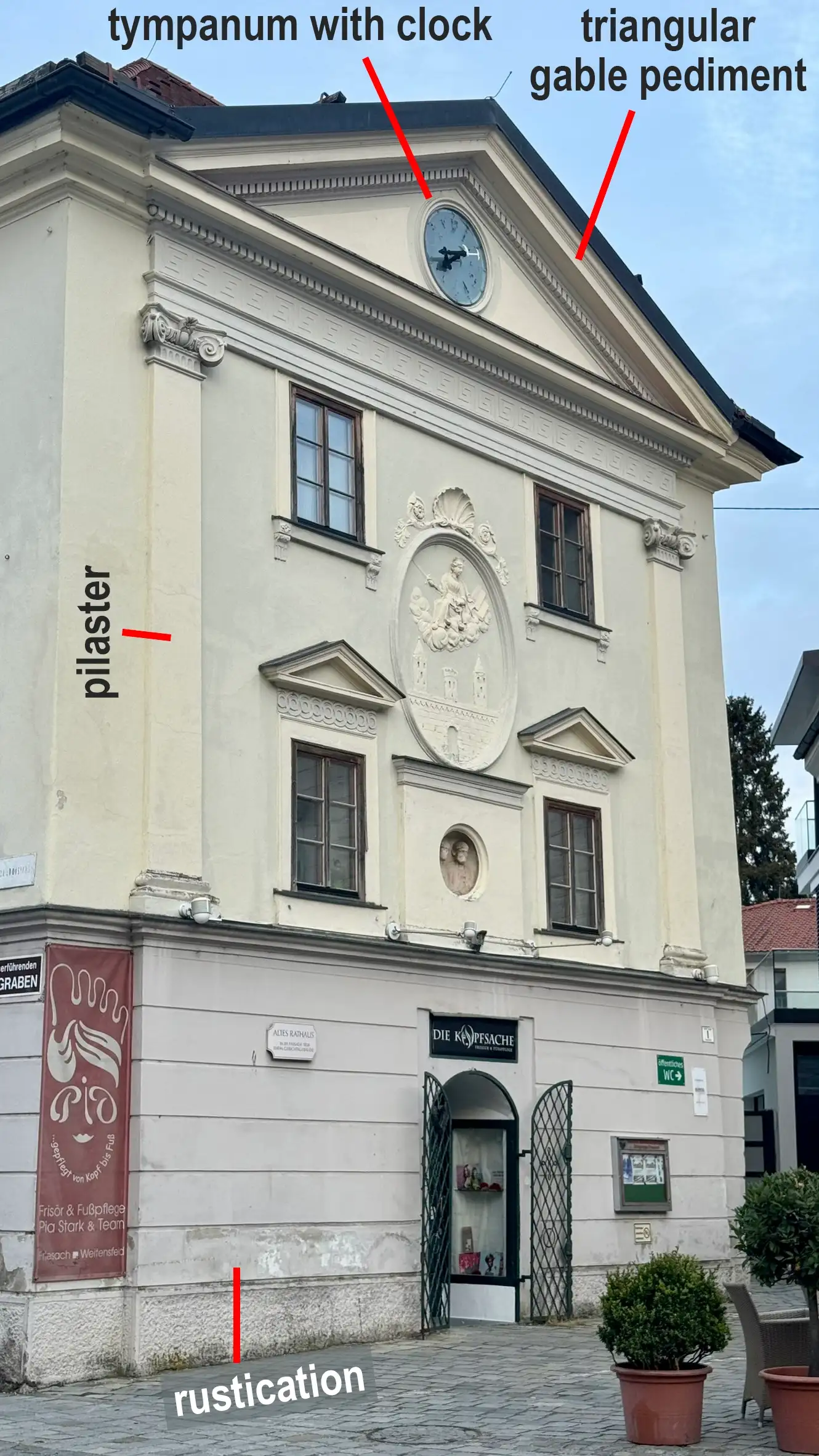
Ionic giant pilasters flank the window axes on the upper floor.
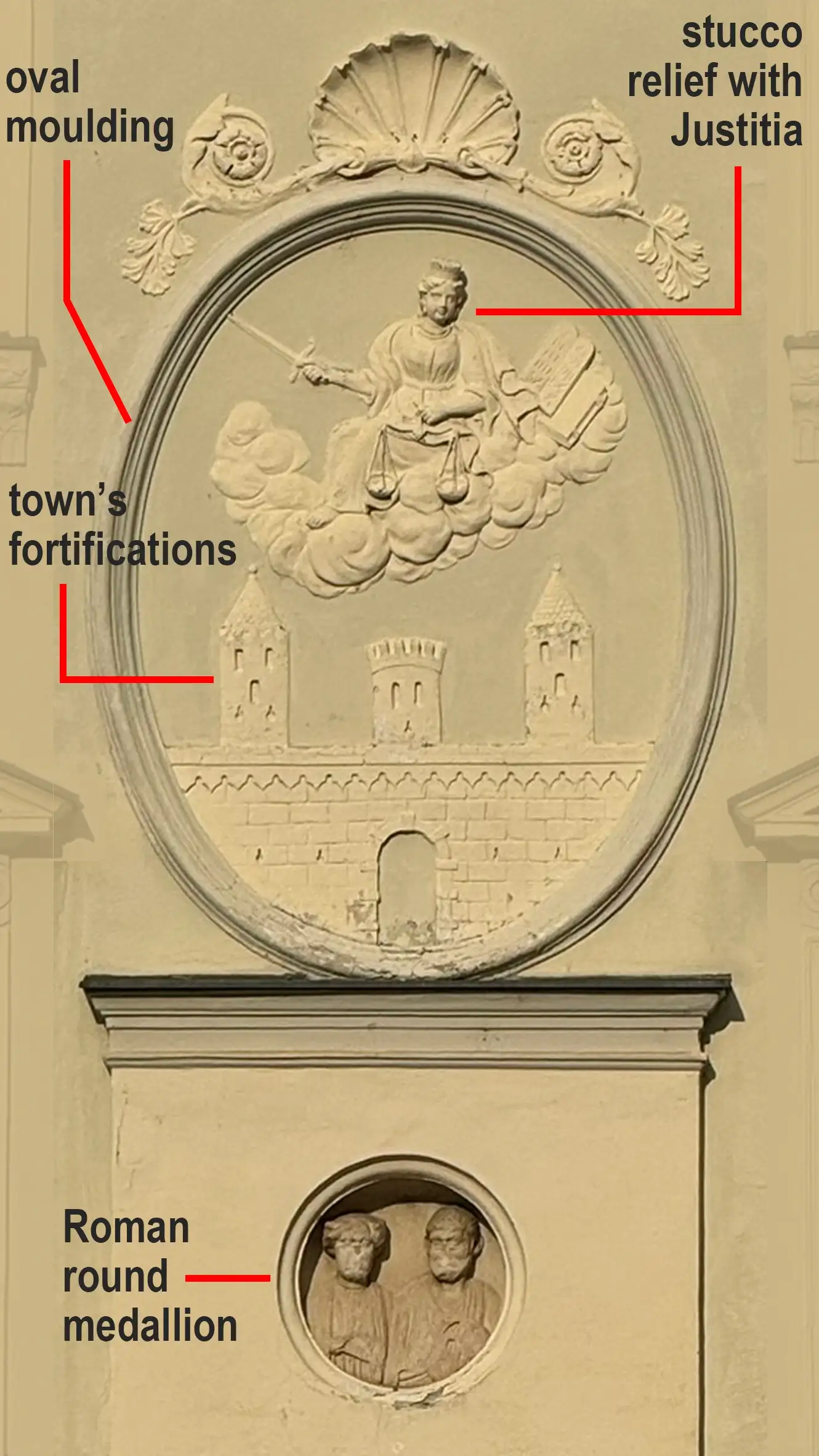
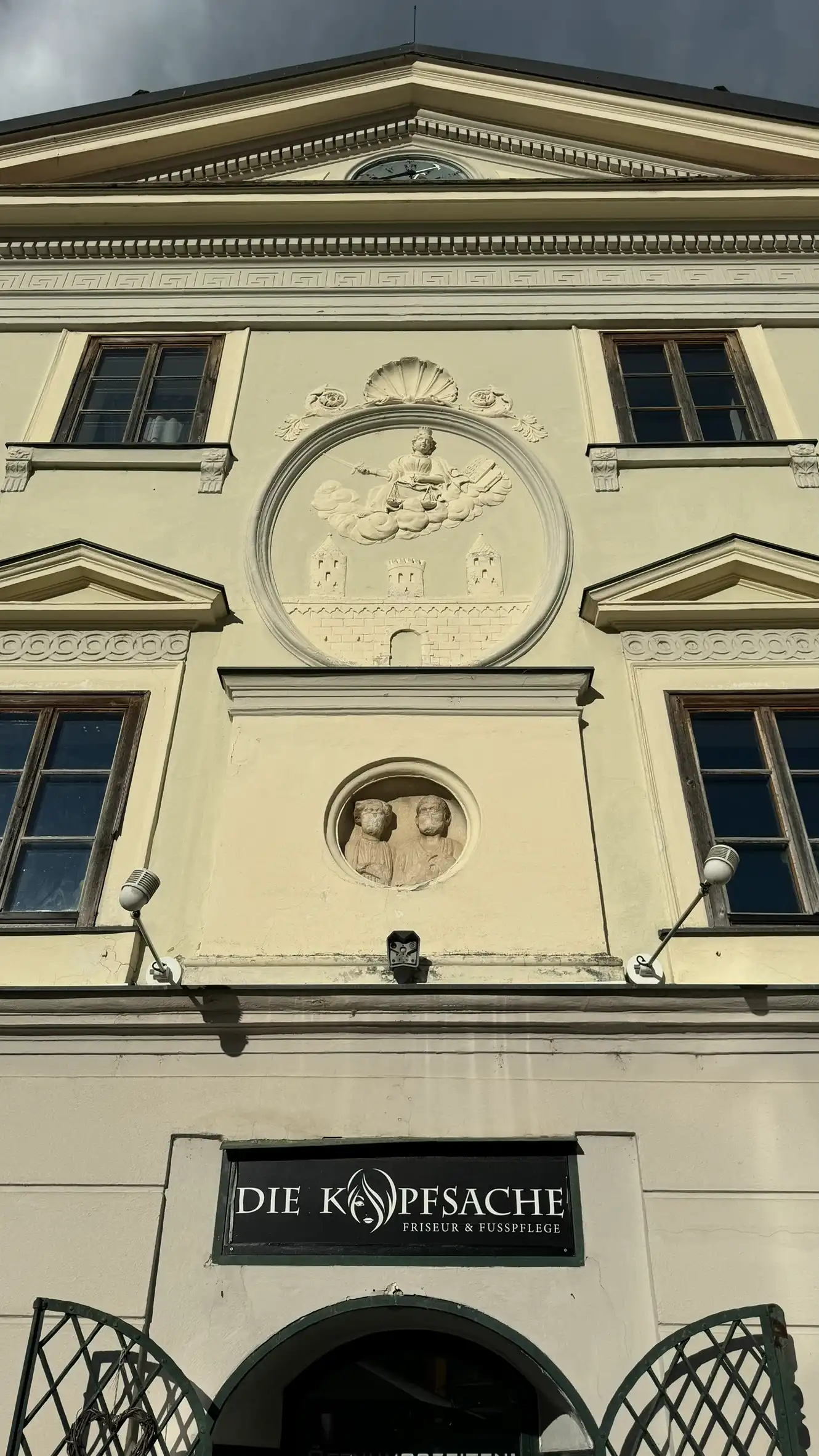
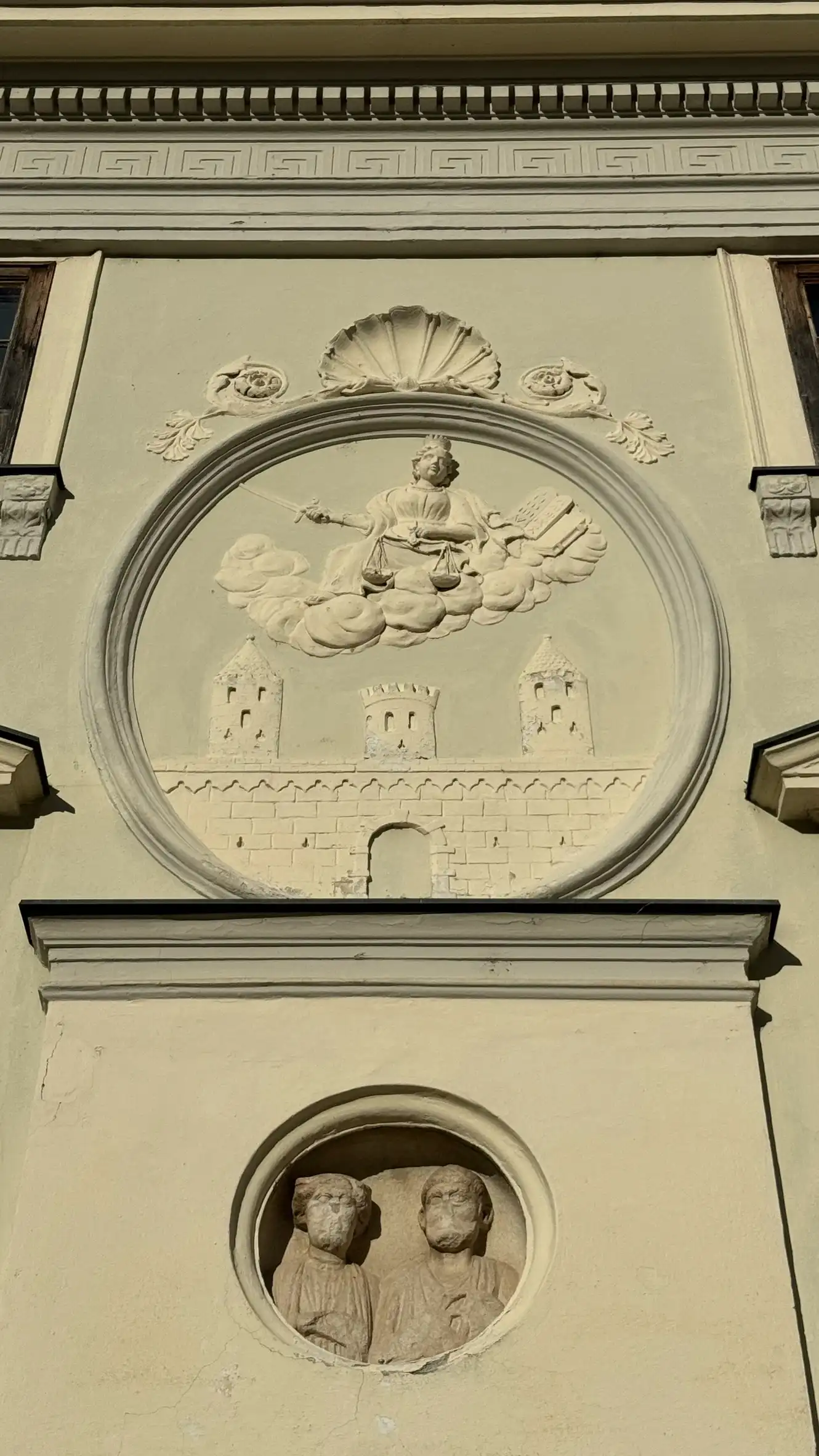
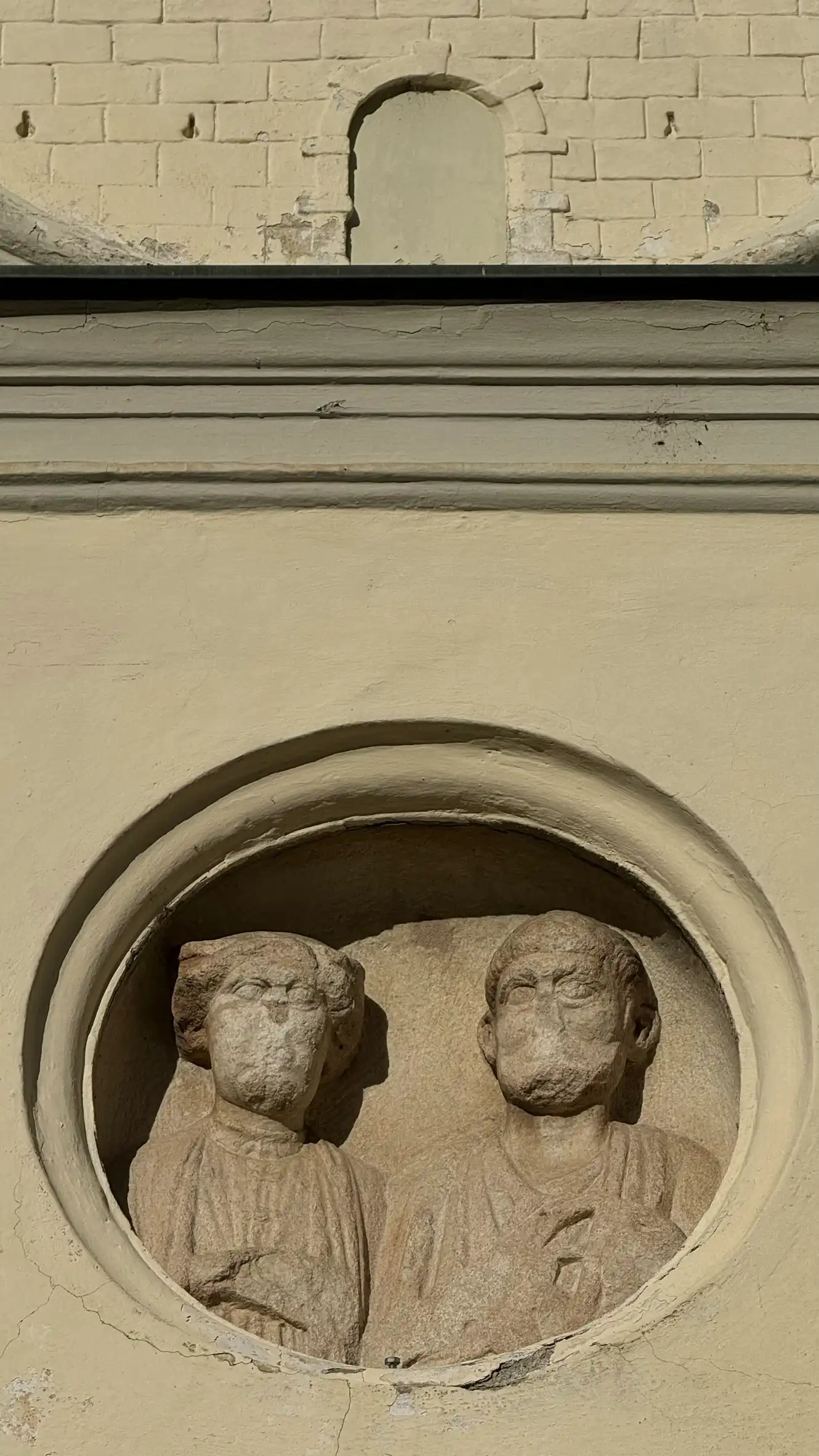
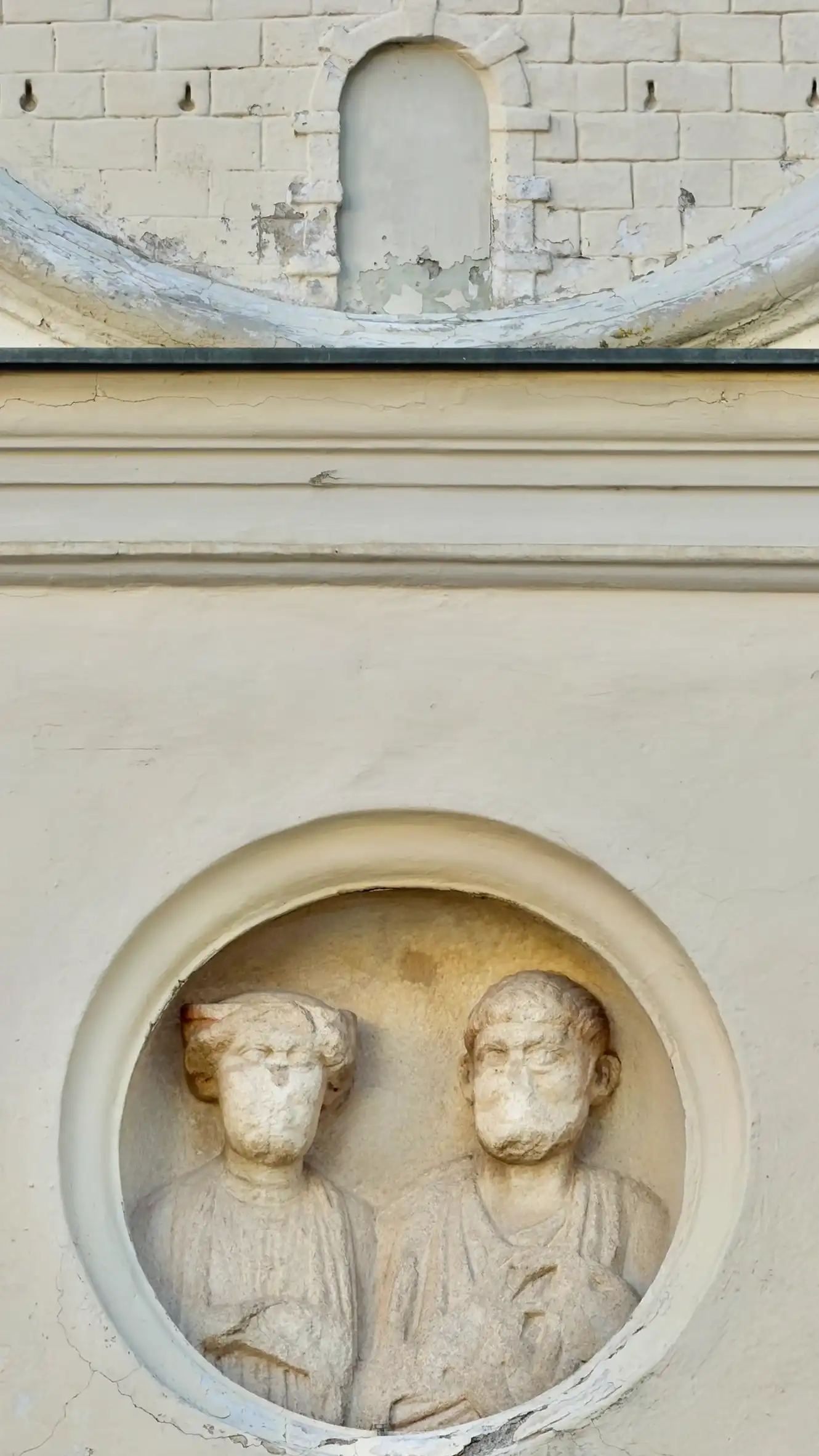
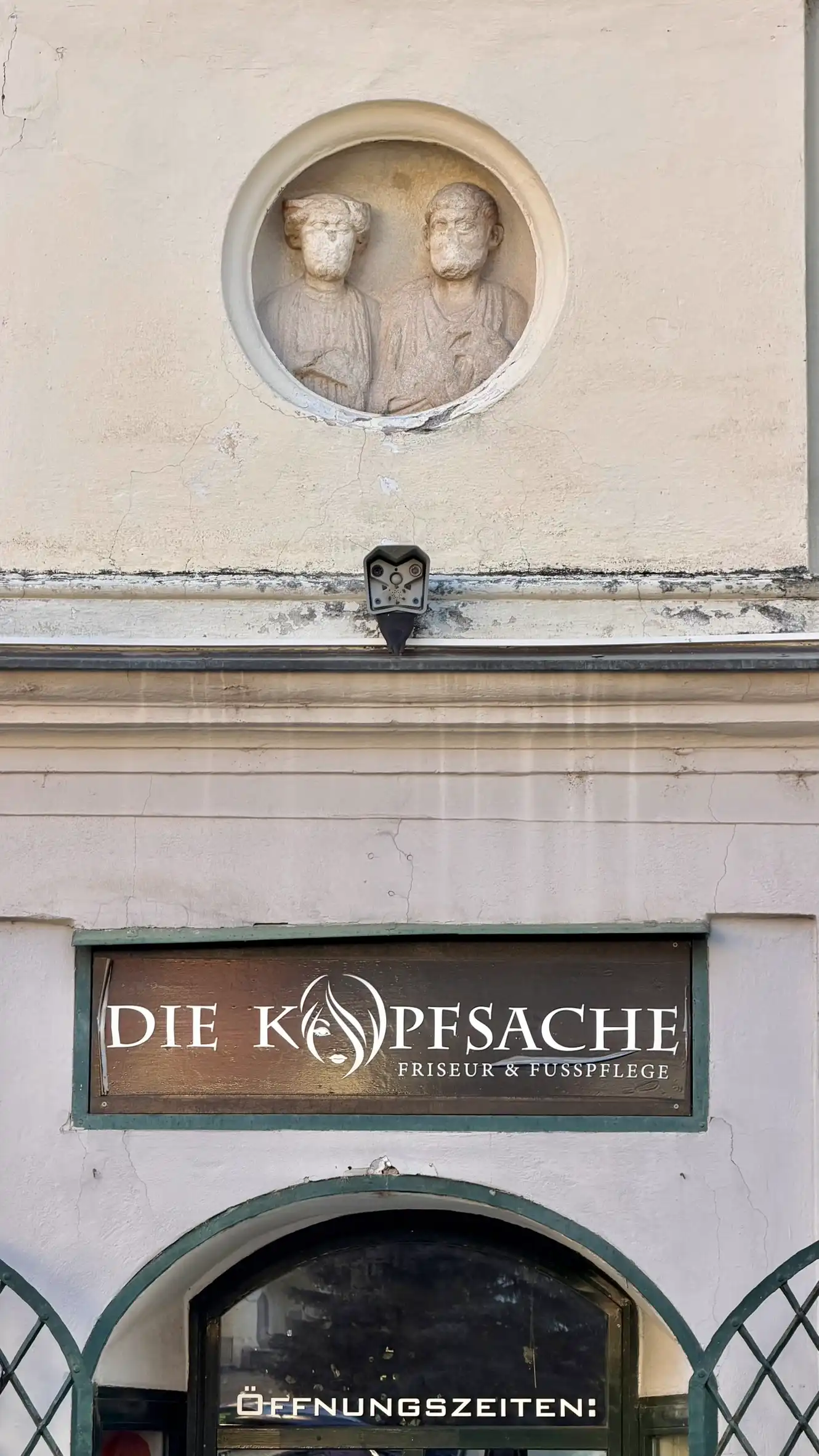
Between the windows a Roman-period round medallion from a funerary monument is embedded. The medallion, dating from the mid-2nd century, depicts a woman in native costume wearing a Noric headdress.
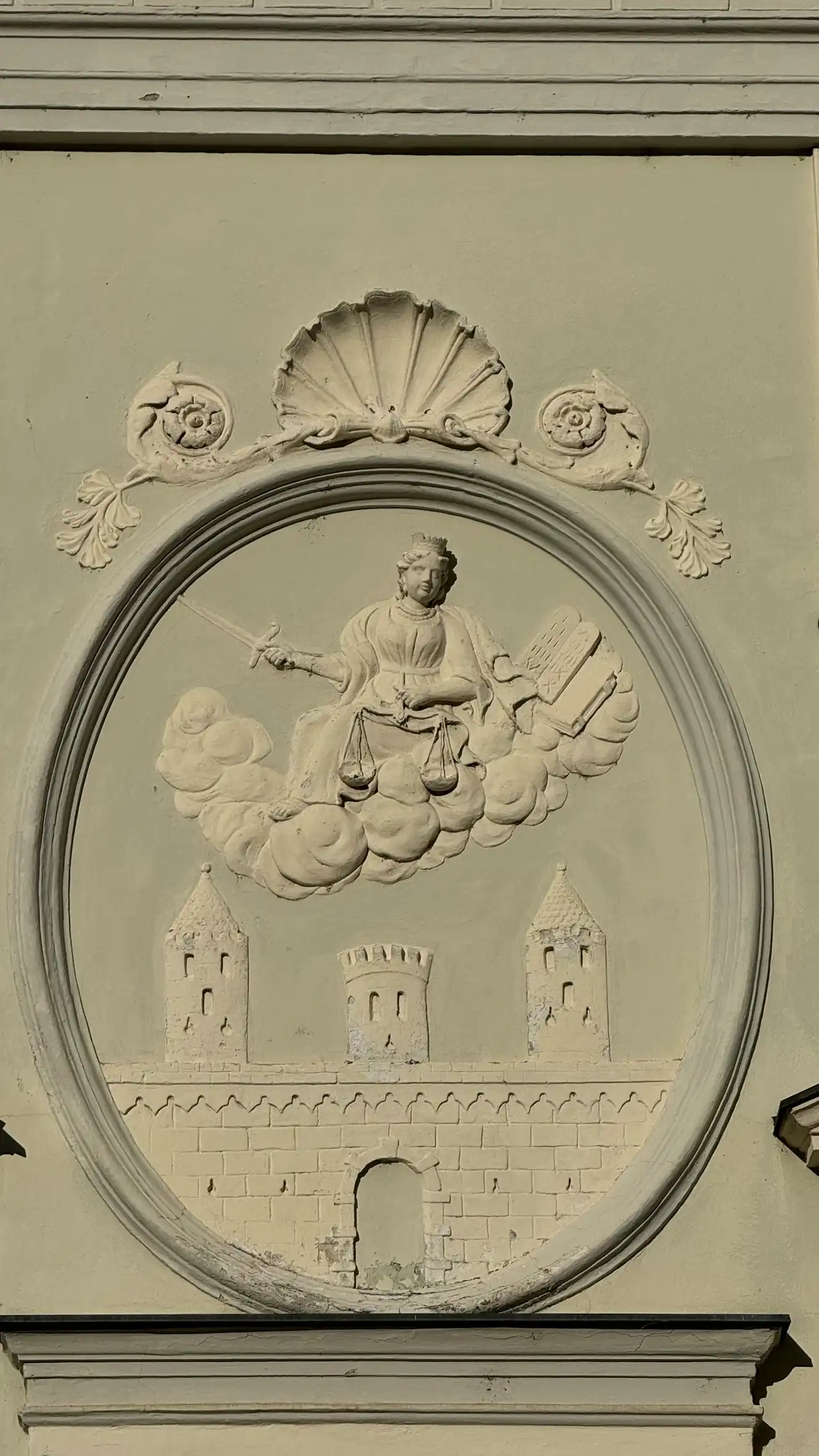
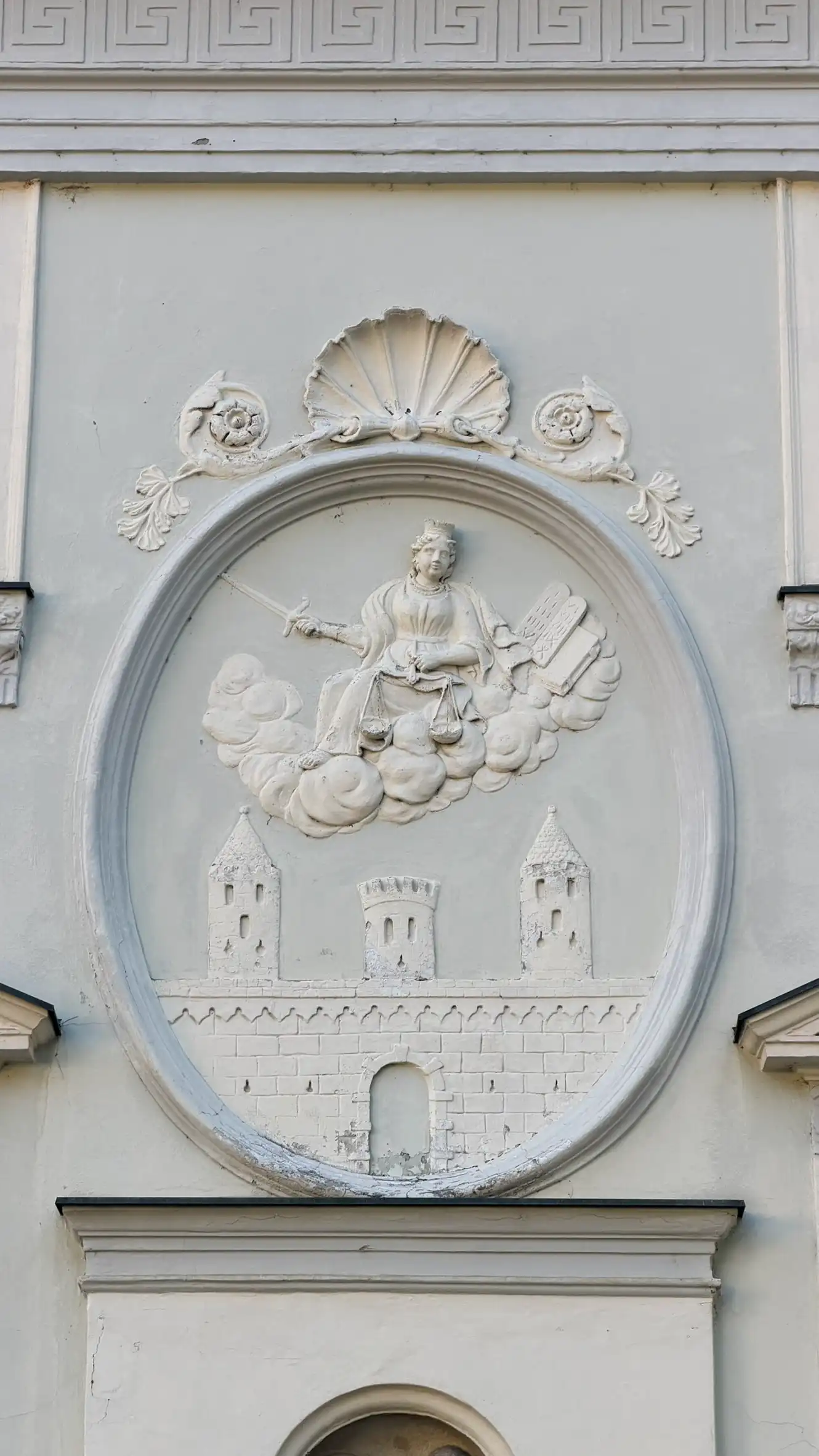
Above it is a stucco relief in an ornate oval frame showing Justitia together with the town’s coat of arms.
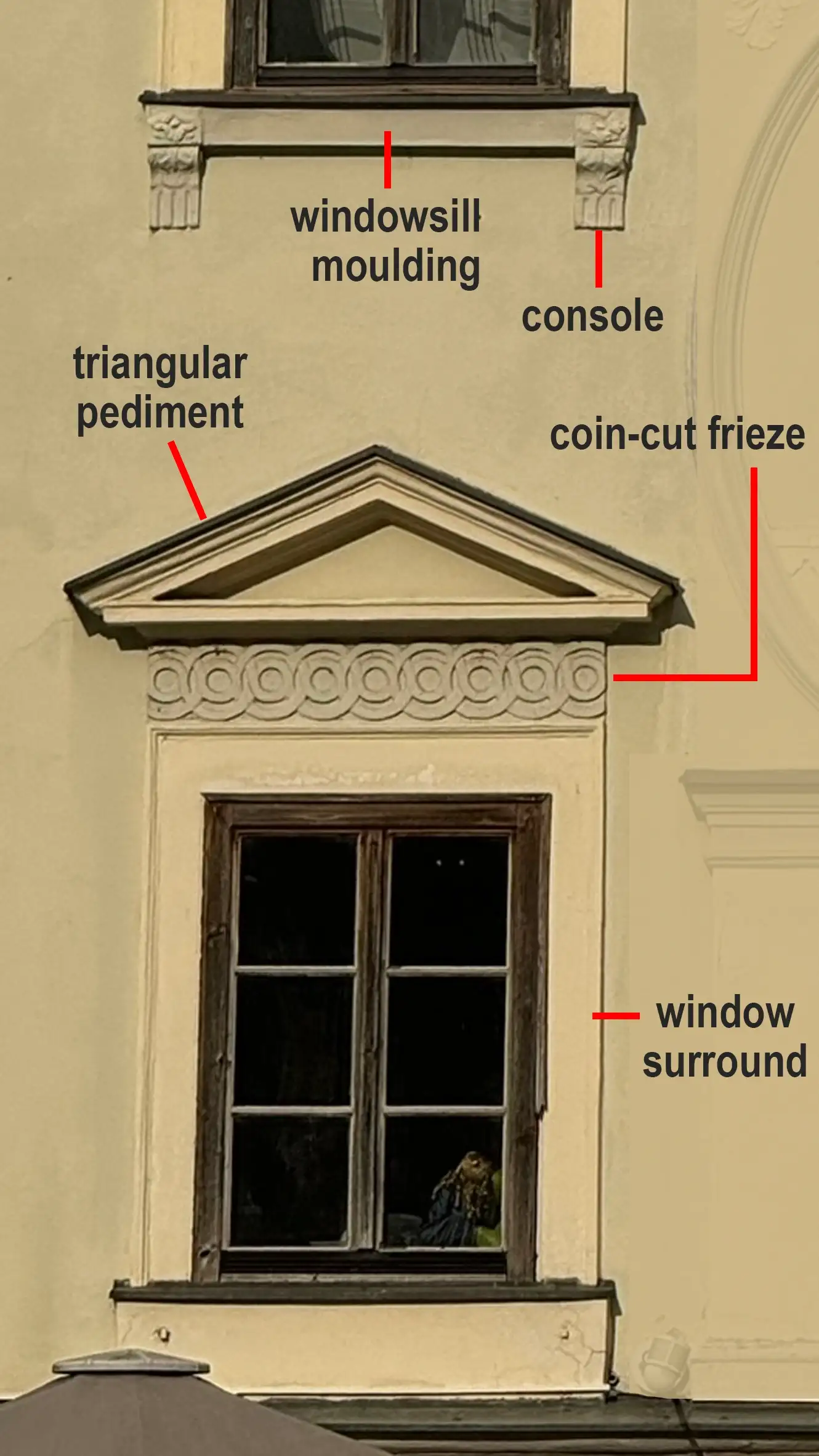
The windows on the first-floor feature profiled frames, triangular gable pediments and coin-cut friezes in the lintel fields.
The windows on the second floor have simple sill mouldings supported by leaf-scroll consoles.
On the central projection, fasciae and a meander frieze replace the window pediments.
The round-arched portal is protected by a wrought-iron gate.
On the street-facing side, the windows have alternating triangular and segmental pediments with either coin-cut or meander friezes in the lintel fields.


Hauptplatz 1 | Old Town Hall
Longer Version | Reading Time: 1:30 min
History
In the middle of the 18th century, the building was a soldiers’ guardhouse.
From about 1770, it served as the town hall.
In 1837–38, the structure underwent extensive remodelling and was given a new facade design.
In 1866, the town-hall clock was repaired.
In 1867, the building passed into the ownership of the Imperial-Royal District Court.
Architectural Description
The building presents itself as a representative corner property with a high-quality Late Neoclassical facade dating from 1838.
Its structural core dates back to the first half of the 13th century.
Further structural alterations were carried out in the 16th century, notably through the insertion of vaulting.
The south wing was added in the 19th century.
Exterior
Articulation
The facades are clearly articulated horizontally by profiled string courses and a crowning cornice.
Rusticated Masonry
The ground floor is finished with rusticated masonry.
Facade facing the Main Square | Central Risalit
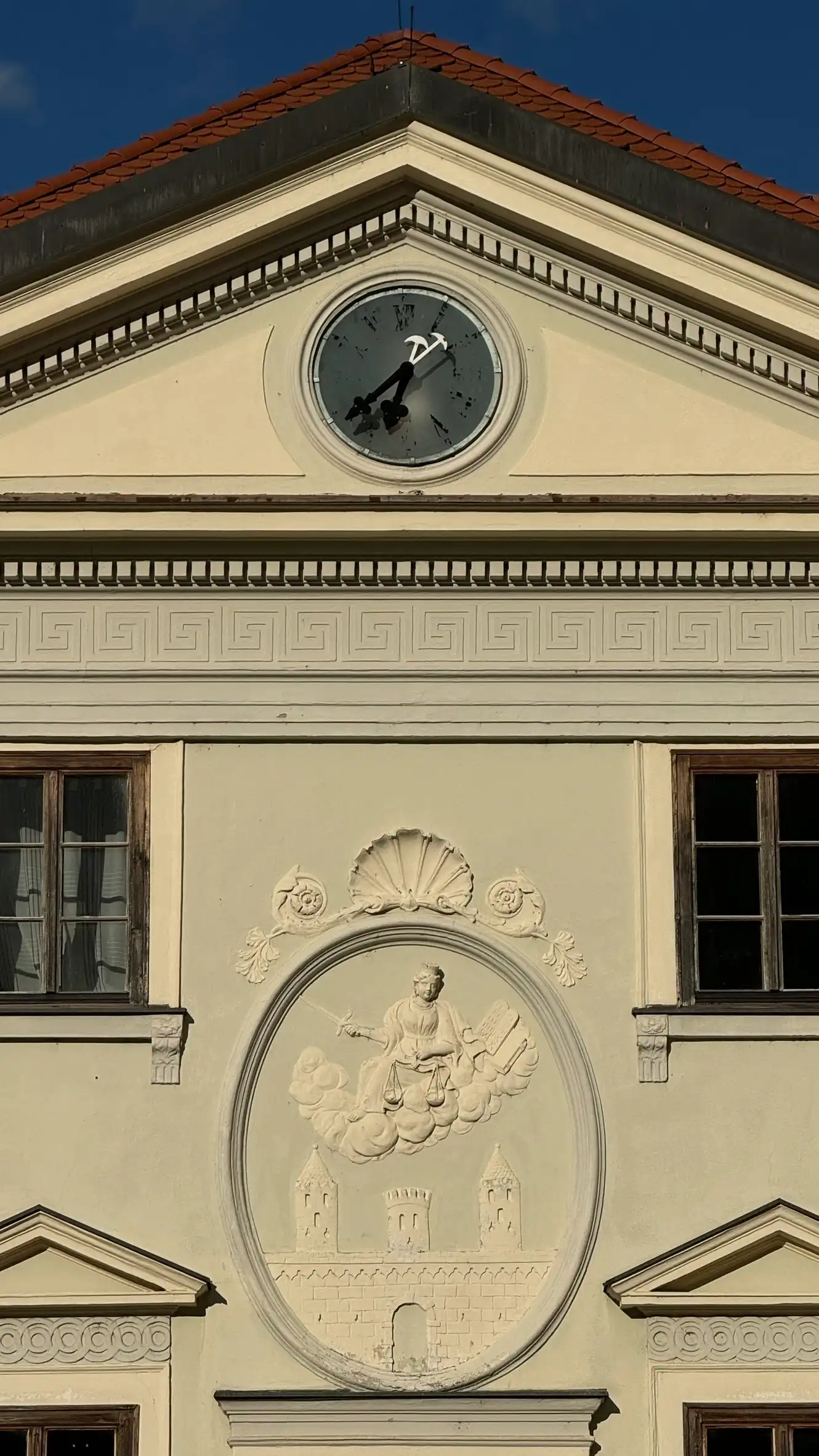
Facing the square, the principal facade is accentuated by a two-axis central risalit with a frontispiece, whose tympanum accommodates a clock.
On the upper floor, the window axes are framed by Ionic giant pilasters.
The central axis is further emphasised by a round-arched portal fitted with wrought-iron shutters.
Above the portal, a Roman-period circular medallion from a funerary monument is incorporated, depicting the busts of a married couple; the woman is shown wearing local dress with a Norican bonnet. The medallion dates to the middle of the 2nd century CE.
A richly modelled stucco relief depicting Justitia and the coat of arms of Friesach is set within an oval frame, adorned at the apex with shell and foliate ornament.
The windows of the first-floor feature moulded surrounds, triangular pediments, and coin-cut friezes in the lintel panels.
On the second floor, the windows are more restrained in design, with sill cornices supported by consoles with leaf volutes; here, the pediments are replaced by fasciae and the meander frieze of the risalit.
Facade facing Bahnhofstraße
Along the street-facing facade, the first-floor windows display an alternating sequence of triangular and segmental pediments, with coin-cut and meander friezes in the lintel panels.
Roof
The building is crowned by a gabled roof.